
“Each word has its own weight. Especially when it comes to violence.”
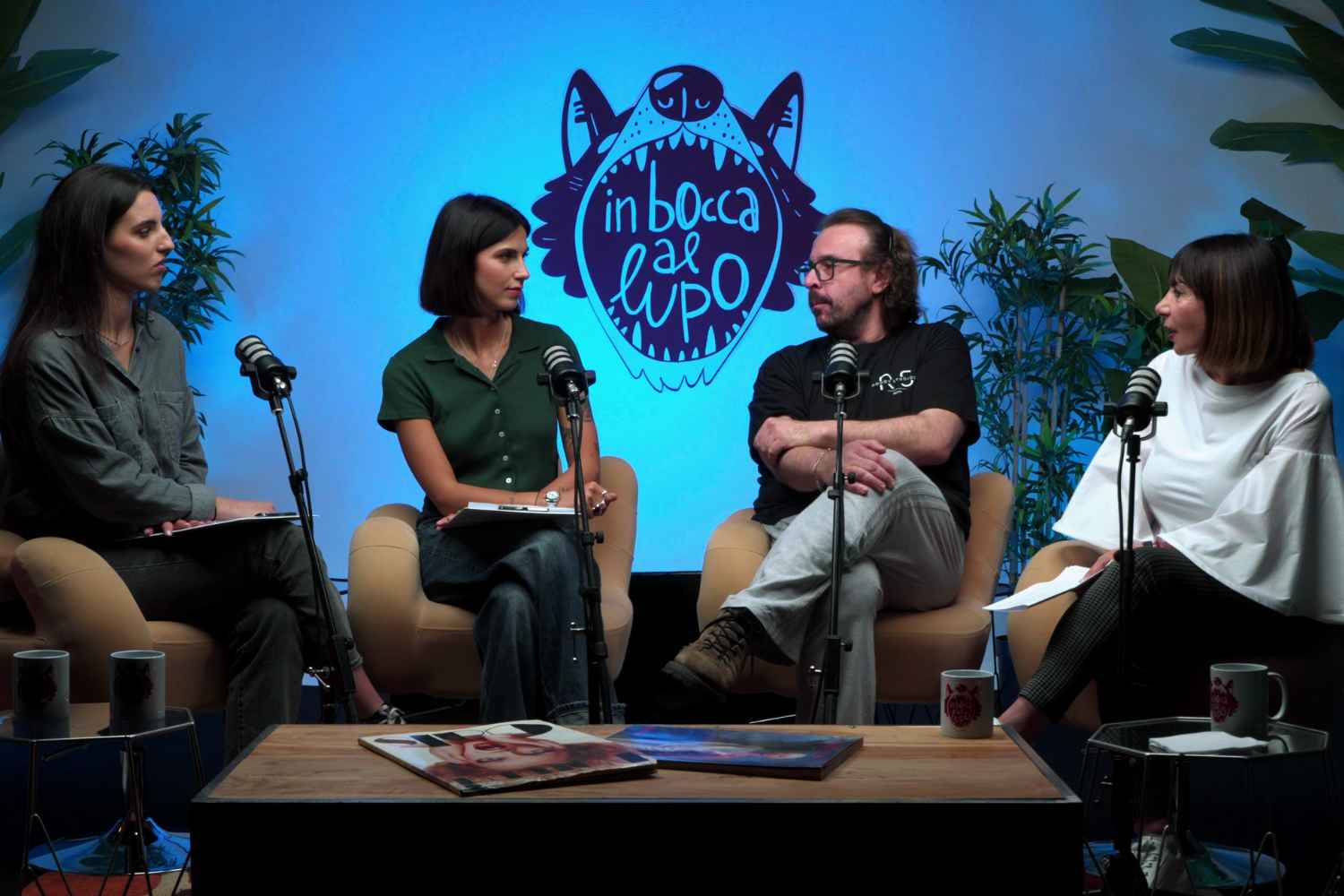
The new episode of “Good luck”, the podcast co -produced by Greenme and Byron Agency, written and directed by Margherita Filosa and Iris Gaeta, puts the thinner and controversial theme of gender violence at the center: language.
Guests of this episode are Adriana Pannitteri, journalist, and Roberto Corradi, author and satirical writer. Two different but complementary voices, which compare themselves on how words can reveal, hide or trivialize violence.
Words that normalize violence
In the daily chronicles it still happens to read about “raptus”, “emotional storm” or “passionate crime”. Expressions that end up justifying the unjustifiable, minimizing the responsibility of the culprit and shifting attention to the victim. “You do not say ‘He killed her because he betrayed him’. It is said ‘He killed her because he is a killer’“CORRADI underlines. Belomters adds: “Every time a title uses wrong words, it produces a further wound. The spectacularized narrative of feminicides does not help to understand or prevent. It is only a chronicle that consumes.”
When language becomes culture
Reflection expands beyond journalism. From cinema to comedy, from music to social networks, language has contributed for decades to build stereotyped images of women and men, strengthening cultural imbalances still rooted.
“The words we choose every day shape reality. If the language changes, culture changes ” – recalls Panenitteri. And Corradi relaunches:“ The problem is not the emulation of those who commit violence, but our habit as spectators. Feeling certain news every day, we risk not indignation. Violence becomes normal. “
Educate to words to change reality
The podcast highlights a fundamental node: language is part of the prevention. Learning to tell the violence with respect, without trivializations or voyeurism, means restoring dignity to victims and responsibilities for executioners. Because, as emerges from the comparison between guests, gender violence is not a phenomenon of a few “monsters”, but crosses all social strata. And it is precisely in the daily narrative that a part of the cultural battle is played.
The case of the Facebook group “My wife”
A recent and disturbing example comes from the Facebook group “My wife”which ended up in the spotlight for the photos posted with a sexual background to the knowing of the. Mogli and the verbal violence of the comments it contained. Sexist jokes and insults and references masked by irony have generated a wave of indignation throughout Italy.
The one that many defended as “Goliardic satire” has instead proved to be a toxic archive of sentences that feed the culture of debasement and abuse. It is proof that words never remain harmless: they can become the fertile ground in which the normalization of violence grows. Behind all this there is always a vision of the world in which the woman is reduced to the subject. And when this narrative is repeated and shared, even in digital spaces that seem marginal, it becomes a piece of a culture that legitimizes and strengthens domain.
The role of journalists: responsibility and care of language
As journalists we have a crucial responsibility today. It is not enough to “tell the facts”: it is necessary to do it with awareness of the words chosen, avoiding every formula that can justify or ridicule violence. Journalism is not neutral. Each title, every sentence, every lexical choice can be transformed into a political and cultural act. It is up to us to decide whether words become accomplices of violence or tools to contrast it.
Telling a femicide does not only mean informing: it means restoring dignity to those who are no longer there, compared to those who remain and tools to those who read to understand the social scope of these crimes. Because language is not only a mirror of reality, but also the key to change it.
A good luck that becomes universal
As in every episode, the final question is the same: “Who would you say good luck today today?” The answers range: to the Pope, to those who suffer from wars, to the children who die under the bombs. A sign that language, when it is chosen with care, can be the act of resistance and hope.
“Good luck” is available every Tuesday on all streaming platforms and on the social channels of Greenme and Byron Agency.
Don’t you want to lose our news?
