
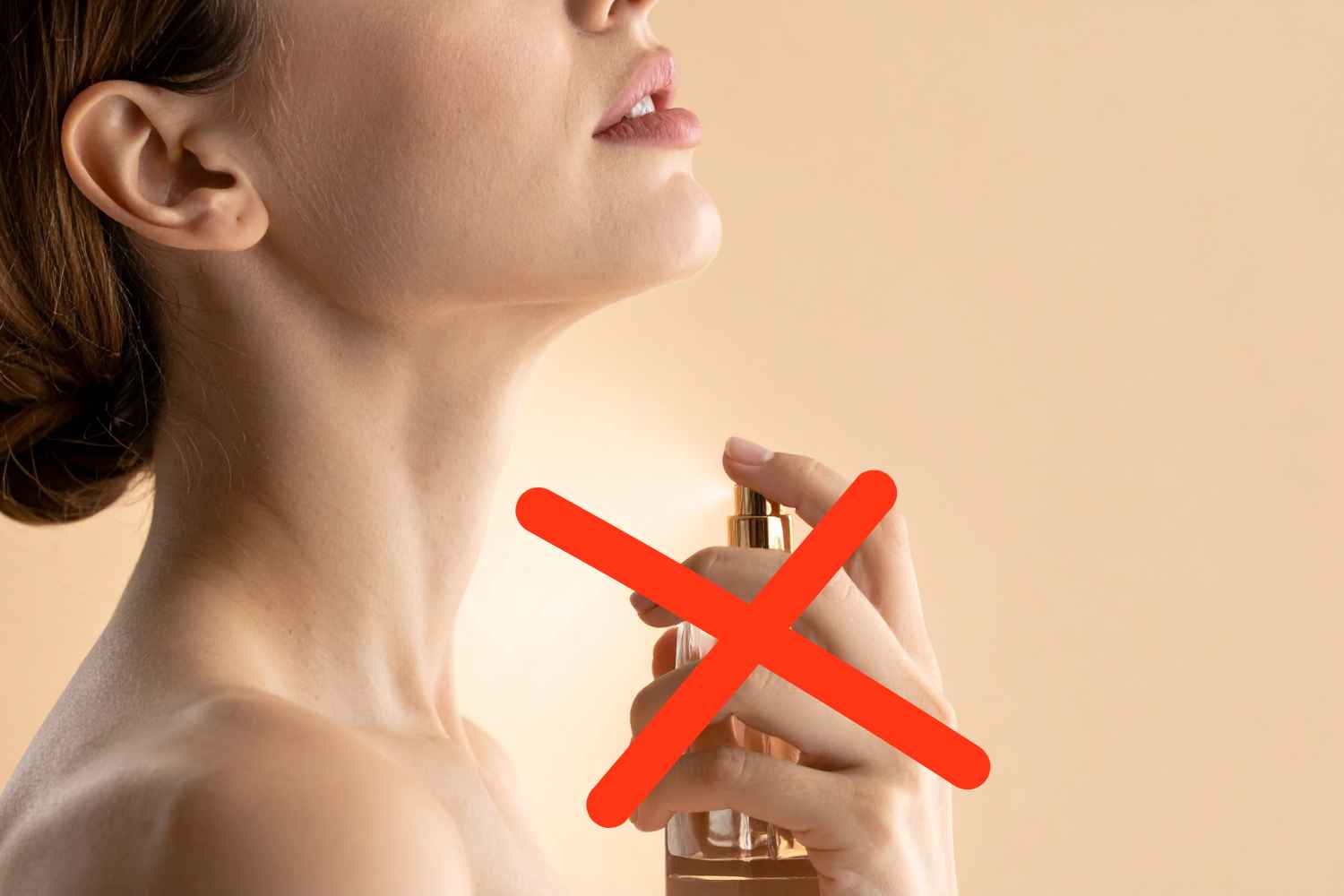
Posts on social media raising the alarm have gone viral in recent times: spraying perfume on the neck would be a mistake, even dangerous, because it is closer to the thyroid and could interfere. The infectious disease specialist Matteo Bassetti would also have expressed his opinion.
But why is such a natural, elegant and instinctive gesture questioned? The truth lies, as often happens, in the middle. This is not terrorism, but neither is it a baseless fixation. Applying perfume to your neck routinely can damage your skin and, in the long run, contribute to exposure to substances that can affect your hormonal health, especially if you’re exposed to the sun.
The point is not the thyroid itself, which remains a deep and protected organ, but the set of factors that make this area particularly vulnerable: delicate skin, sun, pollution and chemical substances contained in perfumes.
Because the neck is a risk area
The neck is one of the most fragile areas of the human body, its skin is thin, sensitive and poor in sebaceous glands, therefore less protected than that of the face or the rest of the body. This means that it more easily absorbs the substances it comes into contact with and reacts more markedly to external agents.
Furthermore, it is an area constantly exposed to sunlight and environmental pollution, has a more vulnerable skin barrier and tends to develop dark spots, redness and signs of premature aging more easily. All these characteristics make the neck particularly subject to phototoxicity, a skin reaction that can be triggered by some substances present in perfumes when they are hit by UV rays.
This is where the seemingly harmless gesture of spraying perfume can transform, over time, into an aesthetic and dermatological problem.
What science really says
Is what is circulating on social media an unjustified alarm? Not entirely. A study published in Environmental Health Insights highlighted the presence of endocrine disruptors in various perfumed products, in particular synthetic musks and phthalate derivatives. These are substances that, if absorbed through the skin or continuously inhaled, can interfere with hormonal functioning in the long term.
This does not mean that a spray of perfume on the neck “damages the thyroid”, as is often read in a simplified and incorrect way. However, it means that cumulative exposure to certain chemical compounds, combined with other environmental factors, can have an impact on the delicate hormonal balance of the body, especially in the most sensitive individuals.
Added to this is the issue of phototoxicity, which is well documented: exposure to the sun after the use of some perfumes can trigger even intense skin reactions, with persistent spots and inflammation, a risk that is amplified on the neck due to the fragility of the area.
The hidden risks of perfumes
Perfumes contain legal and widely used ingredients, but not neutral. Alcohol tends to dry and sensitize the skin, especially if always applied to the same spot. Synthetic mosses have strong environmental persistence and can accumulate in fabrics. Phthalates are among the most discussed substances due to their possible role as endocrine disruptors. Some essential oils, such as bergamot or bitter orange, are notoriously photosensitizing.
Applied to the neck and then exposed to sunlight, these compounds can cause dark spots, irritation and inflammatory reactions. Some studies also suggest a potential disturbing effect on the hormonal system, especially in the presence of chronic exposure and in predisposed subjects. It is not an immediate danger, but a risk that makes sense to reduce with more conscious use.
Where to apply perfume smarter
This doesn’t mean giving up perfume, but using it better. Changing the point of application allows you to reduce risks without losing anything in elegance or olfactory intensity. Areas less exposed to the sun and with more resistant skin, such as the wrists, inside of the elbows, nape of the neck or behind the knees, allow optimal diffusion of the fragrance with less impact on the skin.
Behind the ears can be a good compromise, but avoid direct contact if you are photosensitive. Spraying it on clothes is another practical solution, paying attention to delicate fabrics and maintaining a certain distance. For hair there are specific products without alcohol, designed specifically to perfume without drying or damaging.
An increasingly popular alternative is represented by solid perfumes, natural or free of known allergens, to be applied with moderation and greater control.
Less alarmism, more awareness
Saying that spraying perfume on your neck “is bad for your thyroid” is a missimplification. On the other hand, saying that it is a bad habit for skin health and that it increases exposure to potentially problematic substances is correct.
The point is not to create fear, but to promote a more intelligent use of perfume. Continuing to use it with pleasure is possible, just move the gesture a few centimeters. Sometimes true elegance also lies in awareness.
