
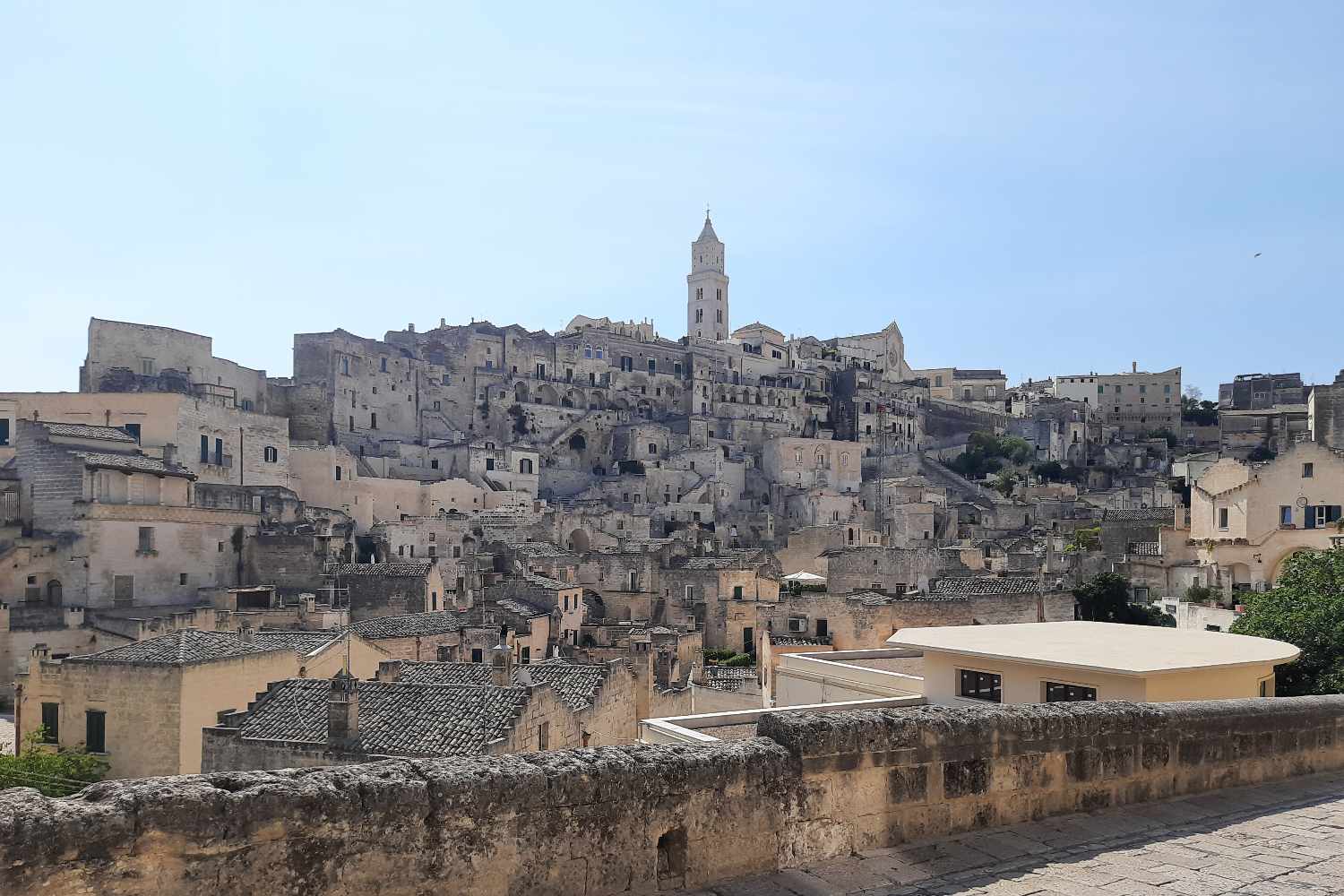
I arrived in Matera with a precise idea: to get lost among the Sassi and, at the same time – as a fan of Italian fiction – to pursue the locations of Imma Tataranni – Deputy Prosecutor. Not a simple journey, but a double itinerary: the real one, made up of climbs and stony silences, and the television one, tailored to the determined face of the most unconventional deputy prosecutor in Italian fiction.
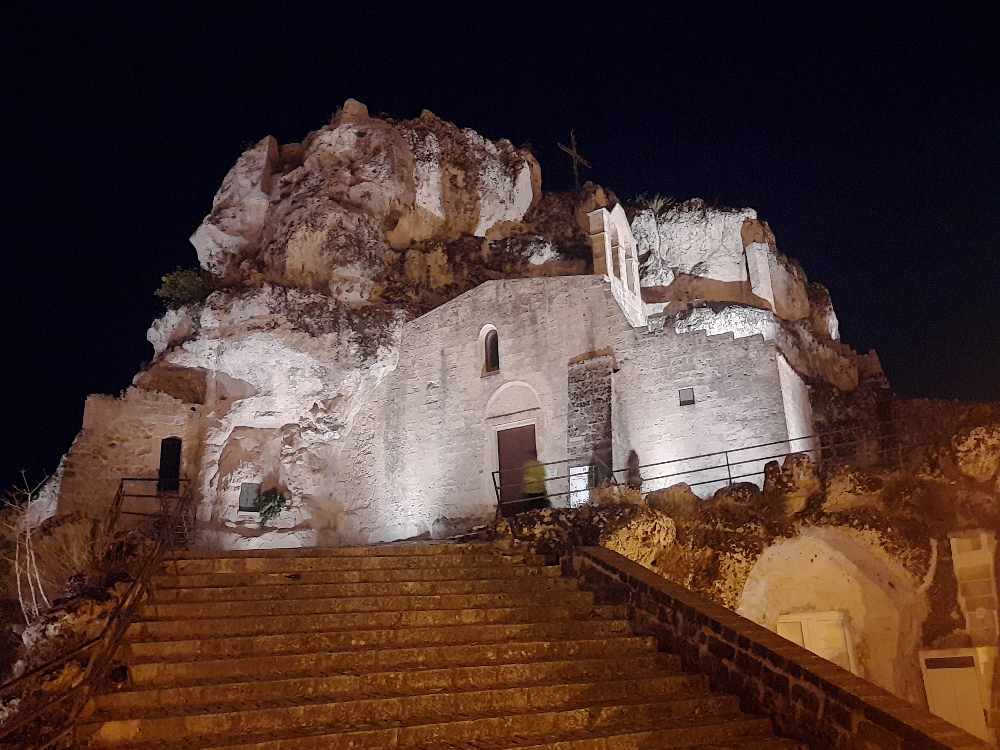
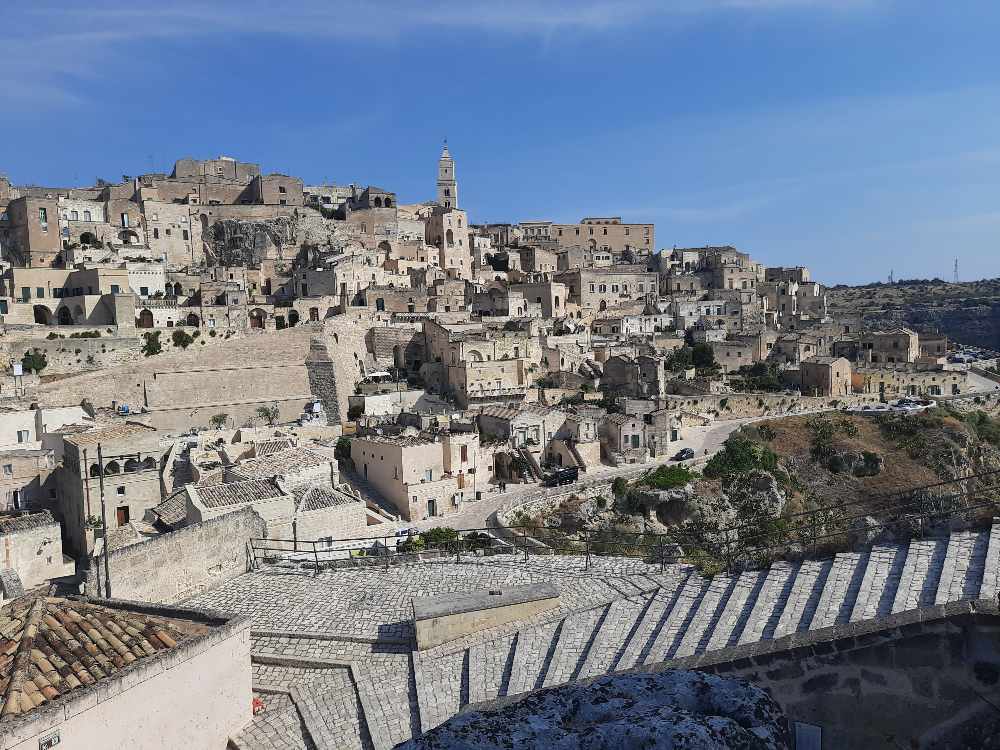
The city welcomed me with a sharp, almost theatrical light. Here every view seems to have been studied by a set designer, but it is all authentic. And it is precisely this authenticity that makes the visit so powerful, leaving you breathless every time you look down. To admire all its beauty, I decided to stay even when the sun went down and the lights came on, making everything even more magical and evocative.
The first impact with the city carved into the rock
I started my itinerary from Piazza Vittorio Veneto, the contemporary heart of the city. Obligatory stop: the Palazzo dell’Annunziata. In the series it hosts the court where Imma works. Live, it is striking for its eighteenth-century grandeur and architectural balance. Entering the square and finding it in front of you means understanding why it was chosen as an institutional symbol.
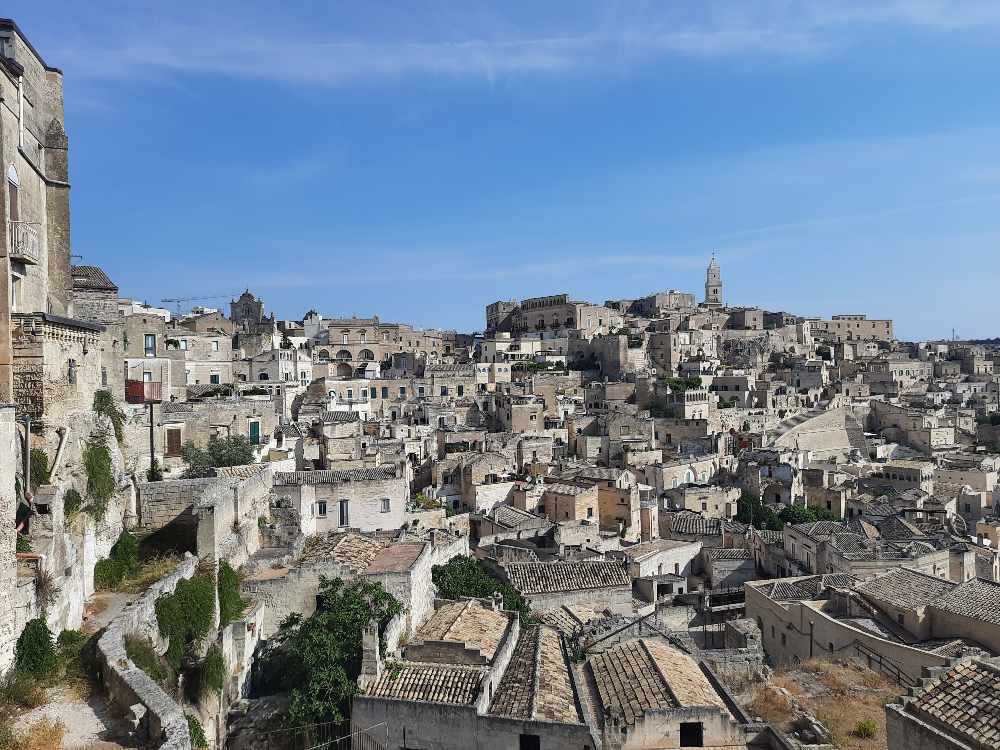
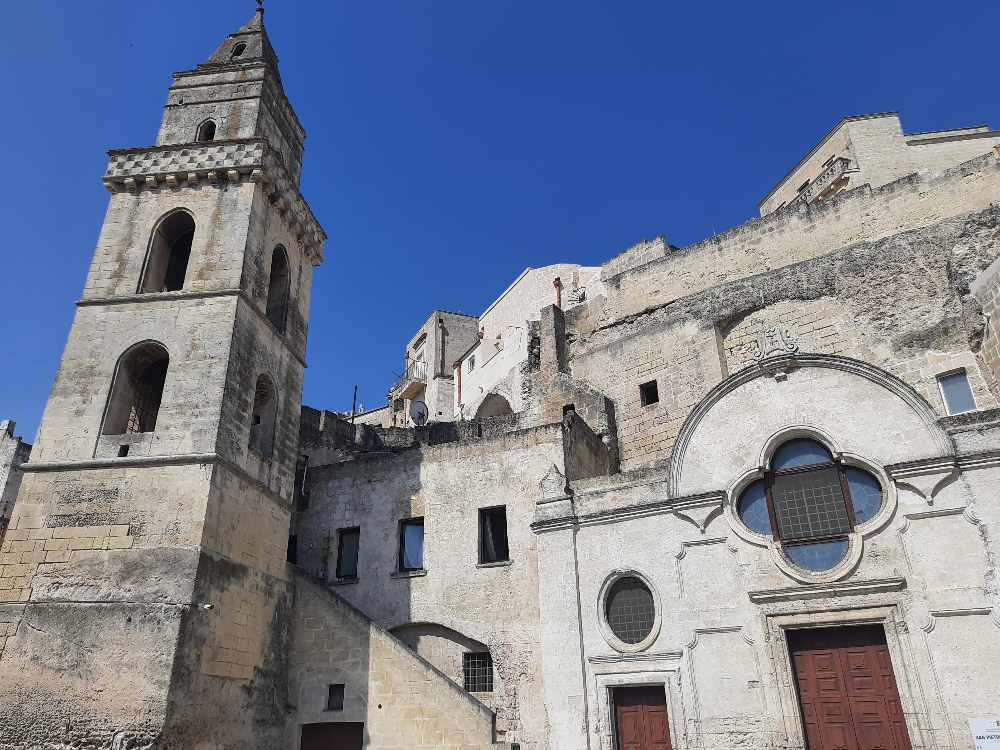
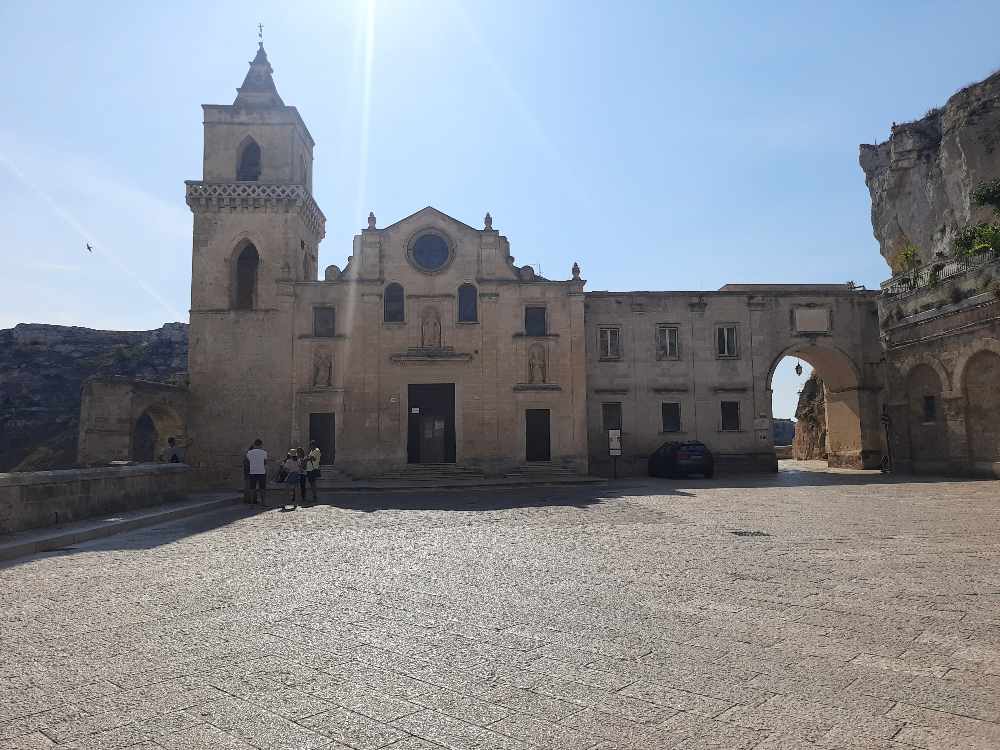
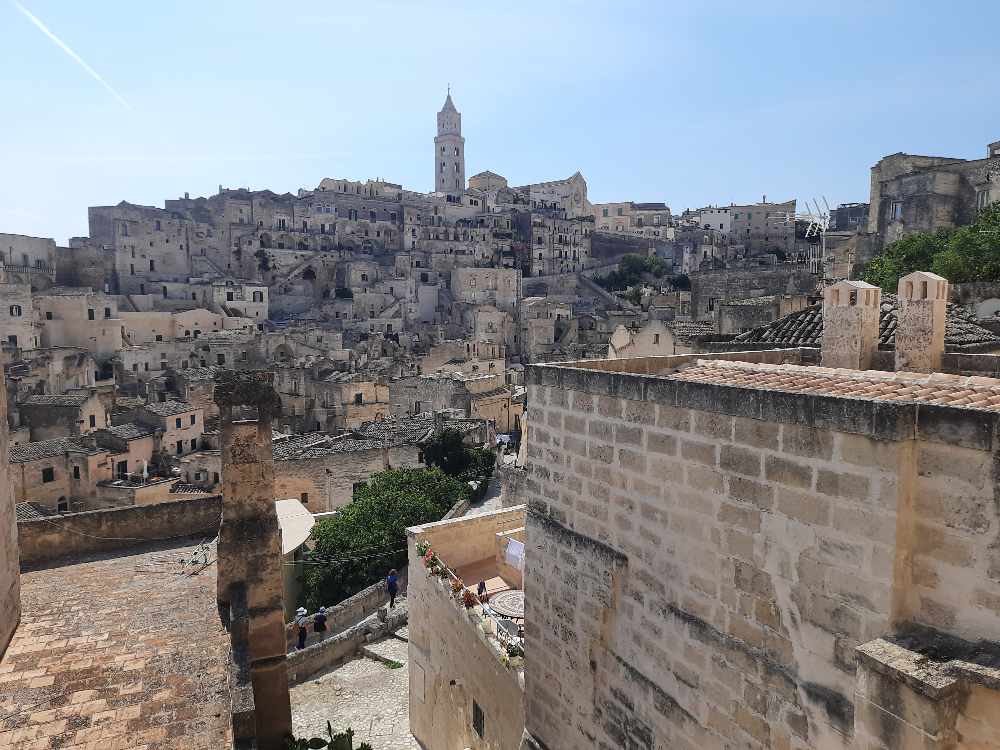
From here you access Belvedere Guerricchio, one of the most spectacular panoramic points: the Sasso Barisano opens up before your eyes, a tangle of stone houses that seem to grow one on top of the other. Here is the largest rock church in Matera, that of San Pietro Barisano. Unfortunately it was abandoned for a long time after the displacement of the Sassi and between the 1960s and 1970s numerous works of art were stolen.
Imma’s house and the heart of the modern city
Continuing towards Via del Corso and Piazza San Francesco, elegant Matera alternates with sudden glimpses of the Sassi. Then I reached Via San Biagio, one of the symbolic streets also for those who love the Imma Tataranni series: here are the exteriors of the protagonist’s house. It’s exciting to recognize places seen on the screen and find them perfectly inserted into everyday life.
The area overlooks Piazza San Giovanni Battista, one of the most elegant hubs in the centre. From here you can perceive the double soul of Matera: ancient and contemporary. The series often concentrates the action in the historic districts, but while walking I realized how modern Matera is alive, dynamic, far from the crystallized postcard image. New neighborhoods, crowded places, light traffic: the city is not just scenery, it is an organism.
Nei Sassi, where fiction comes alive
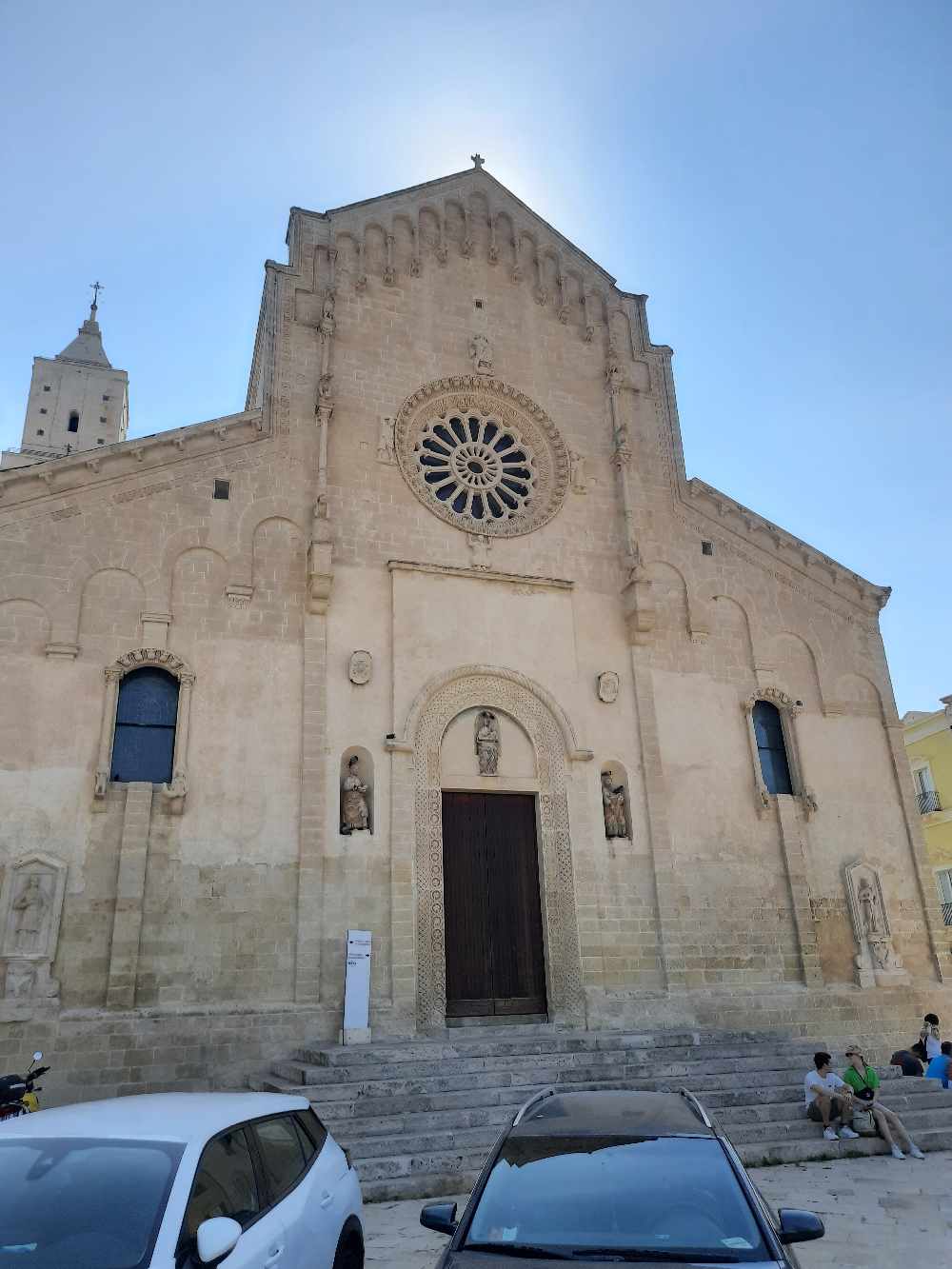
But the heart of Matera are certainly its Sassi. Walking inside it means entering a vertical geography. Stairs that rise without warning, arches dug into the tuff, terraces suspended over the ravine. In the series, these alleys are the scene of Imma’s investigations; live, they are a labyrinth that forces you to slow down.
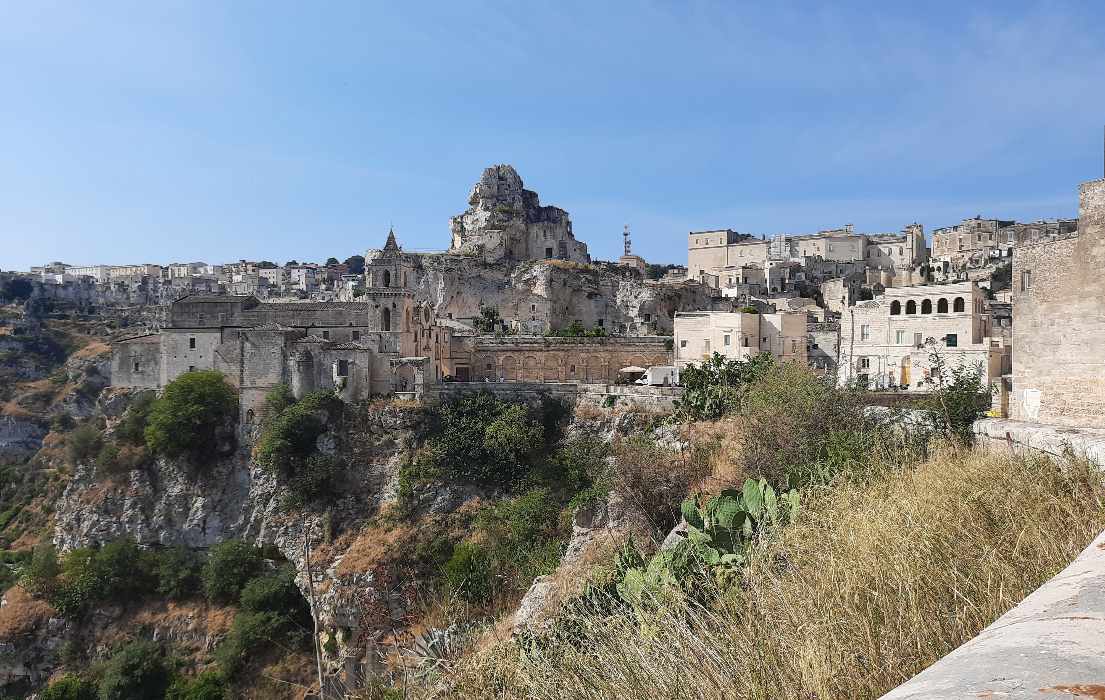
I entered Sasso Caveoso, the oldest district. Here the landscape becomes almost primordial: caves, steep stairways, panoramic terraces overlooking the Gravina di Matera. I visited the Casa Grotta in Vico Solitario, a faithful reconstruction of a house from the early 1900s: a single environment shared with animals and essential tools. Going out, the perception of the place changes completely.
When to visit Matera and how to dress
Another suggestion is not to make my mistake, forced by a geographical distance that makes itself felt: summer can be very hot, with high temperatures and little ventilation in the alleys. If you choose to visit Matera in July or August, plan your visits early in the morning and at sunset.
The ideal period is spring (from mid-April to June) and September, when temperatures are mild and the light enhances every detail of the stone. Even the Christmas period is evocative: the illuminated city amplifies the natural scenographic effect of the Sassi.
Finally, pay attention to the fact that Matera is built on several levels: you will need comfortable, non-slip shoes. Stone surfaces can be smooth, especially after rain. In winter, bring a windproof jacket: the evening humidity can be felt. In summer, a hat, water and sunscreen are essential.
You might also be interested in:
