
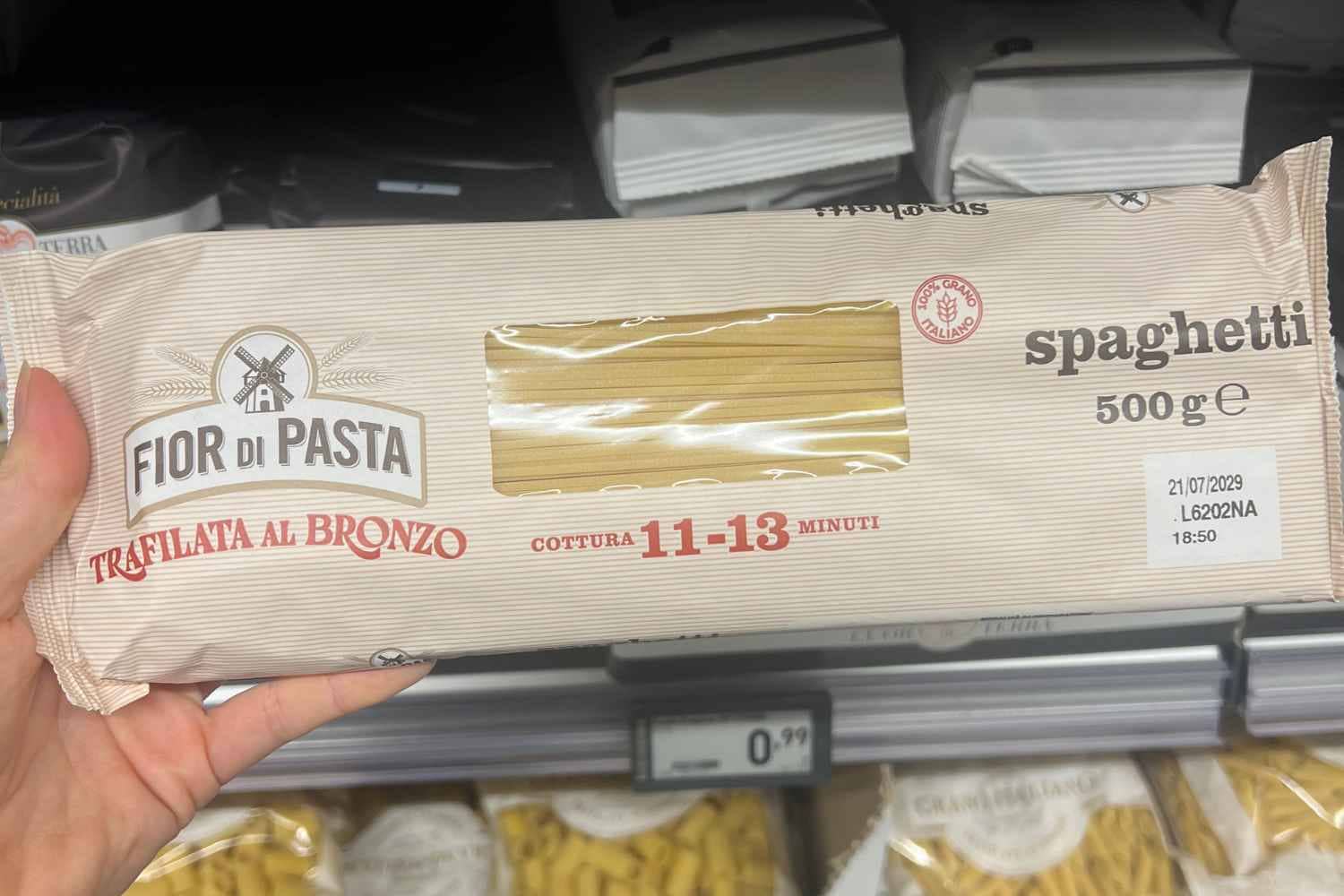
When we buy a pack of pasta at the supermarket, we often let ourselves be guided by the brand, the price or the characteristics shown on the package. What if instead of stopping at the front we tried to turn the package? We could discover that behind a pasta sold at a discount store there is the same producer of much more well-known brands.
This is what we did with bronze-drawn Fior di Pasta spaghetti, one of the Penny brand products. Reading the information on the back of the package, we discovered that they are produced by an Italian company that is far from unknown in the sector: De Matteis Agroalimentare, the pasta factory that also makes the famous Pasta Armando.
But there is an interesting detail: not all packages of Fior di Pasta necessarily come from the same factory.
Who produces Penny’s Fior di Pasta spaghetti?
The answer is found directly on the label, where Penny indicates two possible production facilities:
Both companies are part of the De Matteis production company, one of the important names in the Italian pasta industry. But how can we understand in which of the two factories the package we purchased was produced? Just check the letter printed after the batch number.
In the case of the spaghetti we photographed, the lot is L6202NA. The final letter A therefore indicates the Flumeri plant, in the province of Avellino.
A simple system that allows consumers to know the origin of the product without having to do any particular research.
It is the same pasta factory that produces Pasta Armando
And this is precisely where the most interesting curiosity comes. De Matteis Agroalimentare is in fact the company that produces Pasta Armando, a brand known for its 100% Italian durum wheat supply chain. But it is not the only brand of the group, as reported on the company’s official website, De Matteis also produces Pasta Baronia and Donna Vera, as well as working for private labels, i.e. the branded products of supermarket chains.
Essentially, the same industrial group that produces premium pasta also produces the Fior di Pasta spaghetti sold by Penny. This, however, does not mean that the two pastas are identical.
Each line can have different characteristics, from the selection of the raw material to the processing specifications, up to the quality controls requested by the customer. For example, Pasta Armando follows its own supply chain specifications, which cannot automatically be extended to other products made in the same factory.
In short, the coincidence of the producer is interesting information, but it is not enough in itself to establish that two pastas have the same quality.
Are Fior di Pasta spaghetti made with Italian wheat?
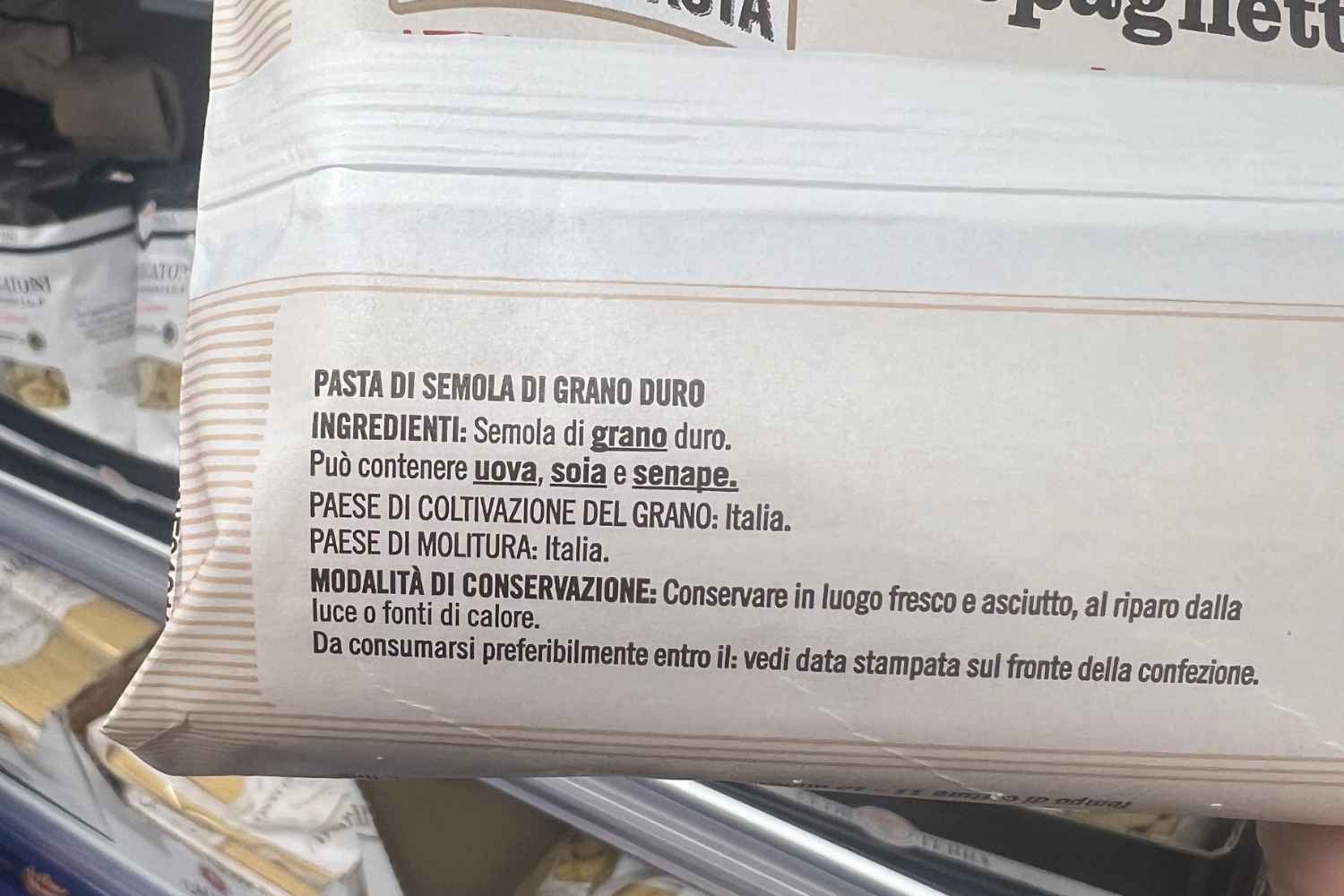
Yes, at least in the case of the packages we photographed. On the front of the Fior di Pasta spaghetti appears the words 100% Italian wheat, confirmed by the information on the back:
The spaghetti are also declared to be bronze drawn, a process that allows for a generally rougher surface to be obtained, capable of retaining the seasoning better. The packaging indicates a cooking time of between 11 and 13 minutes.
Even the homemade Fior di Pasta, which we photographed in the same store, show the Italian origin of the wheat and the bronze drawing, with a cooking time of 10-12 minutes.
Another interesting data can be found in the nutritional table of homemade pasta: 14 grams of protein per 100 grams of pasta. This is a relatively high protein content for a semolina pasta, even if this value alone is not enough to judge its overall quality or its resistance to cooking.
Same manufacturer, but is the quality really the same?
Finding out that a pasta sold at a discount store is produced by the same company as a more expensive brand may be surprising, but a misunderstanding must be avoided: the same pasta factory does not necessarily mean the same pasta. Companies that work for large-scale retail trade can create products with specific characteristics, agreed with each brand.
For example, the selection of semolina, the characteristics of the dough, the production processes and the standards required for the different lines can change.
In the case of Fior di Pasta, the information available on the packaging still allows us to know some concrete elements: the wheat is declared Italian, the pasta is bronze drawn and the producer is clearly identified.
However, for a reliable comparison with Pasta Armando, more detailed information on the respective processes and comparative cooking tests would be needed.
Because reading the label of discount pasta can bring surprises
Fior di Pasta is not an isolated case: many supermarkets and discount stores entrust the creation of their own brand products to companies that also produce products sold under more well-known brands. And precisely for this reason, when we go shopping, it is worth dedicating a few extra seconds to the information on the back of the packages.
In the case of Fior di Pasta di Penny spaghetti, we discovered that behind a discount brand there is the De Matteis group, the same as Pasta Armando, Baronia and Donna Vera.
It is not a guarantee that they are all equivalent pastas, but it is a good reminder: the price and the name printed on the package do not, in themselves, tell the whole story of what we bring to the table.
