

Anyone who own household plants immediately notice it: Each new leaf that opens has a shiny, almost enameled appearance. A brilliance so evident and perfect it seems almost artificial, albeit absolutely natural, that it does not depend on humidity or polishing products, but which seems to blend over time, as the leaf matures. The question arises spontaneously: because the new leaves are so shiny? The answer is more fascinating than it seems and involves plant anatomy, physiology and even survival strategies.
A vegetable skin still “in bands”
The leaves, like our skin, have one Protective external layer: is called cuticle. It is a thin cerosa film that covers the aerial parts of the plant – leaves, young drums and fruits – and which plays a key role in protecting internal tissues from dehydration, pathogenic agents and atmospheric agents.
In new leavesthis cuticle is still in the process of training. The fabrics have just emerged, The cells have not yet completed their maturation cycle And the production of epicutical waxes – compounds responsible for water -repellent protection – has not yet reached the typical levels of adult leaves. The result? A smooth, thin and compact surfacewhich reflects the light evenly. Hence that almost glazed brilliance, which tends to turn off when the leaf completes its development.
It is not humidity: it is physiology
At an inexperienced eye, those leaves may seem wet or treated with polishing products. In reality, they are perfectly dry. The “glossy” effect is the result of the Microscopic structure of the young cuticlethat still.
Over time, in fact, The cuticle is enriched with crystalline waxes and thickenslosing part of the original transparency. In addition, the surface begins to show small irregularities, invisible to the naked eye but sufficient to spread the light rather than reflect it directly. That’s why a new leaf may seem like a mirror, while a older tends to have an opaque appearance.
An evolutionary trick?
But why should plants have such shiny leaves at a young age? There are some theories, not yet all confirmed, which offer fascinating explanations. One concerns the defense from UV radiation: the young, thin but compact cuticle could better reflect ultraviolet light, protecting the meristematic cells still in the growth phase.
Another hypothesis involves herbivores: according to some observations, the lucid leaves reflect the light in such a way as to camouflage themselves better, resulting less visible or less attractive to phytophagous insects. It is no coincidence that many tropical plants – accustomed to living in competitive environments and full of predators – present extremely bright new leaves.
What happens in houseplants
At home, the phenomenon is known in particular because environmental conditions – filtered light, constant humidity, absence of wind – favor the production of more delicate leaves. In addition, the lack of stress allows the plant to dedicate resources to the optimal development of the new leaves, which often are larger, more thin and brighter than those that the same plant would produce in nature.
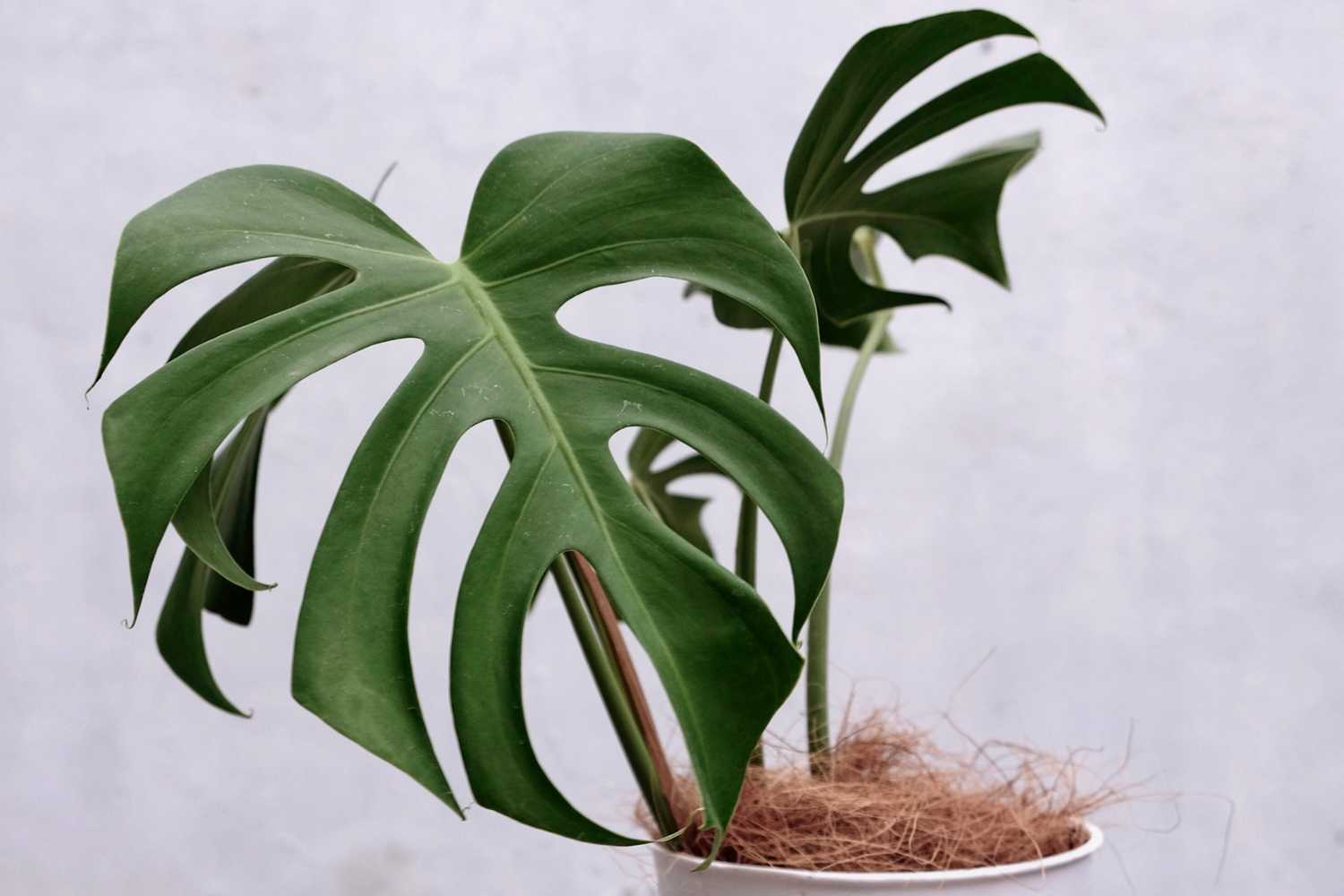
Among the species in which the effect is more visible are the Monsterai Ficus elasticthe Allurei Philodendron and many ARACEAE in general. Each new leaf is rolled up, then it opens slowly like a curtain, letting glimpsed that shine typical of the vegetable structures still “neonated”.
Polishing? No thank you
Many enthusiasts, fascinated by that initial shine, try to artificially maintain it using lucidant products for leaves. It is a not recommended practicefor several reasons. First of all, these sprays can to obstruct the stomathe tiny pores responsible for gaseous exchanges, without forgetting that Oleosa patina can encourage the accumulation of dust and attract parasites Like the labor.
The beauty of the new leaves lies precisely in ephemeral naturalness: They shine for a few days or weeks, then take on the adult aspect, more opaque but also more resistant. It is a completely normal physiological process, which should not be contrasted but observed and understood.
A sign of good health
In the end, A new and brilliant leaf is always an excellent signal: indicates that the plant is growing, which receives enough light, that the roots are active and that the environment is favorable. Each leaf that opens is the result of a long internal work, which often escapes the human eye. The initial brilliance is like a small gift: a visible clue of a hidden but extremely alive world.
In conclusion, The new leaves of the houseplants are so bright not because they are wet or treated, but for a much more fascinating reason: they are still youngcovered with a thin and smooth cuticle, perfect for reflecting the light. A detail that reminds us how complex, dynamic and surprising the plant world is, also on the house windowsill.
