
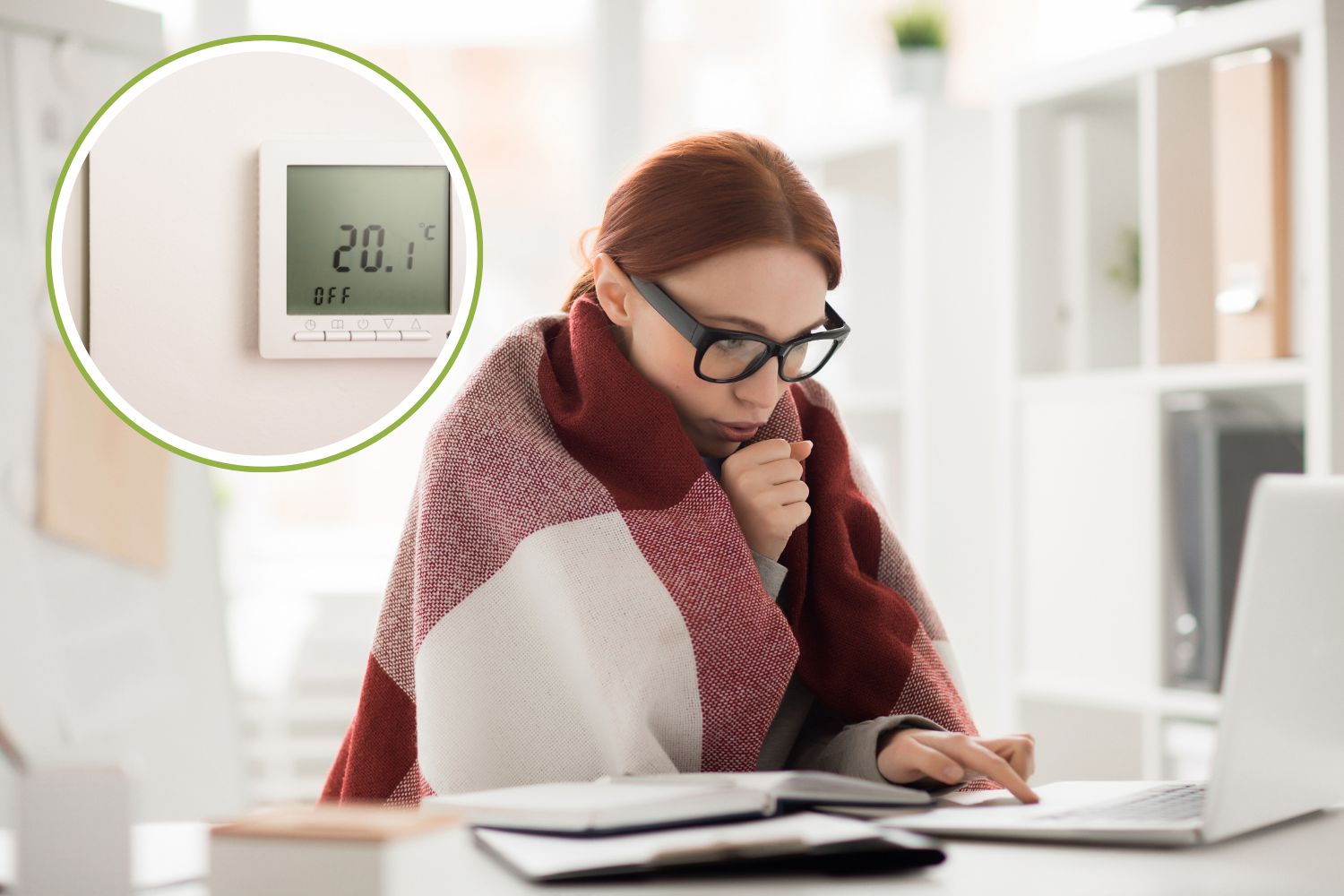
You happen to have cold at home even if the thermostat scores 20 ° C? While someone turns in a shirt, you wrap yourself in blankets and drink hot tea without being able to warm up. It is not just a subjective question: Several factors influence our perception of the coldand do not depend only on the air temperature. Let’s see together because it happens and how to solve the problem.
The perceived temperature: because 20 ° C are not always the same
One of the main reasons you can hear cold despite an adequate ambient temperature It is that the temperature perceived by the body is not the same as that recorded by the thermostat.
1. The isolation and dispersion of heat
If the walls, the floor and furniture are coldyour body will tend to lose heat for compensation. This phenomenon is called thermal irradiation: Even if the air is at 20 ° C, the contact with cold surfaces lowers the perceived temperature. In a house badly isolatedthis feeling is even more intense.
2. Air currents and ventilation
Also i air movements they influence our thermal comfort. A cold air currentperhaps caused by drafts or excessive ventilation, can give the impression of being in a colder environment than it really is.
The role of humidity: when the dry or humid air deceives the body
The relative humidity of the air deeply affects our perception of the cold.
To keep an optimal balance between the 40% and 60%you can use humidifiers or dehumidifiers depending on the need.
Physical factors: why do some people cold than others?
Although two people are in the same environment, they can perceive the cold in a different way. This depends on individual characteristics related to health and lifestyle.
Metabolism and body mass
Circulation problems
If you always have Cold hands and feetyou may have circulatory problems such as the Raynaud syndromewhich reduces the flow of blood to the ends.
Differences between men and women
The women they tend to have colder than men due to hormonal differences and one lower muscle masswhich generates less body heat.
Age and habit of cold
How to fight the feeling of cold at home?
If you have Always cold even at 20 ° Chere are some useful tricks:
If despite these precautions continue to always be coldyou could consider a medical examination to exclude any underlying health problems.
The health risks of a too cold house
A study conducted by Public Health Wales and Bangor University he highlighted that living in a house with a temperature less than 18 ° C can have Negative effects on health and well -beingespecially for elderly people, with pre -existing health conditions or disabilities. The report stresses that those who live in homes are more inclined to respiratory, cardiovascular problems and greater vulnerability to infections.
To ensure a healthy domestic environment, the report recommends maintaining an internal temperature of at least 18 ° C in the most used roomswith a higher value for the elderly and fragile people. The energy crisis and the increase in heating costs make even more difficult for many families to maintain this level of comfort, which is why it is essential to spread information and support to help people protect their health during winter.
