
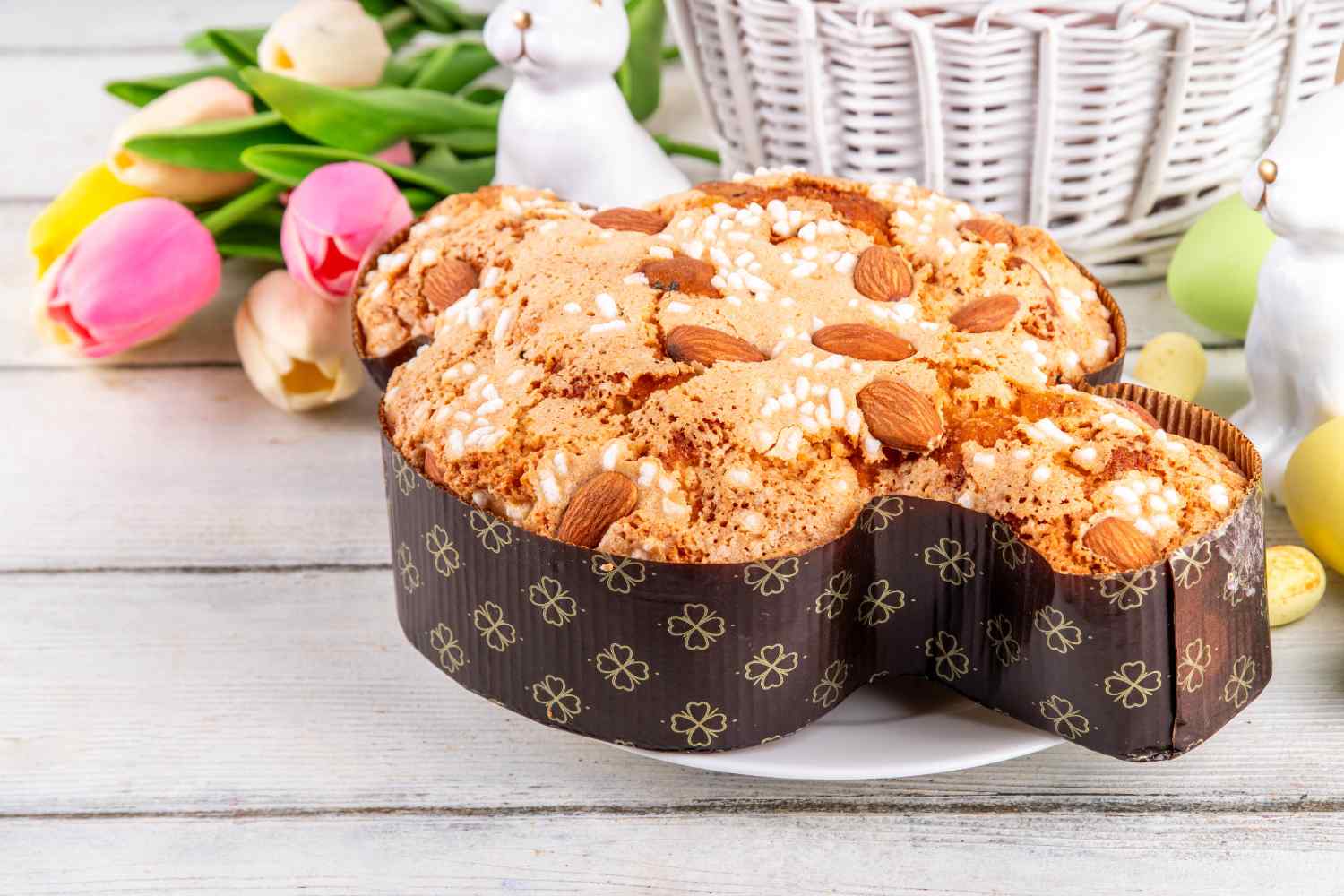
What we are offering you today is the gluten-free recipe for colomba, a classic Easter dessert which unfortunately is taboo for many people suffering from celiac disease or hypersensitivity to gluten. The process is not the simplest, it is quite laborious but with a little patience and dedication it will bring you great satisfaction in the end.
Ingredients for 6 people
Procedure
Peel the potatoes, cut them into pieces and cook them in a saucepan together with the soy milk, rice milk and vanilla pod. Keep the heat low and cook for about a quarter of an hour. Drain them and reduce them to a puree. Soak the raisins in the rum, then drain them and flour them with rice flour.
Melt the soy butter in a bain-marie. Prepare 3 eggs by separating the egg whites from the yolks then whisk the latter with the brown sugar and a pinch of salt. Add the soy butter and the flours sifted with the yeast. Now incorporate the mashed potatoes, the dark chocolate flakes, the chopped almonds and the floured raisins. Whip the egg whites with a pinch of salt and gently incorporate them into the mixture with a movement from bottom to top, to avoid dismantling them. Pour the mixture into a paper mold. Golden the surface with the beaten yolk of the remaining egg and bake at 180°C in a pre-heated oven. Let it cook for about 40 minutes. In the meantime, prepare the icing by whipping the remaining egg white and incorporating a level spoonful of icing sugar; mix until you obtain a thick cream. After 40 minutes, remove the dove from the oven, glaze the surface and add the almonds. Bake it again for about 20 minutes. At the end of cooking, let the colomba cool and dust it with the remaining icing sugar and decorate it with the granulated sugar.
Some advice: if possible, a static oven is better. When you buy dark chocolate, chopped almonds, vegetable drinks as well as icing sugar, rice flour and cornstarch, even if they should have no “other” ingredients, check the label carefully to avoid the risk of coming across products that should be “gluten-free” but which in reality have been added with some suspicious substance.
How to understand if the dove is cooked
The simplest method is the classic toothpick test: poke the center of the dove and if it comes out clean, with no dough attached, the cooking is complete. Keep in mind that with this recipe, thanks to the presence of potatoes, the inside will naturally remain moister than a traditional colomba: don’t be alarmed if the toothpick is slightly moist, the important thing is that it doesn’t come out with raw dough. If you have a kitchen thermometer, the core temperature should reach around 94°C. Avoid opening the oven in the first 30 minutes to avoid collapsing the dough.
How to preserve gluten-free Colomba
Once it has cooled completely, wrap the dove in cling film or place it in a tightly closed food bag to prevent it from drying out. At room temperature it can be stored for 2-3 days, in a cool, dry place away from heat sources. It lasts up to 5 days in the refrigerator, even if it tends to lose a little softness: just heat it in the microwave for a few seconds before serving to regain its original consistency. It can also be frozen, already cut into slices, for up to a month: defrost it at room temperature or in the oven at 150°C for about ten minutes.
Variants for all tastes
This recipe lends itself to some customization without betraying the final result. For a vegan version, replace the eggs with 4 tablespoons of aquafaba (the cooking liquid of chickpeas) and use coconut butter instead of soy butter: the texture will be slightly different but the flavor will remain excellent. Those who don’t like dark chocolate can replace the flakes with candied orange peel or candied lemon drops, which give a fresh and fragrant note perfectly in line with the Easter spirit. For an even tastier version, you can add 30 g of coarsely chopped pistachios together with the chopped almonds.
Frequently asked questions
Can I use cow’s milk instead of plant-based milk?
Yes, if you do not have lactose intolerance or vegan preferences you can easily replace soy milk and rice milk with equal quantities of whole cow’s milk. The result will be slightly richer and tastier.
Can I replace the rum?
Absolutely yes. The rum is mainly used to revive the raisins and flavor the dough. You can use orange juice, apple juice or simply warm water for a non-alcoholic version that is also suitable for children. Alternatively, a teaspoon of vanilla extract added directly to the soaked raisins gives a very aromatic result.
Can it be made without a dove-shaped mold?
Yes. If you can’t find the appropriate mold, you can use a plum cake mold or a 22-24 cm round pan: the shape will be different but the flavor is identical. In this case cooking times could be reduced by 5-10 minutes, so check with a toothpick a few minutes ahead of schedule.
