
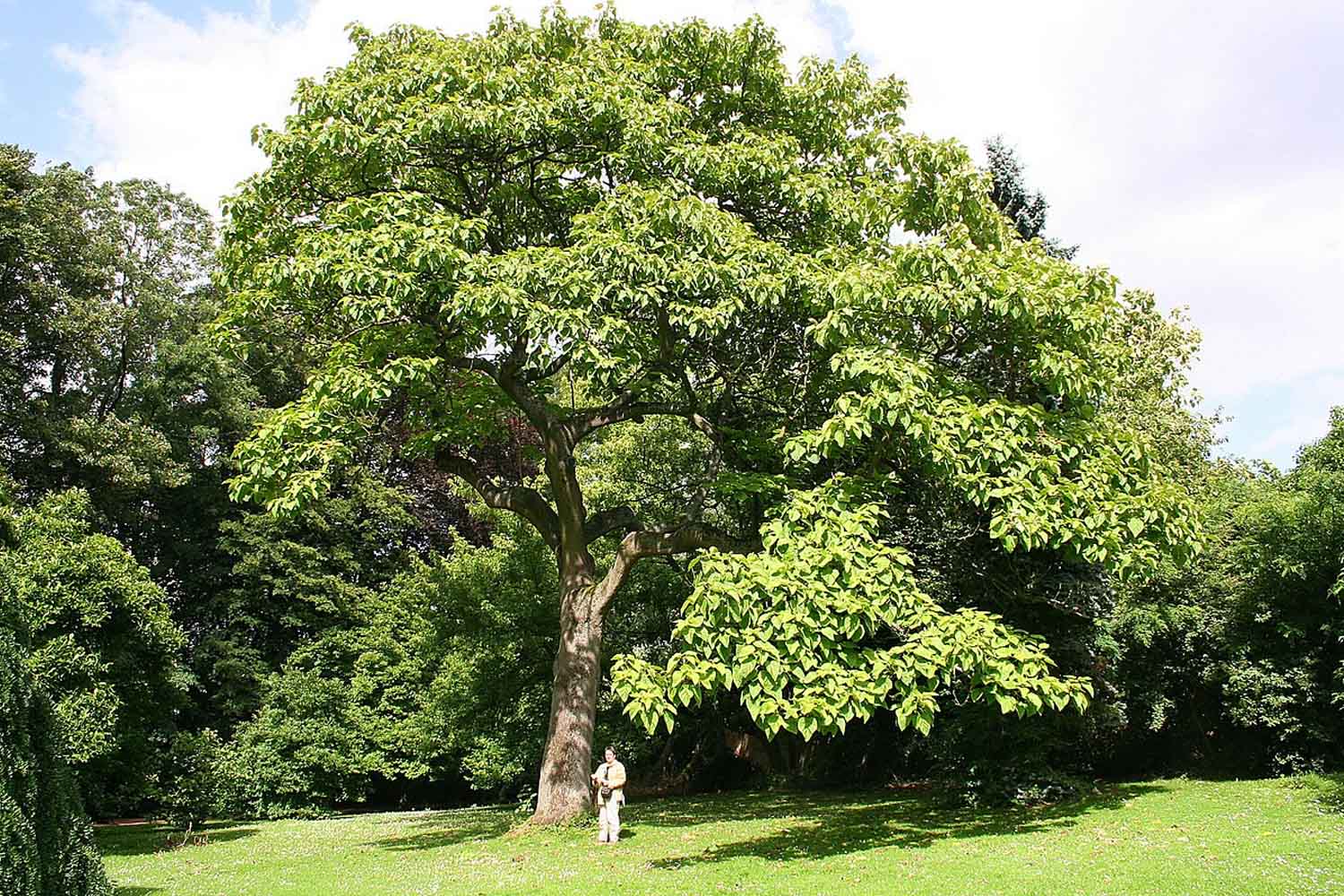
It is growing visibly, promises to absorb large quantities of CO₂ and is described as a possible green gold mine. Paulownia, however, is not just a tree: in recent years it has become an economic narrative, as fascinating as it is slippery. It is no coincidence that this tree is increasingly being compared to a cryptocurrency. But what is really behind this comparison?
Paulownia comes from Asia and brings with it an unwieldy reputation. In ideal conditions it can grow several meters a year, develop a straight trunk and produce a light but resistant wood, highly sought after in some industrial sectors. Added to this is its ability to absorb carbon dioxide in quantities greater than many traditional species. Put like this, the story seems perfect: rapid growth, “precious” wood, ecological promise.
It is on this ground that the figures capable of making your eyes shine are born. We are talking about initial investments of around 7,000 euros per hectare, with projections reaching 80,000 euros in revenues after eight to ten years. Numbers that, read without context, transform a tree into a financial product. And this is where the story starts to resemble that of cryptocurrencies: a few amplified examples of success, a lot of emphasis on potential, very little attention to real variability.
From earth to numbers
In recent years the Paulownia tree has entered the vocabulary of investors and farmers as a diversification tool. There are those who compare it to photovoltaic panels, those who see it as a bet on the future of wood and those who simply hope to give value to less productive land. Some companies offer hybrid seedlings, wood collection contracts and reassuring economic plans.
The problem is that, as happens in speculative markets, reality rarely follows a single script. Paulownia growth is not always uniform. It depends on the soil, water availability, exposure to wind, late frosts. In many cases, the first year does not give record trunks but plants that advance a few centimeters. Nothing but an upward race.
Between sustainability and greenwashing
The image of Paulownia as a universal ecological solution is perhaps the most delicate aspect. It is not a native species and, if poorly managed, can create problems in controlling growth and shoots. It requires water, protection, towels and constant care. Other than a tree that grows alone.
Paulownia: another 2000 trees planted in Piedmont to fight pollution with the plant that absorbs the most CO2 in the world
From an environmental point of view, the benefit depends entirely on the practices adopted. Intensive cultivation, excessive irrigation and careless use of the soil risk transforming a green promise into a greenwashing operation, where the ecological message covers very concrete critical issues. It is no coincidence that some experts urge caution, recalling past cases of species promoted as “miraculous” and then becoming problematic.
Paulownia, when planting trees makes the territory flourish and the economy blossom: the reforestation of Lankao
Paulownia and cryptocurrencies: the comparison that causes discussion
The comparison with cryptocurrencies does not arise by chance. In both cases we are talking about potential, not certainties. The stories of those who have earned a lot are told, but little is said about those who have not achieved the desired results. A complex system is simplified to make it attractive, forgetting that there are skills, risks and long lead times behind it.
Like bitcoin, Paulownia can provide satisfaction, but it is not a shortcut. It is not a scam per se, nor a magic tree. It is a choice that requires study, knowledge of the area and a long-term vision. Thinking of it as an easy income means exposing yourself to disappointment.
Paulownia remains a fascinating plant. It asks interesting questions about how we produce wood, how we absorb CO₂ and how we imagine the agriculture of the future. But the biggest mistake is confusing enthusiasm with analysis.
Before planting or investing, you need to look less at brochure numbers and more at local data, field experiences and real conditions. The real risk is not the tree, but the narrative that surrounds it. Just as happens in the world of cryptocurrencies, where the dream of quick profit often overshadows complexity.
You might also be interested in:
