
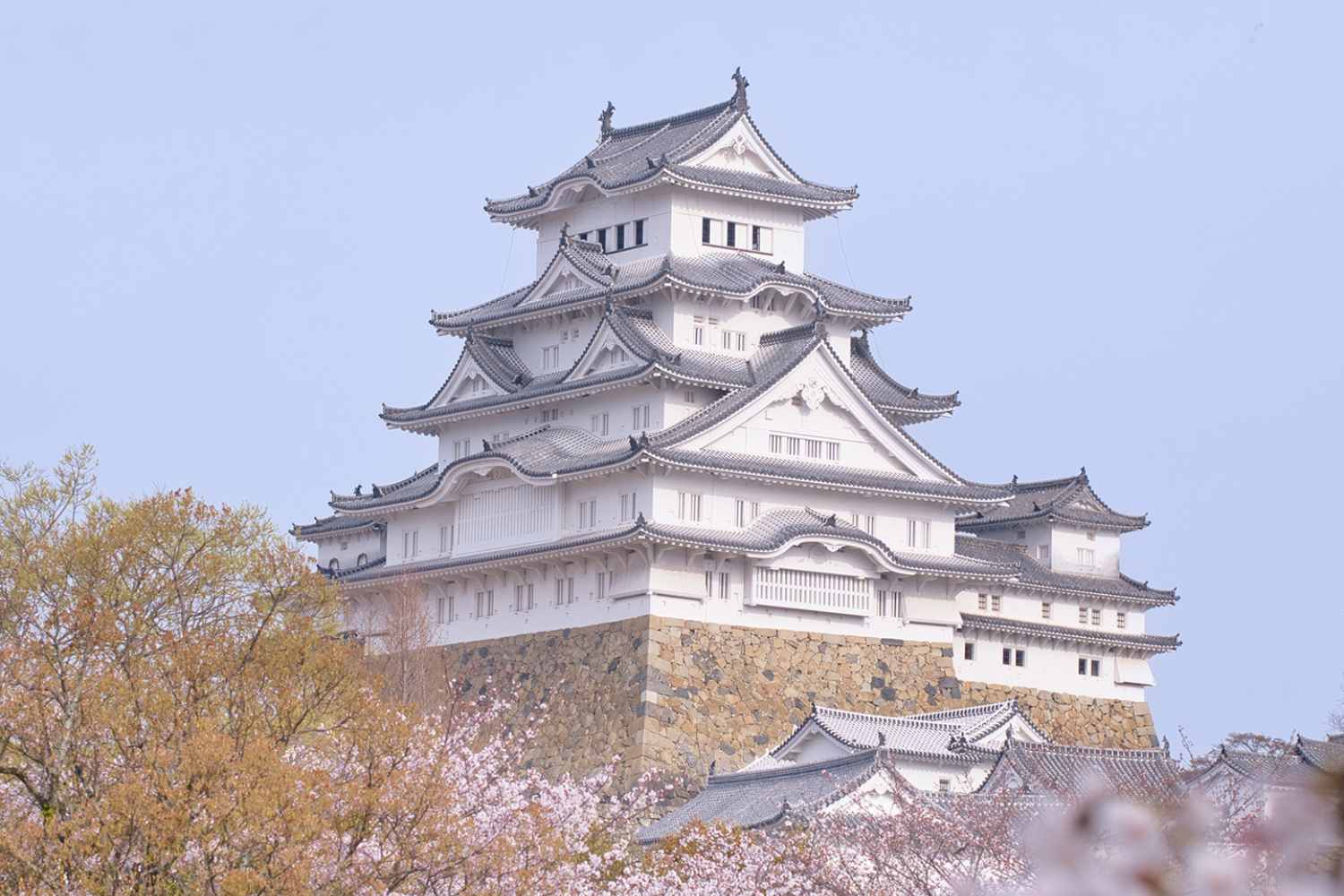
Two thousand five hundred yen against one thousand: at Himeji Castle, from March 1, 2026, a foreign tourist will pay two and a half times what a city resident pays to enter. It is the most cited case of a trend that is taking shape throughout Japan, but which, unlike what is circulating on social media, is not at all (at least for now) a national law already in force. The castle is nicknamed “the castle of the white heron”, due to the white roofs arranged on several levels, and represents the best preserved samurai fortress in the country, as well as a UNESCO site since 1993. Until February entry cost 1,000 yen for all adults, while starting from last March non-residents pay 2,500 yen, according to what was published on the official website of Himeji Castle (in the context of castles, these are the most expensive ticket in all of Japan, as also confirmed by the Nihon Keizai Shimbun, the Nikkei) while residents, who must prove their status via the My Number Card, driving license or residence permit, continue to pay the usual amount. Under 18s get in free, regardless of where they live.
@city.himeji.lg.jp
The managing body does not like the term “double price”, it prefers to talk about a single rate with a discount for those who live in the city and already contribute, with local taxes, to the maintenance of the monument (this is what we read in the same official communication from the Municipality of Himeji). A clarification that serves to dampen the controversy, but which does not change the numbers: according to the Nikkei, the Municipality expects 2.2 billion yen in ticket revenues for the current fiscal year, about a billion more than the previous period, a figure that will serve to cover the 28 billion yen of maintenance and anti-seismic reinforcement of the walls expected in the next ten years, almost double what was spent in the previous decade.
A national rule does not yet exist
Here is the point that is worth clarifying, because it is the one about which there is the most confusion. The first meeting of the “study group on tariffs for tourist facilities and services”, established by the Japanese Tourism Agency, was held on 27 April 2026: this is confirmed by the official page of the Ministry of Infrastructure, Transport and Tourism, which also reports the opening speech of Commissioner Shigeki Murata. The group, chaired by Professor Noriko Yagasaki of Tokyo Woman’s Christian University, has the task of analyzing the cases already started in the area and providing them as a reference for other administrations. The guidelines, whose establishment had already been anticipated in March by the Jiji Press agency, should be ready by the 2026 fiscal year, which in Japan ends in March 2027. Until then, each municipality or manager decides on its own, therefore there is no mandatory double tariff for the whole country, but rather a mosaic of local initiatives that the agency is trying to systemise.
Where it already applies, besides Himeji
The model is expanding, albeit patchy. In the city of Kyoto, an increase in city bus fares for non-residents is being studied, with a possible doubling of the ticket price, the introduction of which is hypothesized for the fiscal year 2027. In Nagano Prefecture and in Biei, in Hokkaido, surcharges for non-residents are already applied on spas (onsen) and parking in the busiest areas. Junglia Nature Park, which opened in Okinawa in July, charges foreigners 8,800 yen versus 6,930 for Japanese residents. Several national museums, including the Tokyo National Museum, are evaluating the adoption of differentiated tariffs by 2031. To be kept separate, because it is often confused with dual pricing, the so-called “sayonara tax”: the exit tax from the country, which has risen from 1,000 to 3,000 yen from 1 July 2026, applies to anyone leaving Japan by air or sea, without distinction between residents and tourists.
