
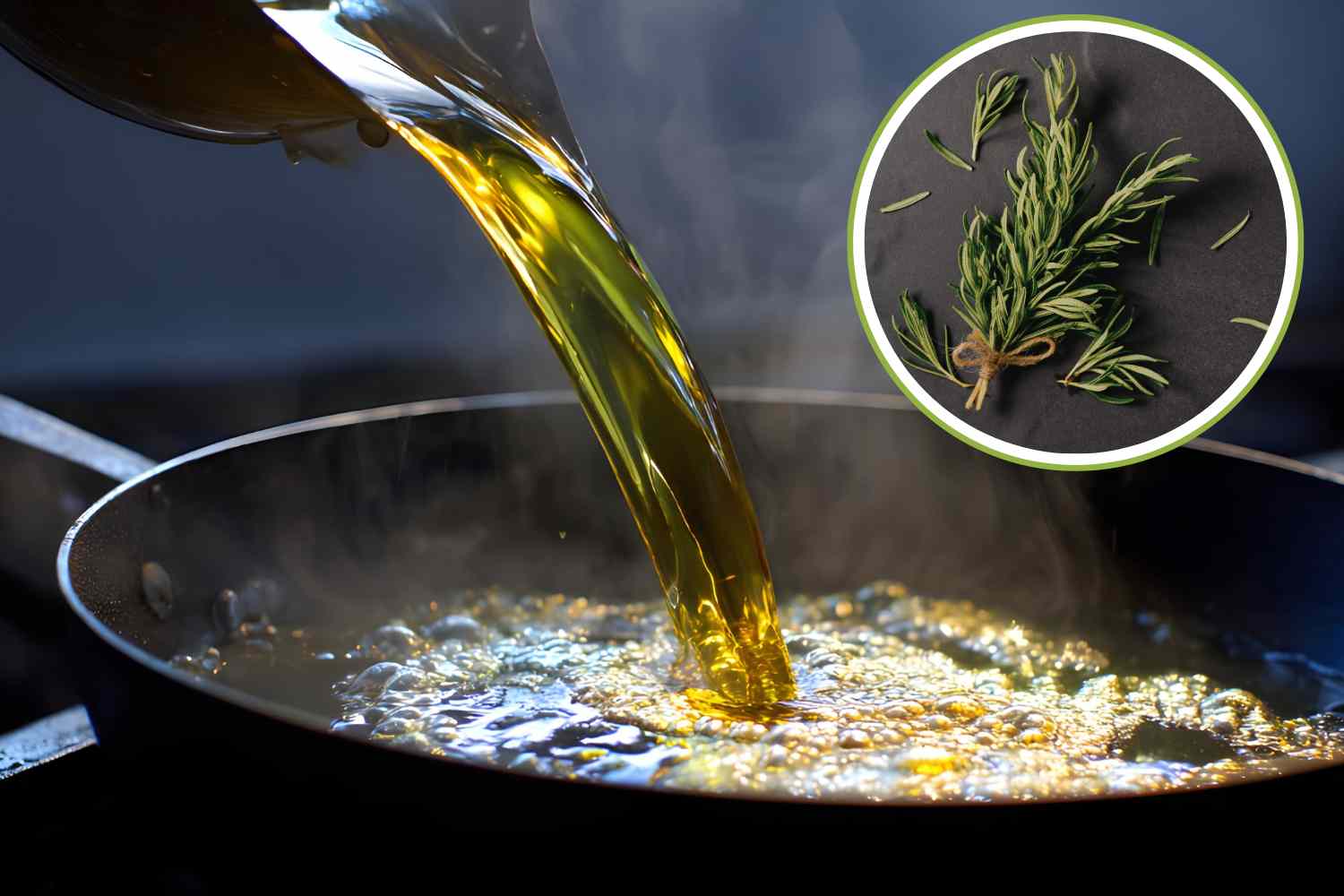
There is a precise moment, when the oil just begins to quiver in the pan, when certain chefs insert a sprig of rosemary into it. Not to make a scene, not for the scent that rises. For a kind of little trick handed down from hand to hand over the years: in this way, they say, fried food is more digestible.
It seems like one of those pieces of advice that circulate around home kitchens, half practical wisdom and half legend. The kind of thing you do because someone before you has always done it, without anyone ever feeling the need to explain why. And then the question arises: does it really work, or is it just gastronomic folklore that has survived by inertia?
What happens in hot oil
Rosemary isn’t just a roasting herb. It contains molecules with antioxidant properties – rosmarinic acid and carnosic acid, among the main ones – which in the industrial sector are already used as natural preservatives to slow down the deterioration of fats. When the oil gets very hot, it inevitably starts to degrade: oxidized compounds are formed which give that typical heavy smell of fried foods that have been reused too many times, and which make the fat more difficult for the stomach to dispose of. The substances in rosemary can slow down this process. They don’t block it, but they slow it down. This is why the gesture has its own logic, and why the sprig in the oil is not that rare in professional kitchens.
The most common misconception
But here’s where the donkey falls. Partially slowing down the degradation of the oil is not the same thing as making fried food light or digestible in the full sense. Food continues to absorb fat, calories don’t magically disappear, and the work that awaits the stomach remains the same. Anyone who thinks that a green sprig is enough to transform a tray of biscuits into something innocent is telling themselves a reassuring story, and they understand it quite quickly. Fried food stays fried.
Where the difference really lies
Those who fry regularly know that the variable that matters most is not an aromatic herb, but the temperature. Oil too cold and the food acts like a sponge, absorbing lots of fat. Oil too hot and the surface burns before the inside is cooked, while the oil itself spoils quickly. The right window is narrow: around 170-180 degrees, depending on what you are cooking.
The choice of oil also matters. Not everyone handles heat the same way. Oils rich in monounsaturated fats — such as extra virgin olive oil or peanut oil — have a thermal stability that many more delicate seed oils cannot boast. This is why they have been used in Mediterranean cuisines for centuries. Rosemary, in this context, is almost a side note.
Because the gesture of rosemary survives
Yet that sprig keeps appearing in the pans. Perhaps because something, in a small part, really does it: it slows down the degradation of the oil a little, leaves a clean aroma in the air, gives the impression of more careful and conscious frying. He doesn’t change the rules of the game, but respects them in his own way.
And then there is another reason, less scientific but perhaps more honest: in the kitchen certain gestures survive even when the rational explanation that supports them is more modest than the story that accompanies them. They are passed down because someone saw them done, because they work at least a little, because they give rhythm and meaning to an otherwise mechanical operation. That twig that sizzles as soon as it touches the hot oil is also this – a small kitchen ritual, neither entirely myth nor entirely science.
