
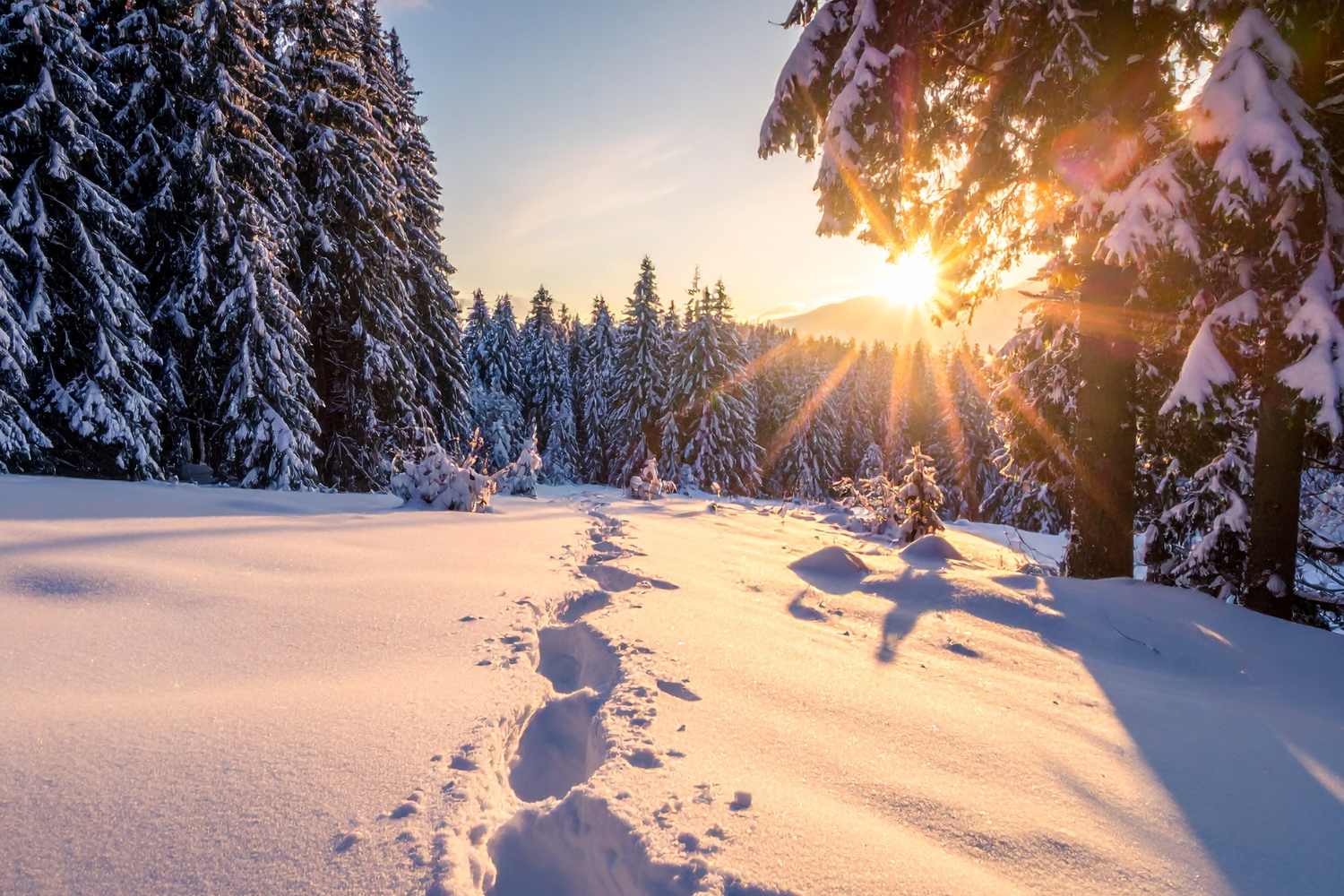
Winter is coming! This year the winter solstice falls Sunday 21 December at 4.03pm (Italian time). It is not just a symbolic anniversary, but a very specific astronomical event that marks the official start of the winter season in the Northern Hemisphere. In our hemisphere the winter solstice coincides with the shortest day and longest night of the year. The reason is simple and has nothing mystical: the Earth’s axis is inclined by approximately 23 and a half degrees with respect to the plane of the orbit and, in this period, the North Pole faces away from the Sun. As a result, sunlight hits the Earth with a smaller inclination and the hours of illumination decrease drastically.
As also happens with the equinoxes, the date of the solstice is not fixed. It may fall between December 20th and 23rdalthough it is quite rare for it to happen at the extremes. The most common dates remain December 21st and 22nd, the ones that statistically repeat most frequently. From the day of the solstice onwards, however, something happens that often goes unnoticed: the days slowly begin to get longer. At the beginning it is a matter of a few seconds, almost imperceptible, but the process is unstoppable and will gradually lead towards spring, until the next summer solstice, scheduled for 21 June 2026, when the maximum hours of daylight will be reached.
A moment of rebirth celebrated since ancient times
For many ancient civilisations, the winter solstice represented a true rebirth of the Sun after the period of maximum darkness: it is no coincidence that it was celebrated with rites and festivals. In ancient Rome the Saturnaliadays of wild celebrations that have influenced some modern Christmas traditions. In Nordic cultures the solstice symbolized the progressive victory of light over darkness, while in many agricultural societies it marked a turning point in the cycle of the year.
Even today, the winter solstice is celebrated in many parts of the world. In Northern European countries, bonfires and candles are lit as a symbol of protection and the return of light. In the Neolithic site of Stonehengein England, hundreds of people gather at dawn to witness the alignment of the Sun with the thousand-year-old stones.
It too Yule, a celebration of Germanic pagan origin much older than Christian Christmas, it was born as a celebration of the winter solstice. In ancient Nordic societies, which lived in very harsh environments and with extreme winters, Yule was a rite of survival and hope. Passing the solstice meant having passed the most critical point of the year. It is no coincidence that the Sun was seen as a divinity that was “reborn”, destined to come back strong in the following months. One of the central elements of Yule was the log, a large log that was lit in the hearth and burned for days. Fire symbolized the light that resists the darkness, the protection of the home and the continuity of life. Many modern traditions derive from here, such as Christmas candles, decorative lights and even the dessert called “Christmas log”.
