
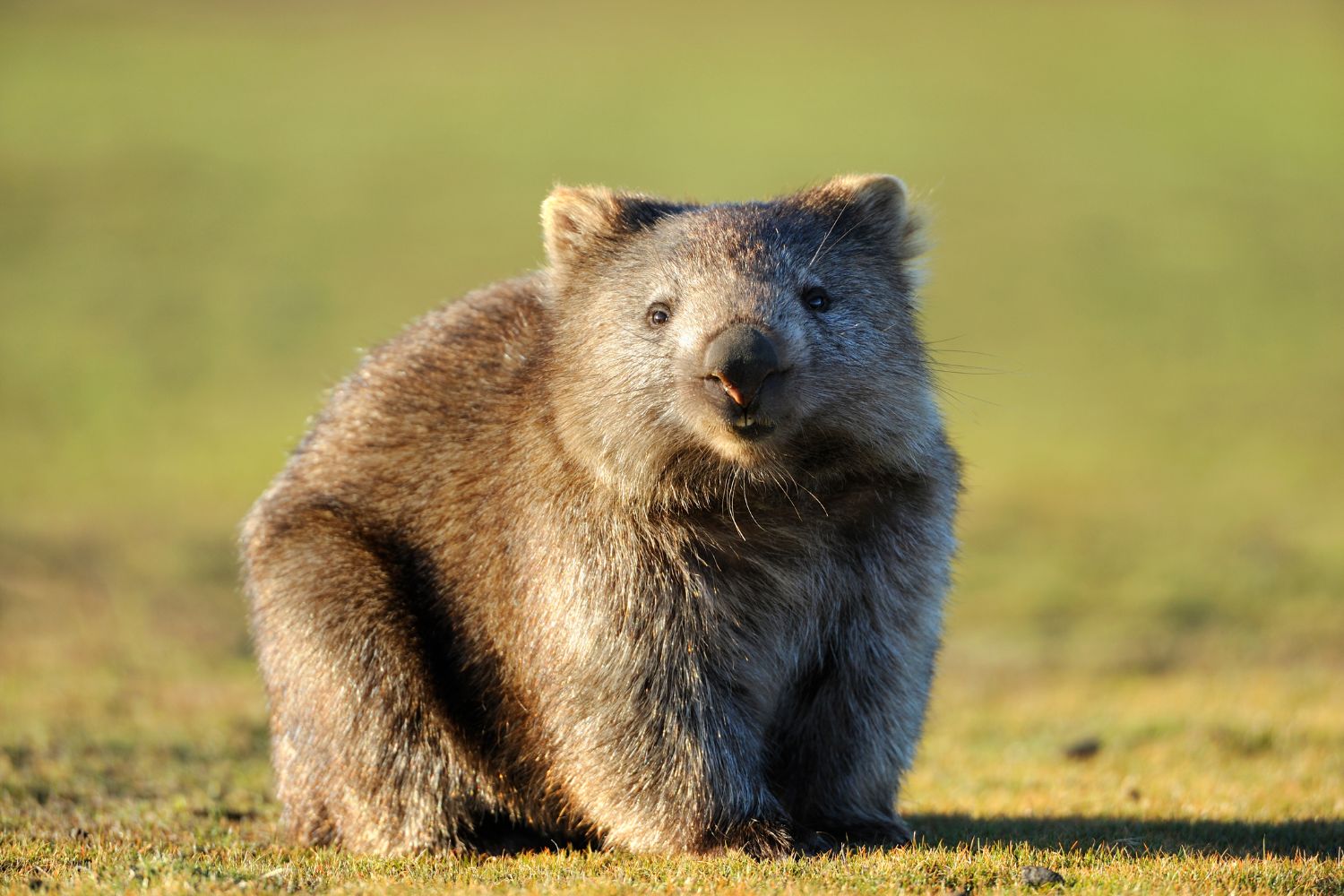
We already knew it: the wombat poops in cubes, and we also knew why. But now we know something more: the small marsupial native to Australia uses its very particular feces, unique in the animal kingdom, to communicate with its peers. The study was led byUniversity of Georgia (USA).
Wombats’ cube poop and the IgNobel prize
A research group led by Georgia Institute of Technology had discovered in November 2018 that these delicious inhabitants of the oceanic continent have a “technique” with which they compress their feces, shaping them into a cube shape just before expelling them. And what seems even more absurd, but real, is that this shape is maintained even when passing through the anus, which is notoriously round in shape.
The wombat is the only living being currently known to perform this “feat”. Cubic structures are indeed rare in biology because flat surfaces and sharp corners require a lot of extra energy. The sphere is much more “comfortable” because it is much less expensive, and nature, as we know, aims to save money.
But the wombat’s intestinal walls, which show variations in elasticity, would shape the unusual structures. In other words, since the marsupial’s intestine is not homogeneous, neither are its “products” homogeneous, so that the less elastic and more rigid sections are responsible for the sharp edges. Since wombats are herbivores and live in very arid areas, they produce dry and compact feces, remaining so even after expulsion.
An unlikely research that could be useful for both biology and mechanical engineering, and which, very improbably, comes from physicists who have worked in the biological field. All this earned this research group the 2019 Ignobel Prize for Physics.
A new discovery
Now, the same scientists have noticed that wombats leave their characteristic feces near landmarks, such as large rocks, to create latrines where they apparently share information.
In reality, these marsupials are notoriously antisocial creatures, avoiding interactions with each other except for mating and raising their young. They change dens every few days, often returning to a previous home. Furthermore, being nocturnal animals, their eyesight is not great. Yet, they defecate in communal areas called latrines, and their square stools stay put, rather than rolling away.
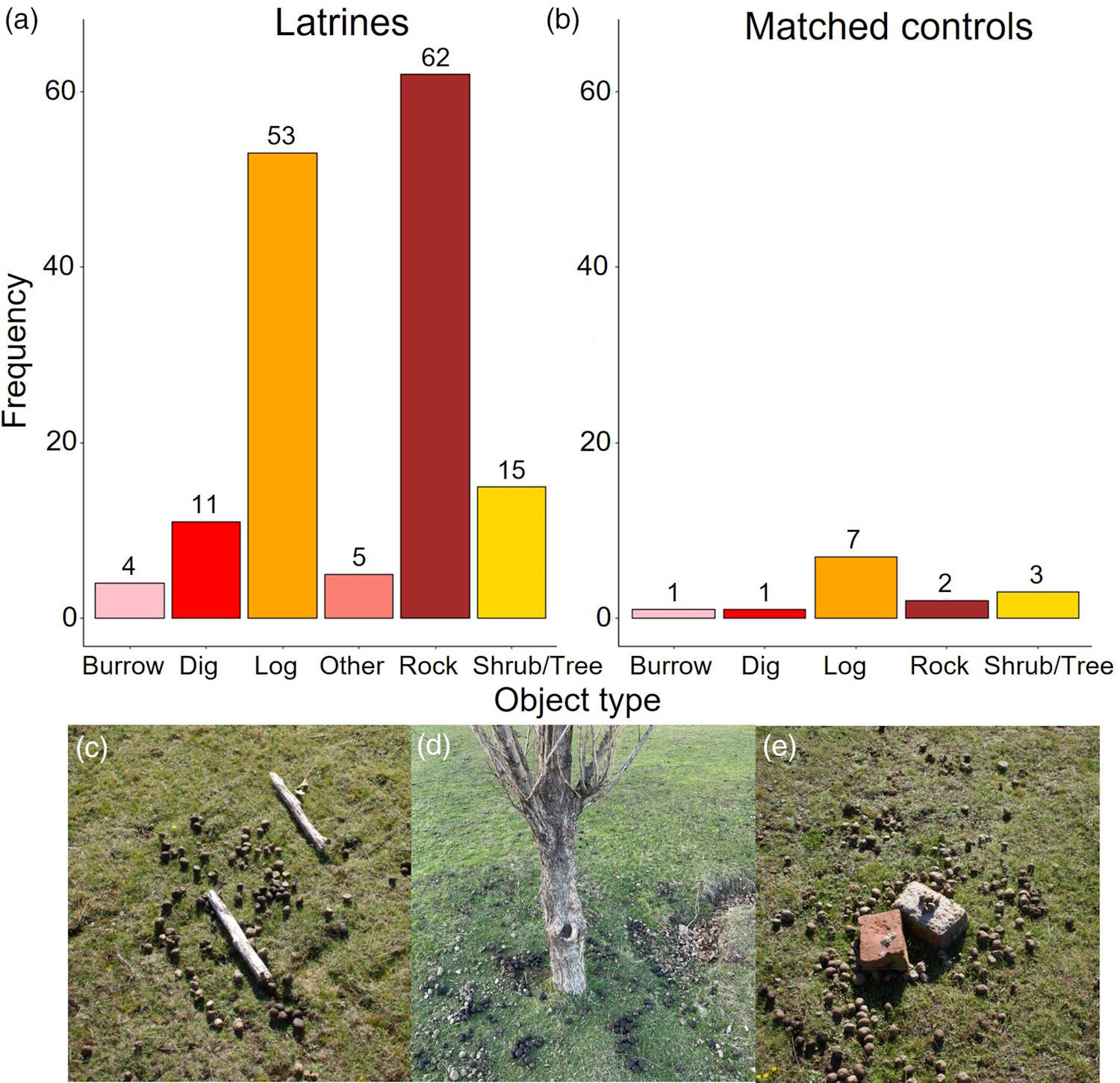
We have clues that make us think how these latrines are important for wombats, who find objects, such as logs or large rocks and collect their feces there – explains Scott Carver, who conducted the work and who was awarded the IgNobel prize in 2019 – We were led to believe that it was olfactory communication, but there is no research on the matter
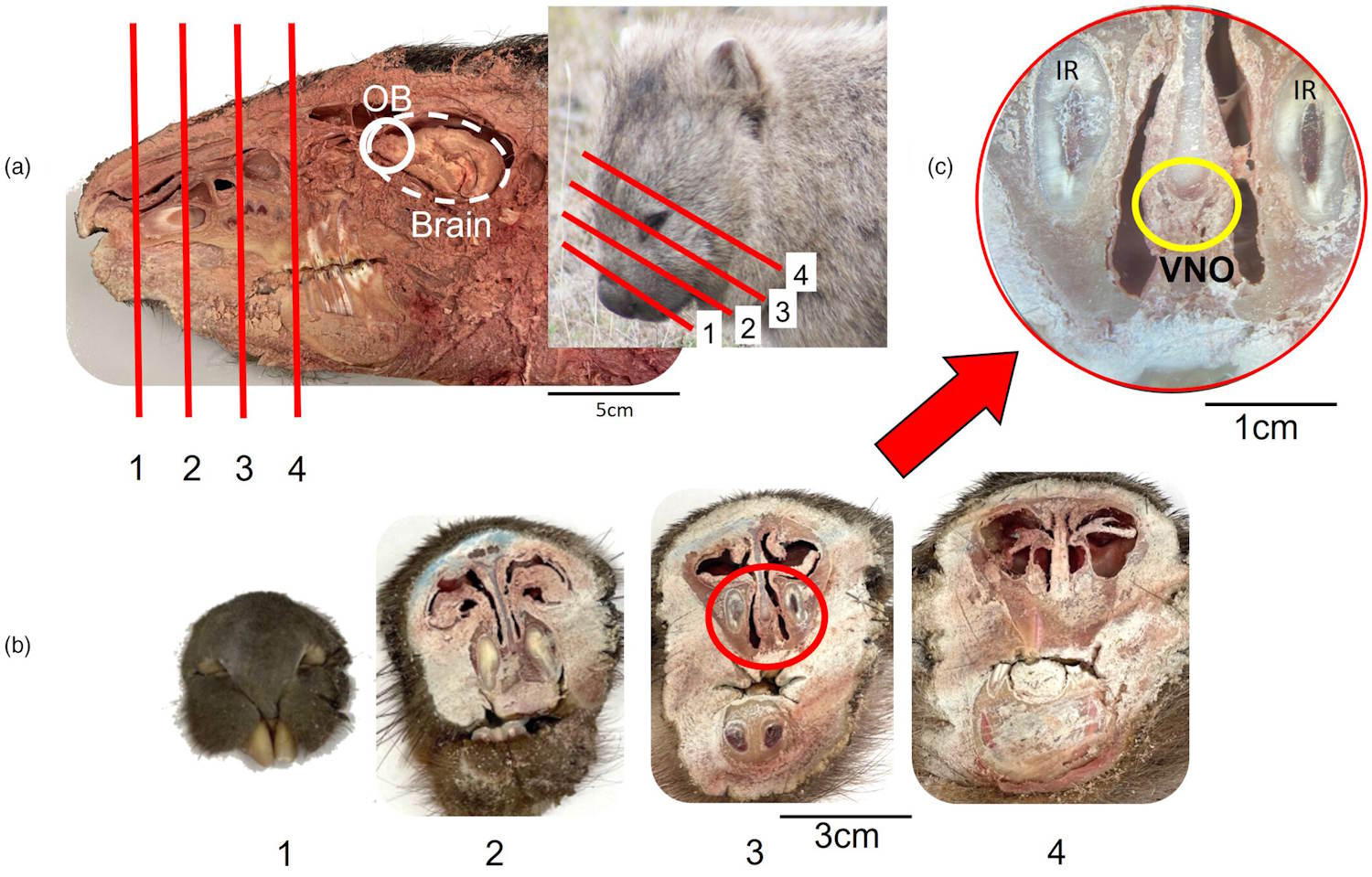
Under Carver’s leadership, Kate McMahon ofUniversity of Tasmania began studying the anatomy of wombats, demonstrating that their skulls contain a vomeronasal organ responsible for an exceptional sense of smell.
If you see your cat twisting its face, it means that it is actually exposing the odors of the environment to its vomeronasal organ – continues Carver – With snakes, this response is really evident because they basically pull their tongue back over this organ. Dogs also do this a little, but in primates this characteristic is greatly reduced
With this in mind, the researchers took wombat feces and analyzed them using gas chromatography and mass spectrometry and found 44 distinct compounds.
We were able to demonstrate that there are individually distinct chemical signatures – or individual odors – in feces. Wombats have good sensory facilities for smell and individually distinct chemical mixtures, so they probably can distinguish individuals
To test whether each wombat communicates its presence, and to find out who else is nearby, the researchers took feces from a distant latrine, placed it in one outside the original neighborhood, and set up a wildlife camera to see how the wombats would react.
What we found was that they actually spent a lot more time inspecting latrines that had individual non-resident feces added to them. Thus, they could detect the arrival of a new individual in their population or local area just by the presence of feces
Wombats thus appear to recognize different individuals from the chemicals in their feces, but researchers suspect that this way they also learn information about their neighbors’ sex, age, reproductive status and more.
These were small experiments to get a good starting point on different aspects of wombat communication. In the future, we could do much more to understand the chemical compounds and signals associated with olfactory communication in wombats and mammals in general
The work was published on Journal of Zoology.
Sources: University of Georgia / Journal of Zoology
