
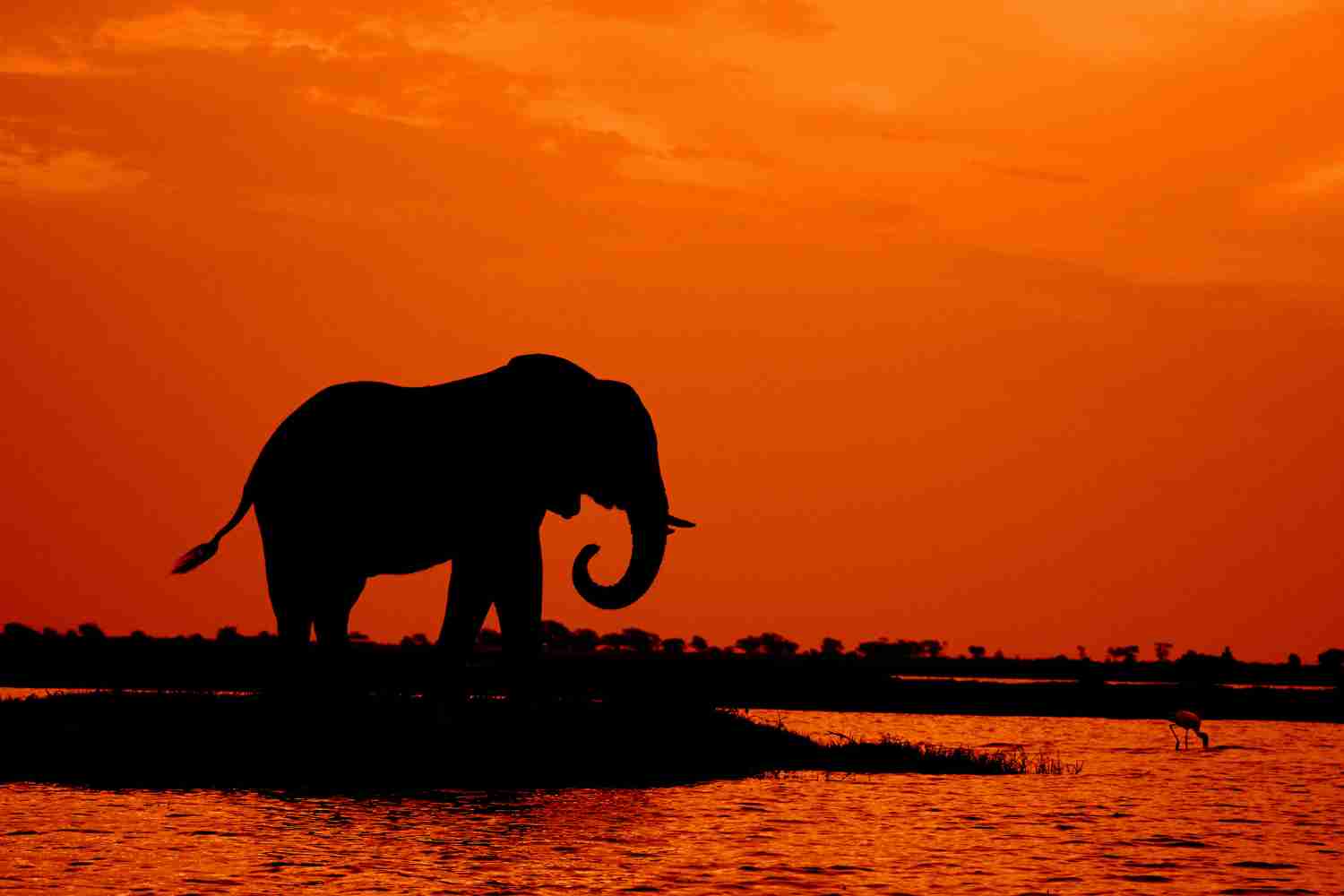
The Zimbabwe Back in the spotlight of the international community for a decision that reopens a wound never healed: theElephant removal. At least fifty specimens will be killed in the Save Valley Conservancya private reserve in the south-east of the country, where-according to an air census of 2024-about 2,550 elephants live in the face of an estimated ecological capacity in 800. A drastic measure, which the authorities define a “management operation”, but that many observers consider a return to practices that put the survival of the species at risk.
To motivate the intervention, explain the managers of the Zimbabwe Parks and Wildlife Management Authority (Zimparks), it is the impossibility of transferring the animals to alternative habitats: “There are no suitable and free areas from elephants in a practicable distance,” said the spokesman for the Save Valley Conservancy in ABC News. Zimparks spokesman, Tinashe Farawohe specified that it is not technically a “demolition”, since this “would entail the elimination of the entire herd en masse”.
View this post on Instagram
The flesh of the killed elephants will be distributed to local communities affected by food deficiencies, while ivory will be taken over by the state authorities. However, it cannot be sold on the international market, since they submitted to the ban imposed in 1989 by Washington Convention on the trade of threatened species (Cites). The country already retains great stocks of Zanne who cannot legally place on the global market.
It is not the first time that Zimbabwe has resorted to this strategy. Already in 2024, and even before in 2018, hundreds of elephants had been transferred or killed to contain an excess population in ecologically fragile areas. In 2023, the demolition of about 200 elephants was motivated by a devastating drought that had compromised the available resources. In a similar context, also the Namibia – neighboring country – has recently authorized the demolition of Over 700 wild animals.
The heart of the problem lies in an increasingly fragile balance between conservation and survival. On the one hand, the African elephant (Loxodont Africana) is classified as Species at risk in the Red list of the iUcnhaving lost about 50% of their habitat in the past 75 years. The global population is today at just over 415,000 individuals, in marked decrease compared to the 526,000 estimated in 2006. On the other, climate change and anthropic pressure intensify the conflicts between elephants and human communities, especially in the regions affected by drought and scarcity of resources.
“Elephants destroy collected, damage houses, put people’s safety at risk,” say local authorities, who justify the felling as the last resource in the absence of alternative logistical and economic solutions. However, conservation experts report the lack of long -term strategy and fear that the regular killing of the elephants will become a shortcut in order not to face the real causes of the problem.
According to a study published by Department of Biology of the University of Aveiro (Portugal), the reduction of elephants is mainly due to poaching and fragmentation of the habitat due to agricultural expansion. The interaction with local communities is a critical node: the peaceful coexistence projects and economic redistribution of natural resources are still too weak to support the pressure of one of the most emblematic and impressive species of Africa.
The story of the Save Valley Conservancy highlights how, in the absence of structured plans of coexistence between man and wildlife, the most drastic solutions end up prevailing. Despite the reassurances on the distribution of the meat and the custody of the ivory, the basic question remains: It is really inevitable to respond to the environmental crisis with new killings? And above all, who pays the price – Ecological, ethical and symbolic – of these choices?
In the meantime, the protests of international environmental organizations continue to be felt. According to them, the demolition of specimens belonging to an already threatened species cannot be passed off as a “management”, but it should be the extreme ratio in a context of Emergency declared and shared on a scientific level.
The ongoing climatic crisis and demographic pressure make these conflicts more and more frequent. Without a paradigm change in the management of wildlife – which intact environment, development and human rights – it will be difficult to prevent such massacres from becoming the new normality.
