
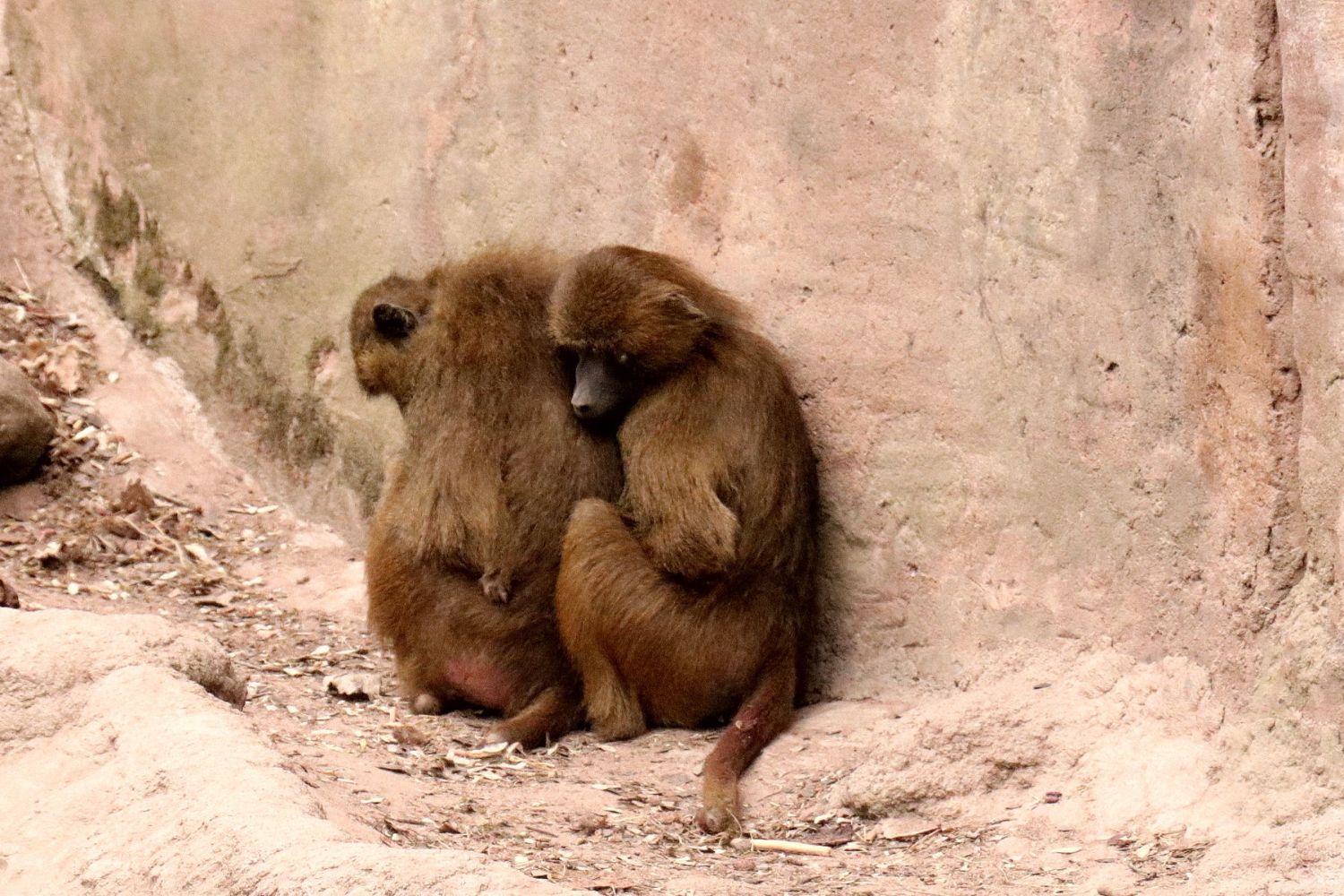
In February 2024, The Tiergarten Nürnberg zoo, in Germany, he announced the intention of Keep some baboons of Guinea hosted in its structures because they are considered “in supernumero”. The news aroused large controversy, highlighting one of the most delicate themes in the field of animal welfare: are the zoo really arise to protect the species or do they risk transforming into places where some individuals, considered superfluous, end up being sacrificed?
The declaration of the German zoo leaves no room for misunderstandings: after trying to transfer the baboons to other structures, and having evaluated the expansion of the spaces, The managers opted for the demolitionjustifying it as a necessary choice to maintain a manageable reproductive group and optimal genetic variability. According to Tiergarten Nürnberg, the selective reduction of the population would be the only solution that remained to guarantee adequate living conditions for animals.
The controversial choice of the abatement
According to some researchers and veterinarians, eliminating the elderly or no longer useful for reproductive purposes would be a “natural” strategy to ensure the vitality of the group and contain management costs, as well as, they say, teach the public the cycle of life e of death. An emblematic case remains that of 2014, when at the Copenhagen zoo A young giraffe named Marius was suppressed and sectioned in publicin a defined operation “educational” by his own managers.
Supporters of this line explain that captivity reproduction requires Eliminate the surplus to maintain stable social groups. They also believe that interventions such as contraception can be harmful, interrupting natural processes and compromising the well -being of animals, deprived of reproductive instinct and the possibility of breeding their puppies.
What alternatives possible?
From an ethological point of view, the situation is much more complex, as explained a few days ago in La Stampa The Ethologist and President of the Ethics Association Science Chiara Grasso. The well -being of an animal does not depend only on its reproductive potential. To deeply affect factors such as social relationships, the dimensions of the habitat, environmental enrichment, psychophysical health and the quality of veterinary care. The sterilization, if performed adequately, can represent a less bloody solution than the demolition, avoiding unwanted pregnancies and alleviating the management pressure on the structures.
In addition, the expansion of the spaces and the creation of networks between different zoo could also help in the relocation of animal animals. Structures with large territories or oriented towards safeguarding specific species can, if well coordinated, to welcome new individuals without clashing with capacity and resources limits. This would make the abatement really the last, extreme resource.
Education or “spectacularization” of death?
One of the most controversial aspects concerns the so -called “pedagogical” value of these killings. Zoo aims, at least on paper, to raise awareness of visitors to nature and respect for animals. However, transforming death into a show or a striking event risks obtaining the opposite effect. If it is true that ecological processes provide for mortality, it is equally true that the euthanasia of an animal in an artificial environment does not reflect neither the wild dynamics of predation nor the complexity of natural balances.
Openly show the killing of an individual bred in captivity raises doubts about the educational effectiveness of these practices. Those who deal with ethology and fauna protection underline that there is nothing “natural” in an animal that, instead of dying of natural death or being prey to a predator in a wild context, be suppressed and then dismembered for demonstration purposes.
