
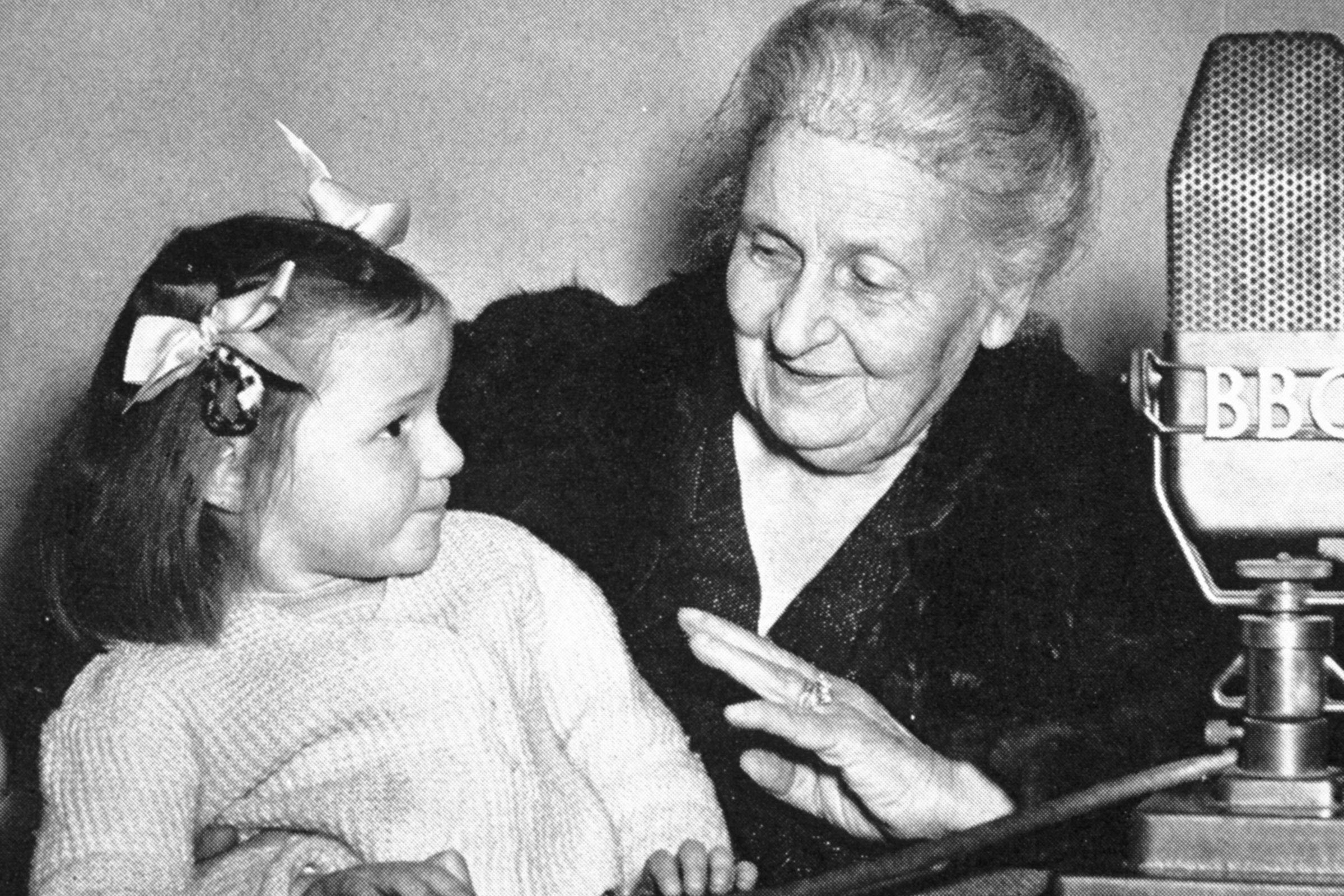
The Montessori method provides parents and teachers with suggestions and principles for educate children to happiness and freedom. In the world, the Montessori method is present in thousands of schools with maximum diffusion in the United States and is applied in over 100 Italian schools.
In the Montessori method, children should have the opportunity to choose the activities to devote themselves according to their inclinations. In this way they will certainly have success in everything they will carry out.
The wealth of the Montessori method embraces theecological educationEducation for peace and world championship to guide children towards love for life. Someone phrases That Maria Montessori He left in his texts help us to better understand the educational method he conceived.
Hope for the future
The hope for the future must be placed in the New generations that will be our salvation and our help. Just starting from children we can build a new humanity starting from a right education that makes them of autonomous and responsible adults.
“If there is a hope of salvation and help for humanity, this help will only come from the child, because man is built in him”. (Maria Montessori)
Autonomy of children
The Montessori method puts at the center the autonomy of children. The teacher’s satisfaction is achieved when children are able to work alone, without needing help, to carry out their duties.
“The greatest sign of success for a teacher … is being able to say: children are working as if I didn’t exist”. (Maria Montessori)
“Never help a child while he is carrying out a task in which he feels he can be successful” (Maria Montessori).
Happiness of children
The Montessori method, according to its founder, allows you to Educating happy children. Child’s happiness is considered a good sign of the educational action of adults who deal with supporting him in his growth.
“A proof of the correctness of our educational action is the happiness of the child”. (Maria Montessori)
The importance of concentration
Maybe we don’t realize it, but for children the game It is not a simple fun. It is in fact a very serious activity that helps him to develop numerous skills, including concentration, which will then be fundamental in school and work.
“The first premise for the development of the child is concentration. The child who concentrates is immensely happy”. (Maria Montessori)
Manual work
THE Manual and practical jobs They are the basis of the Montessori method. From an early age, children should be involved in the daily activities of the family and the method provides all the suggestions and tools to do it.
“Manual work with a practical end helps to acquire an inner discipline”. (Maria Montessori)
Children and parents
Think that sometimes The roles between children and parents can be reversed? According to Maria Montessori, sometimes children are so good at understanding adults that they decide to indulge them to make them happy.
“Often, between children and parents, the parties are reversed. Children, who are very fine observers, have the pity of their parents and indulge them to give them a joy”. (Maria Montessori)
The adult must first of all renounce to be verbally and practically the despota to which the child must obedience with the claim that the childhood mind form according to a plan established a priori.
Rich and stimulating environment
The child for his own correct and complete psycho-physical development He needs to live in a rich, varied and stimulating environment, in which he can face different experiences. Here then that parents and teachers should pay particular attention to the environment in which children spend most of their days.
“To help a child, we must provide him with an environment that allows him to develop freely” (Maria Montessori).
Help and freedom
In the Montessori method, children carry out the activities under the supervision of teachers or parents who, however, must learn not to make their presence feel too much. They will be attentive to the child’s activities but they will try not to interfere.
“It is necessary that the teacher guides the child, without letting him feel his presence too much, so that he can always be ready to provide the desired help, but without ever being the obstacle between the child and his experience”. (Maria Montessori).
Learn to learn
Another principle of the Montessori method is that real learning is not only linked to what is studied, but in the way it is learned. This means that the ability to acquire new knowledge and skills is the foundation on which to build education. Learning to learn makes children ready to face any challenge, not only in the school field, but also in adult life.
“If you learned to learn then you have made to learn” (Maria Montessori).
Those who do not understand that teaching a child to eat, washing, dressing, is much longer, difficult, and patient than taking it, washing, dressing it. Everything is useless help, it is impediment to the development of natural forces.
Do not hinder learning
It would be better not to help children if the request does not come directly from them. The temptation to intrude on the child’s activities could be strong, but this would not allow the little one to reach his own success.
“Never help a child while he is carrying out a task in which he feels he can be successful”. (Maria Montessori)
Let’s help them do it yourself
It is the phrase that in a nutshell summarizes The main concept of the Montessori method and what has been highlighted so far. It is essential that children learn independence so that as adults do not find themselves in difficulty and so that from an early age they can explore the environment in which they live without fear.
“Let’s help them do it”. (Maria Montessori)
Emotional teaching
In the Montessori method, teaching goes beyond the mere content transmission. It is essential that learning also involves the emotional side of the child. A teacher who excites children stimulates them to discover and appreciate what they are learning. In this case, the emotion becomes the engine that lights curiosity and motivation, essential elements for true educational growth.
“To teach you have to excite” (Maria Montessori).
