
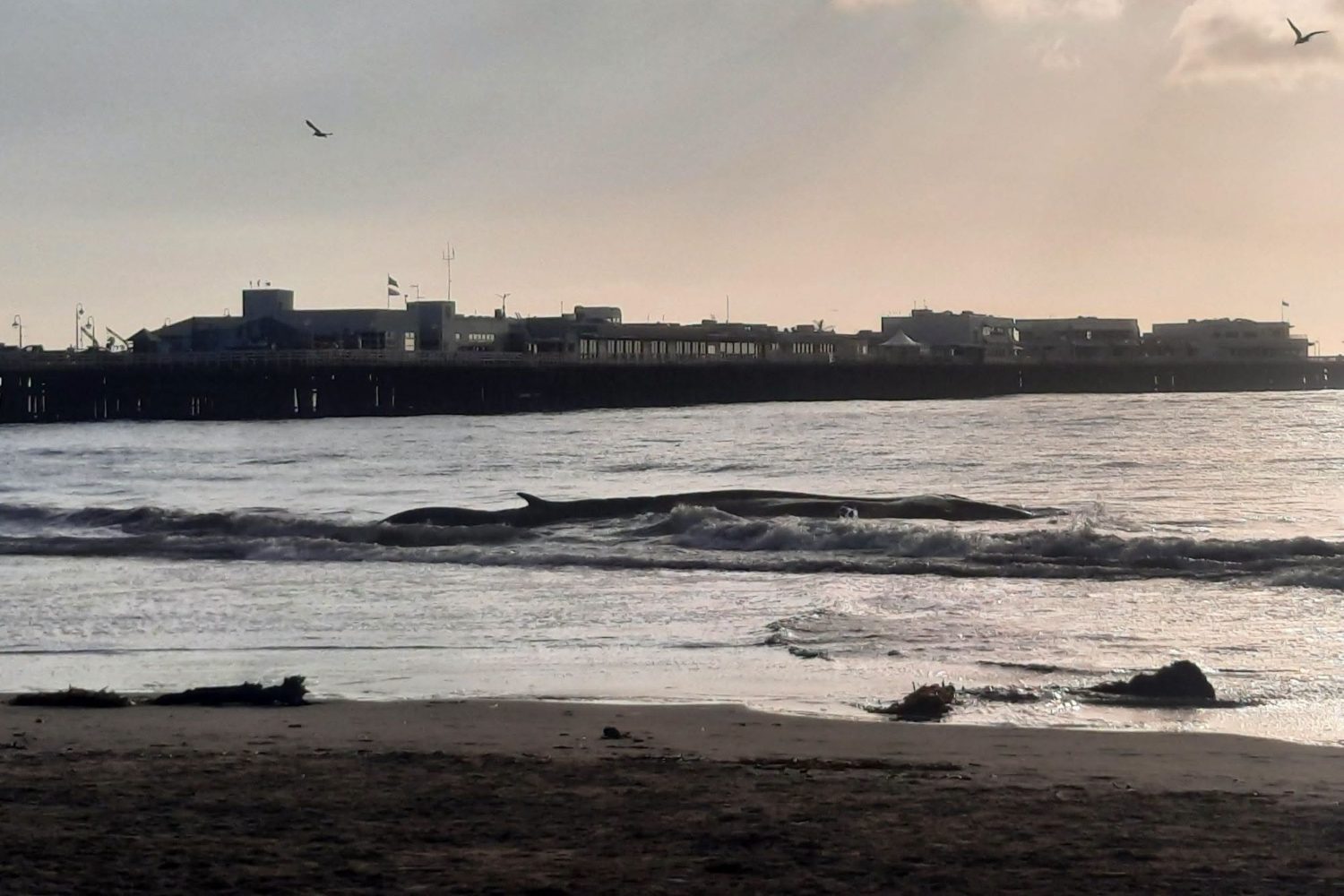
An impressive scene left residents and rescuers breathless along the central California coast yesterday morning. A giant fin whale, about 18 meters long and identified by experts as a juvenile specimen, was spotted at 9.30 am struggling in the waves at Cowell Beach, in the city of Santa Cruz, after having run aground on the sandy shoreline.
Despite the timely report sent to the West Coast Marine Mammal Stranding Network and the immediate arrival on site of maritime safety personnel and biologists from the Marine Mammal Center, there was nothing that could be done for the large mammal: the animal stopped breathing and died around 10:00-10:15, a few hours after the first alarm.
View this post on Instagram
Health conditions and the stranding anomaly
Michael Milstein, spokesperson for the National Oceanic and Atmospheric Administration, intervened to shed light on the possible causes of this tragic end, underlining how rare such an event is. In fact, fin whales represent the second largest cetacean species in the world and usually spend their existence offshore, in very deep waters, making such a rapid approach towards the shore completely anomalous. According to the first findings carried out by the specialists who intervened on the beach, the young specimen appeared seriously emaciated and showed clear signs of a long-term chronic illness, a highly compromised clinical picture that would have pushed the debilitated animal to the point of losing orientation and beaching itself.
View this post on Instagram
Isolated beach, autopsy and complex removal operations
To allow biologists and technicians to operate in complete safety, the Santa Cruz administration ordered the immediate closure of the affected area of Cowell Beach, demarcating a strict perimeter around the carcass and inviting citizens to remain at a distance. Agencies specializing in marine mammals are now working closely with local firefighters to plan the complex removal of the cetacean, a delicate operation that requires carefully assessing the animal’s exceptional weight, ocean tidal conditions and available heavy machinery, without damaging coastal infrastructure. Before the definitive transfer, experts will carry out an in-depth autopsy to precisely ascertain the origin of the pathology that killed the young whale and collect precious data for scientific research.
View this post on Instagram
