
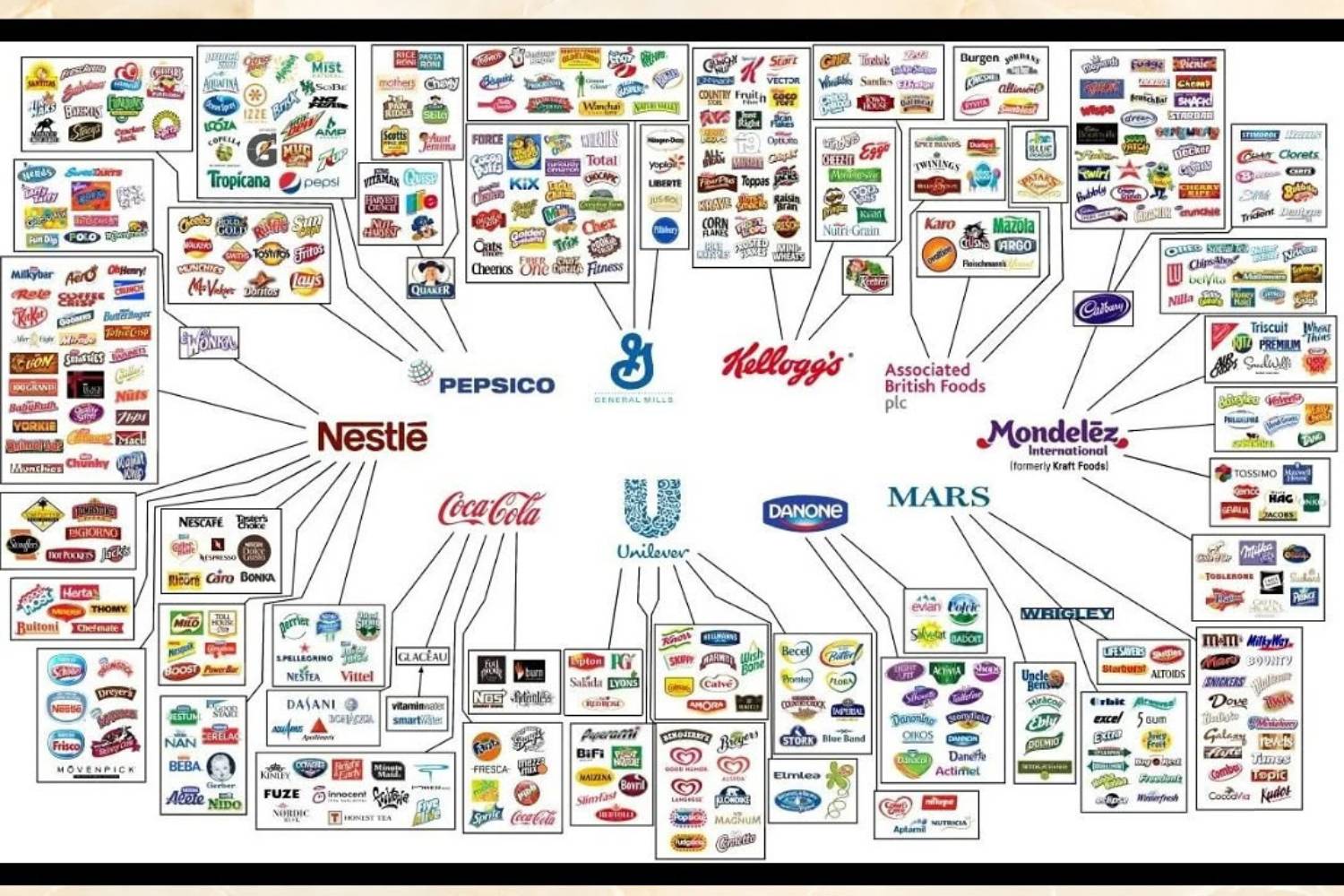
Despite the apparent variety of brands on supermarket shelves, most of the food and drinks that we consume daily are controlled by a restricted group of large multinationals. According to an analysis made long ago by Business Insider, based on Oxfam data, ten companies dominate the food and drinks market, having hundreds of brands known all over the world.
Who is it about? We tell you immediately.
The 10 multinationals that dominate the food sector
Nestlé
Based in Switzerland, Nestlé is the largest food company in the world with annual revenues that exceed 80 billion dollars. Its vast wallet includes over 2,000 brands, including:
The company operates in 189 countries and takes about 339,000 people. According to the Oxfam report “Behind the Brands”, Nestlé has a significant influence on global supply chains.
Pepsico
Founded in 1965 by the fusion of Pepsi-Cola Company and Frito-Lay, Pepsico has constantly expanded its range of action through strategic acquisitions. Its wallet includes:
With over 290,000 employees and operations in more than 200 countries, Pepsico generates annual revenues of over 70 billion dollars.
The Coca-Cola Company
Founded in 1886, Coca-Cola has become one of the best known companies in the world. Its wallet includes:
The company sells over 4,100 products in more than 200 countries, reaching around 1.9 billion consumers every day according to company data.
Unilever
Anglo-Dutch Multinational founded in 1929, Unilever is known both for its food and personal care products. In the food sector check:
With about 149,000 employees and operations in about 190 countries, Unilever has an annual turnover of around 50 billion euros.
Danone
Founded in Spain in 1919 and now based in France, Danone has specialized in:
Danone uses over 100,000 employees and markets its products in more than 120 countries, with particular attention to nutrition and health.
General Mills
Founded in 1866, General Mills is particularly known for his breakfast cereals and baked goods, but his wallet has significantly expanded:
The company operates in more than 100 countries and uses about 35,000 people.
Kellogg’s
Founded by WK KELLOGG in 1906, the company has become synonymous with breakfast cereals, but also checks:
With operations in 180 countries and about 34,000 employees, Kellogg’s remains one of the main actors in the cereal and snack sector.
Mars
Founded in 1911, Mars is one of the largest family -owned food companies in the world. Its diversified portfolio includes:
With over 130,000 employees in 80 countries, Mars generates annual revenues estimated at over 35 billion dollars.
Mondelez International
Born in 2012 from the split of Kraft Foods, Mondelez has specialized in snacks and sweets:
The company operates in 160 countries with about 80,000 employees and an annual turnover of about 26 billion dollars.
Associated British Foods (ABF)
British conglomerate founded in 1935, ABF has a diversified portfolio that includes:
In addition to the food sector, ABF also has the Primark clothing chain. The company employs over 130,000 people in 53 countries.
The implications
The concentration of power in the hands of a few companies has different significant implications:
Influence on prices
The concentration of the market allows these companies to exercise considerable control over food prices. According to a study by the organization for economic cooperation and development (OECD), reduced competition contributes to the increase in costs for consumers. In some sectors, such as that of carbonated drinks or packaged snacks, profit margins can exceed 40%.
Health impact
The aggressive promotion of ultra-processed foods by these multinationals is a problem for public health. The World Health Organization (WHO) highlighted the link between the consumption of these products and the increase in obesity, type 2 diabetes and cardiovascular diseases. A report published in The Lancet magazine estimated that the marketing of non -healthy food addressed to children contributes significantly to the global epidemic of childhood obesity.
Sustainability and workers’ rights
The intensive agricultural practices required to satisfy the demand of these companies have a considerable environmental impact. According to the “Behind the Brands” report by Oxfam:
The next time you shop, remember all this. As consumers, we have great power: each purchase is an opportunity to direct our food system towards a more right future, which respects not only people and workers along the chain, but also our planet.
