
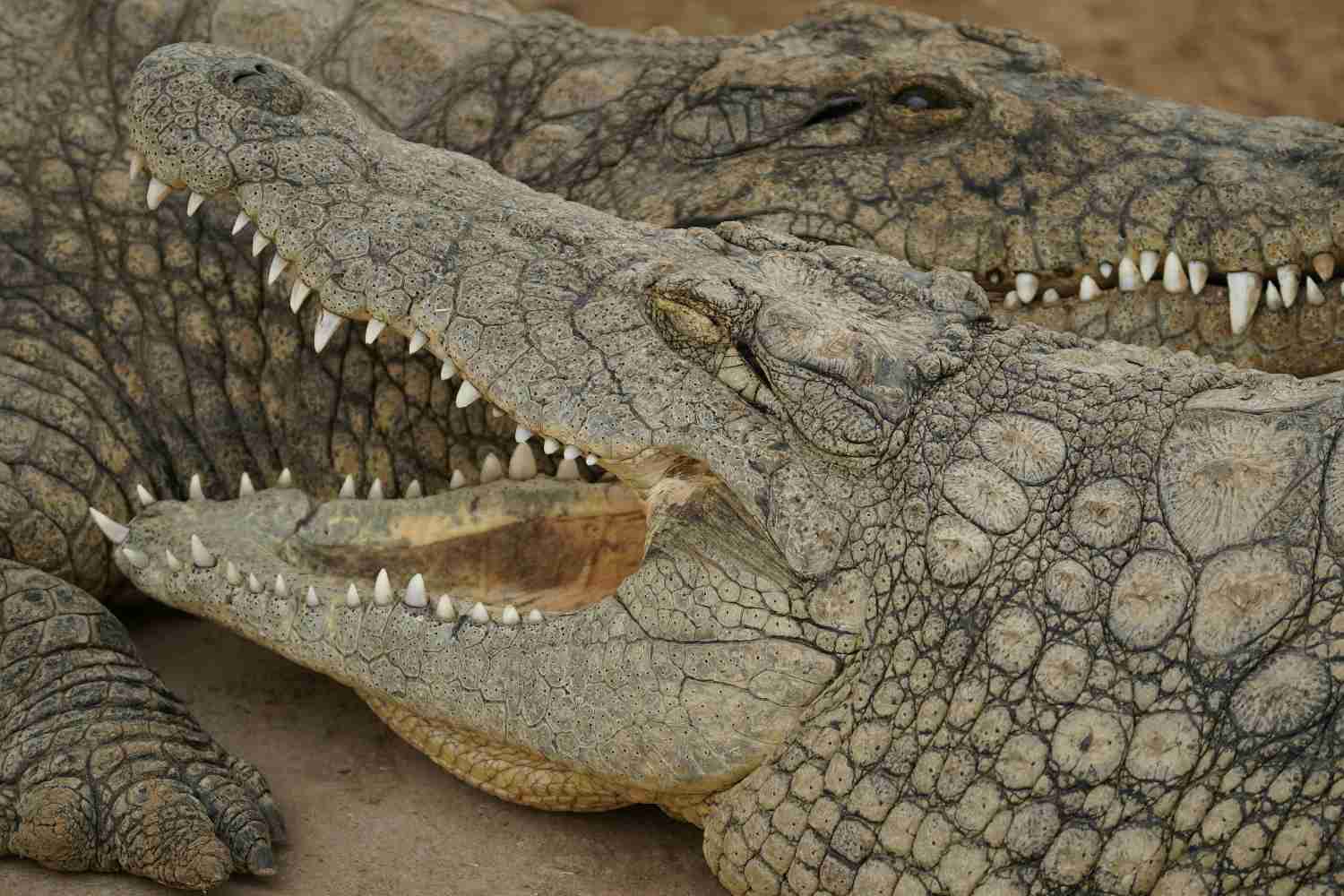
THE crocodiles they are among the oldest predators on the planet, Two mass extinctions survivors who swept via dinosauri and other dominant species. But how did they do? A new study reveals that their evolutionary success is not the result of the case, but of one Extraordinary ecological flexibility.
THE Crocodilomorfithe ancestors of modern crocodiles, about 230 million years ago. Unlike what you think, it has not always been the fierce semi-aquatic predators that we know today. Some species were herbivorother terrestrialmore others highly specialized carnivore.
Teeth and skulls tell their evolutionary history
The key to their survival? Omnivorous diet and adaptability. During the extinction of the Triassic (201 million years ago) and that of the Cretaceous (66 million years ago), only the Generalist speciescapable of feeding on anything and living in different environments.
To reconstruct the eating habits of these ancient reptiles, the researchers analyzed fossil teeth and skulls Of 99 extinct species And 20 living. The shape of the teeth revealed fundamental details:
This evolutionary plasticity It has allowed crocodiles to overcome global catastrophes that have eliminated more specialized animals.
Now their survival is at risk because of man’s fault
Today, however, i modern crocodiles they face a different threat: the human impact. Deforestation, pollution and illegal hunting are pushing species such as the gange locker and the Cuban crocodile on the edge of extinction.
Their story shows that, if protected, they can still adapt. But this time, their survival depends on our choices. If we want these ancient reptiles to exceed one third extinctionwe have to act immediately to preserve their habitats. The real question is: Will they be able to survive man? The answer, unfortunately, is in our hands.
