
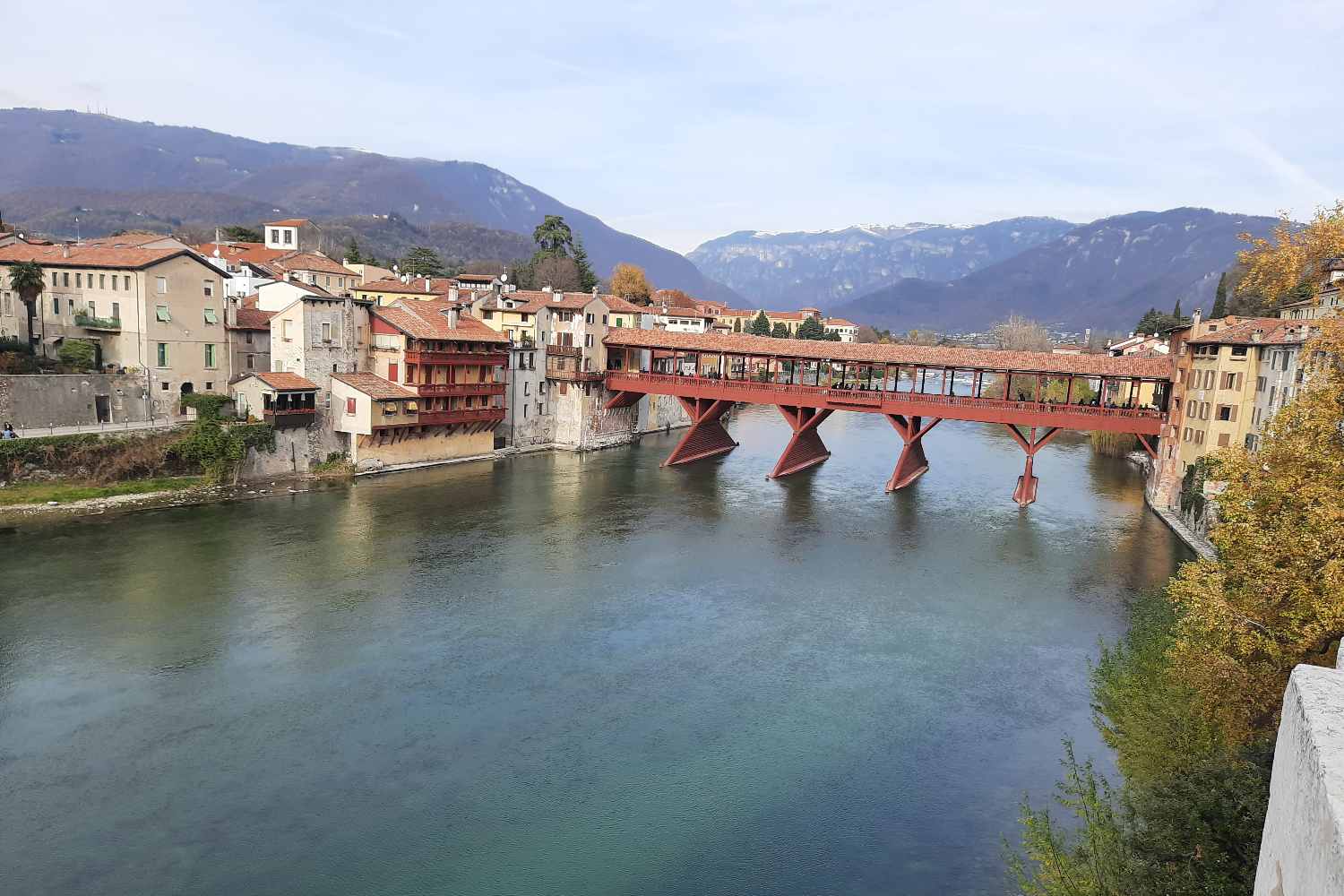
There are places where geography merges with memory to the point of becoming legend and Bassano del Grappa is exactly one of these. As soon as you set foot in this medieval Venetian village, set like a gem between the Vicenza hills and the banks of the Brenta river, you perceive a suspended atmosphere. The mild climate welcomes us as we take the road that leads to the beating heart of the town, an urban center that has managed to transform the deep wounds of the First and Second World Wars into a heritage of dignity and artistic beauty.
@RebeccaManzi/GreenMe
The Ponte Vecchio where history is reflected in the Brenta
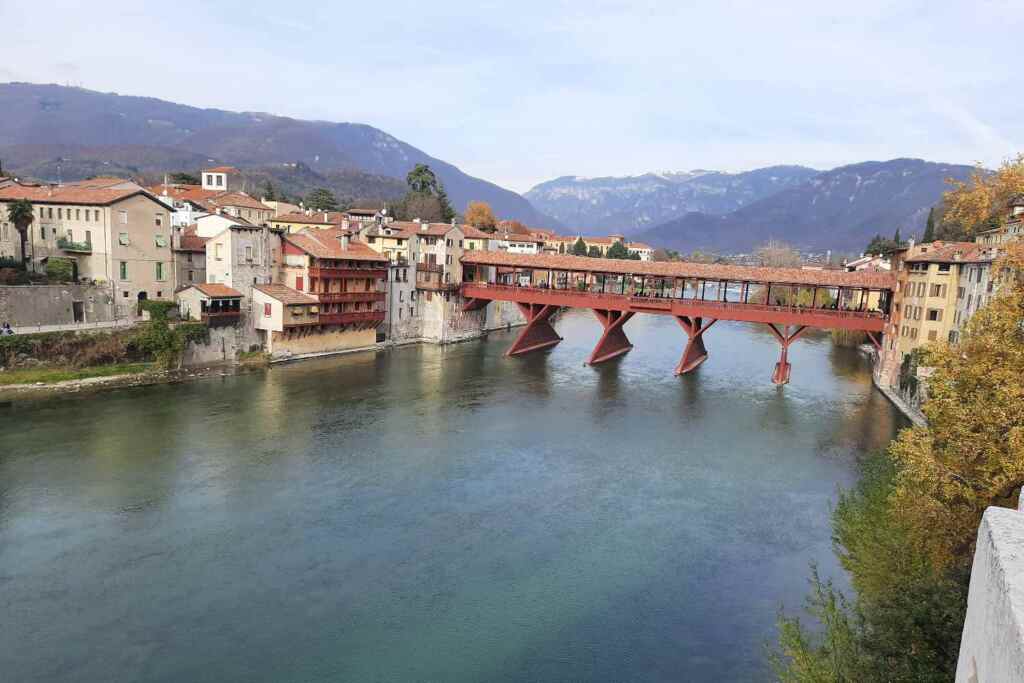
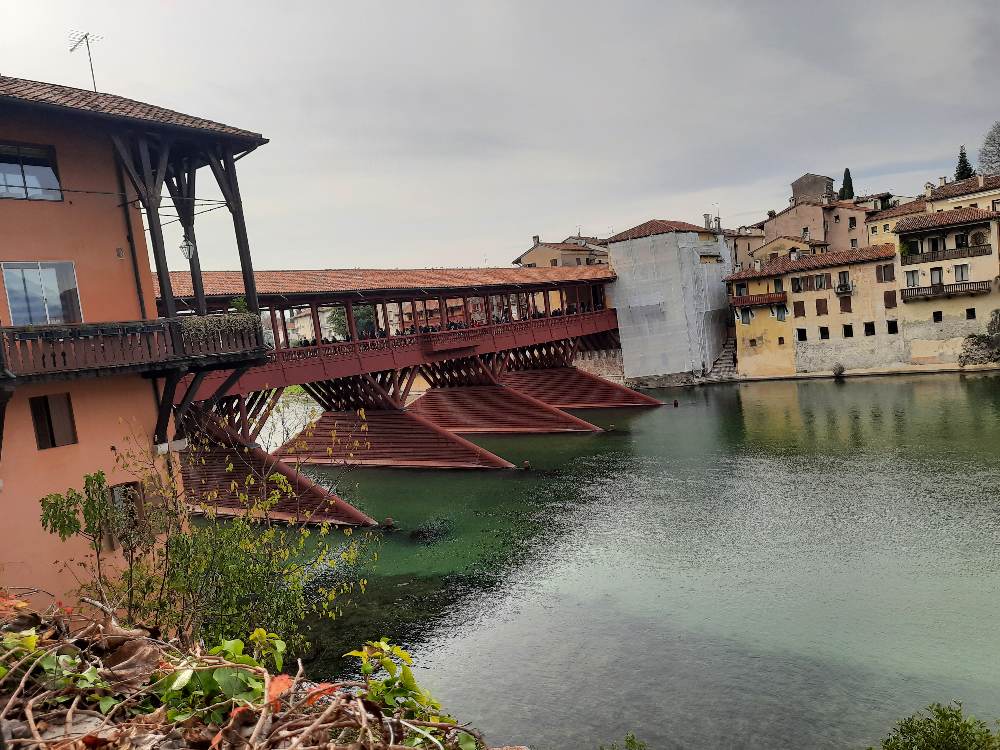
Our journey could only start from the true identity symbol of Bassano: the Ponte degli Alpini, also known as Ponte Vecchio. Walking on its wooden planks, surrounded by the sturdy roof designed in 1569 by Andrea Palladio, evokes a deep thrill. This structure is not simply an engineering masterpiece created to challenge the raging floods of the river; it is a symbol of resilience.
@RebeccaManzi/GreenMe
Destroyed and rebuilt several times – not least after the bombings of 1945 – the bridge owes its current appearance to the faithful reconstruction commissioned by the Alpini. Under the north entrance, going down into the basement, we discovered the Alpini Bridge Museum, where it is possible to closely observe period memorabilia and uniforms. Not far away, the echo of the famous popular song linked to this place seems to resonate between the banks, remembering the soldiers who said farewell here before climbing towards the Monte Grappa massif.
@RebeccaManzi/GreenMe
Centuries-old aromas and liquid traditions at the foot of the bridge
Once past the pedestrian walkway, the sense of smell is captured by the pungent scent of the distillation. On both sides of the bridge, a historic challenge with glasses takes place. On the eastern side we treated ourselves to a stop at the Grapperia Nardini, the oldest distillery in Italy founded in 1779. A little further on, inside the fourteenth-century Palazzo delle Teste, is the Poli Grappa Museum. Access is free and offers a unique sensorial journey: thanks to special olfactometers, it is possible to select and smell the different essences of the vines.
The city lounge between elegant squares and medieval towers
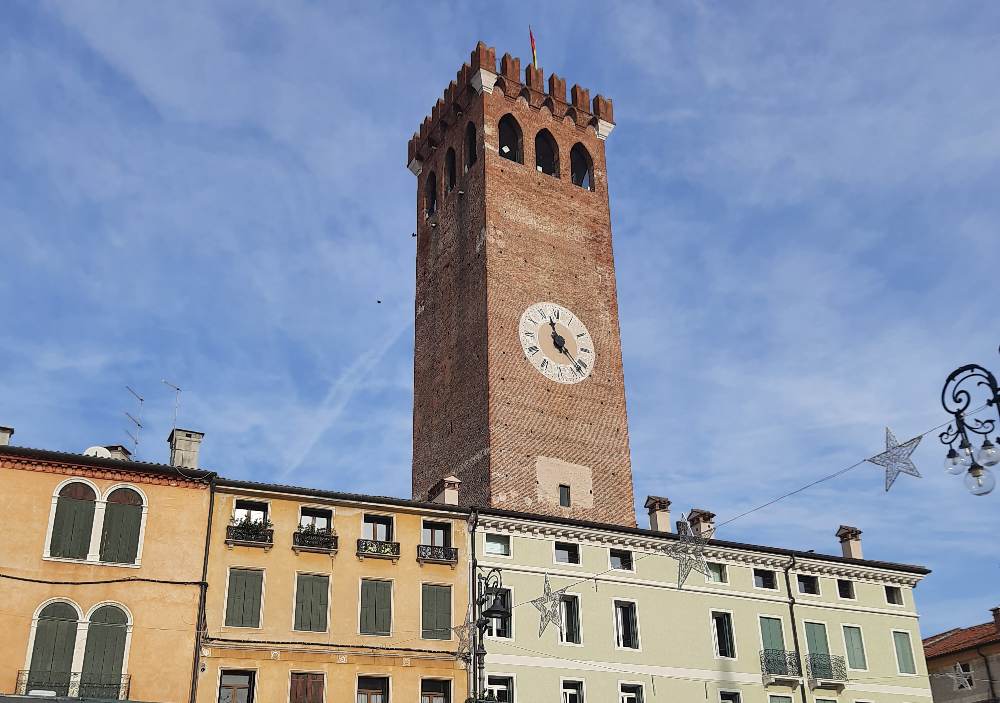
Leaving the banks of the Brenta, we headed towards the two adjacent squares that form the social soul of the village. Piazza Garibaldi, dominated by the imposing Civic Tower which stands 43 meters high, welcomed us with the lively bustle of its outdoor cafes and the splendid Bonaguro Fountain in pink marble.
@RebeccaManzi/GreenMe
In the background, the Church of San Francesco shows its rigorous Romanesque-Gothic façade. A few steps and you find yourself in Piazza Libertà, once known as Piazza dei Signori. Here the Loggia del Comune stands out with its characteristic blue dial clock and the neoclassical facade of the Church of San Giovanni Battista, whose monumental columns catch the eye.
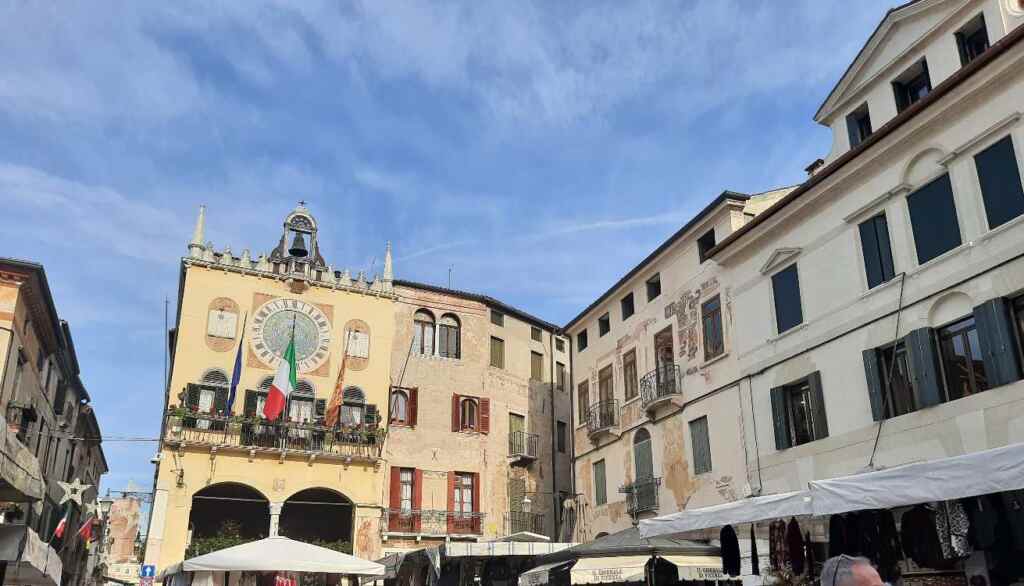
@RebeccaManzi/GreenMe
The Ossuary Temple: the naked and solemn embrace of the “Boys of ’99”
From the banks of the river our path moves towards Piazzale Cadorna, where the imposing and severe mass of the Ossuary Temple stands out. This monumental red brick building, characterized by a Gothic-Venetian style and surmounted by an octagonal dome with two 60 meter high bell towers, preserves a tormented and moving history. Originally created in 1908 to become the city’s new cathedral – by the strong will of Monsignor Gobbi, who donated his land to overcome the heated protests of the people of Bassano at the time – the construction site was blocked for years due to the end of the funds and the outbreak of the Great War. It was only in 1930 that the Ministry of Defence, in agreement with the parish, took over the unfinished structure to transform it into a military shrine, which was then inaugurated in 1934 in the presence of Prince Umberto of Savoy.
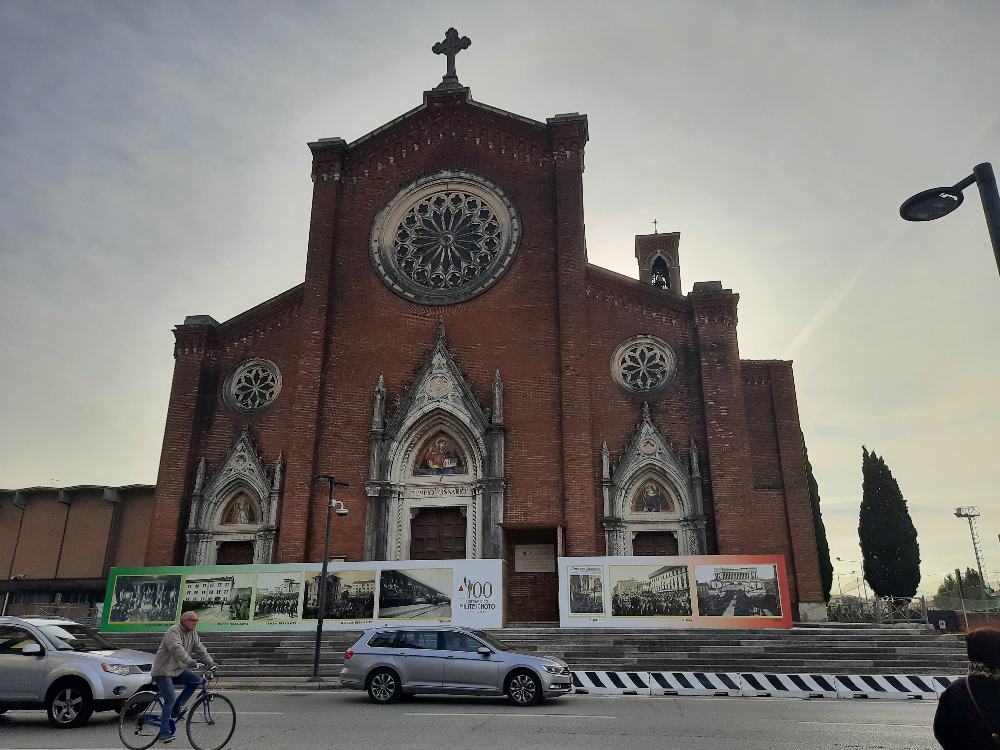
@RebeccaManzi/GreenMe
Crossing the threshold, the visual and emotional impact is unsettling: the large Latin cross interior, punctuated by ten columns in Grappa stone, appears naked, cold and devoid of the sumptuous original decorations, precisely to reflect the solemnity of a burial place. Along the walls, slabs of yellow Istrian marble contain the remains of 5,405 Italian soldiers, arranged in strict alphabetical order. Reading their names is a real blow to the heart, imagining so many broken lives. Among them there is no unknown soldier: these are young souls – including many very young “Boys of ’99” sent to the front just eighteen years after the defeat at Caporetto – who died due to wounds in the field hospitals of the foothills and who were brought together here from 46 temporary cemeteries.
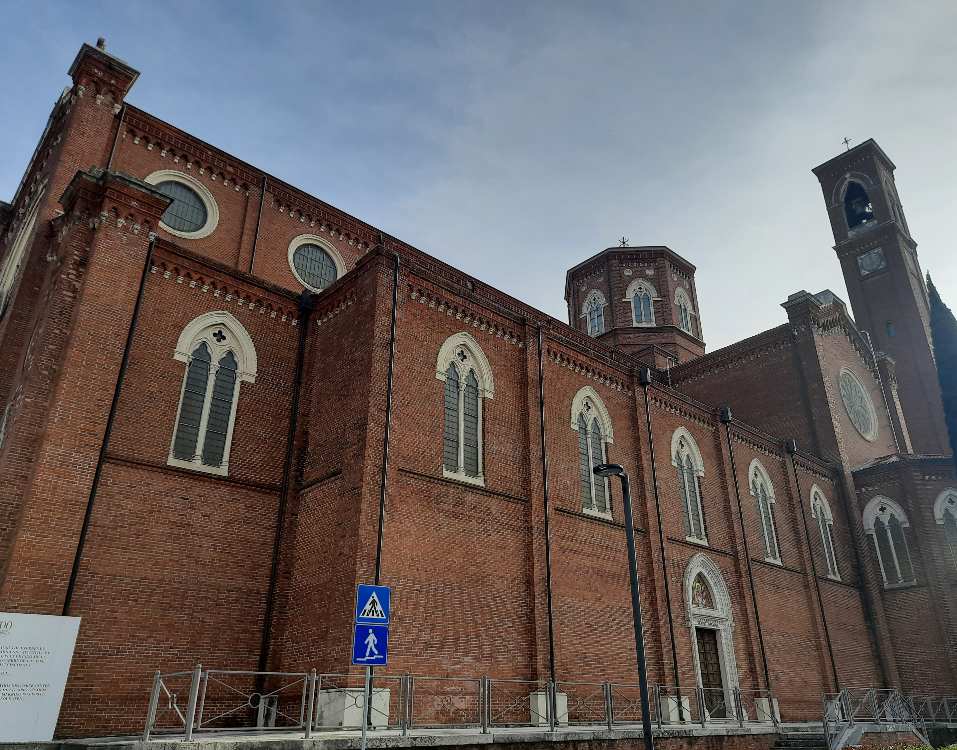
@RebeccaManzi/GreenMe
This space, which still today bears the marks of the bombings of February 1945 which uncovered its façade, serves as a shrine during the week and resumes parish functions only on Sundays. But the deepest bond with the city is renewed every evening, at 7.30pm, when the bronze bell towers strike forty: an eternal warning intended to remember the forty partisans hanged in 1945 during a ferocious Nazi retaliation, uniting the fallen of all wars in a single ideal embrace.
