
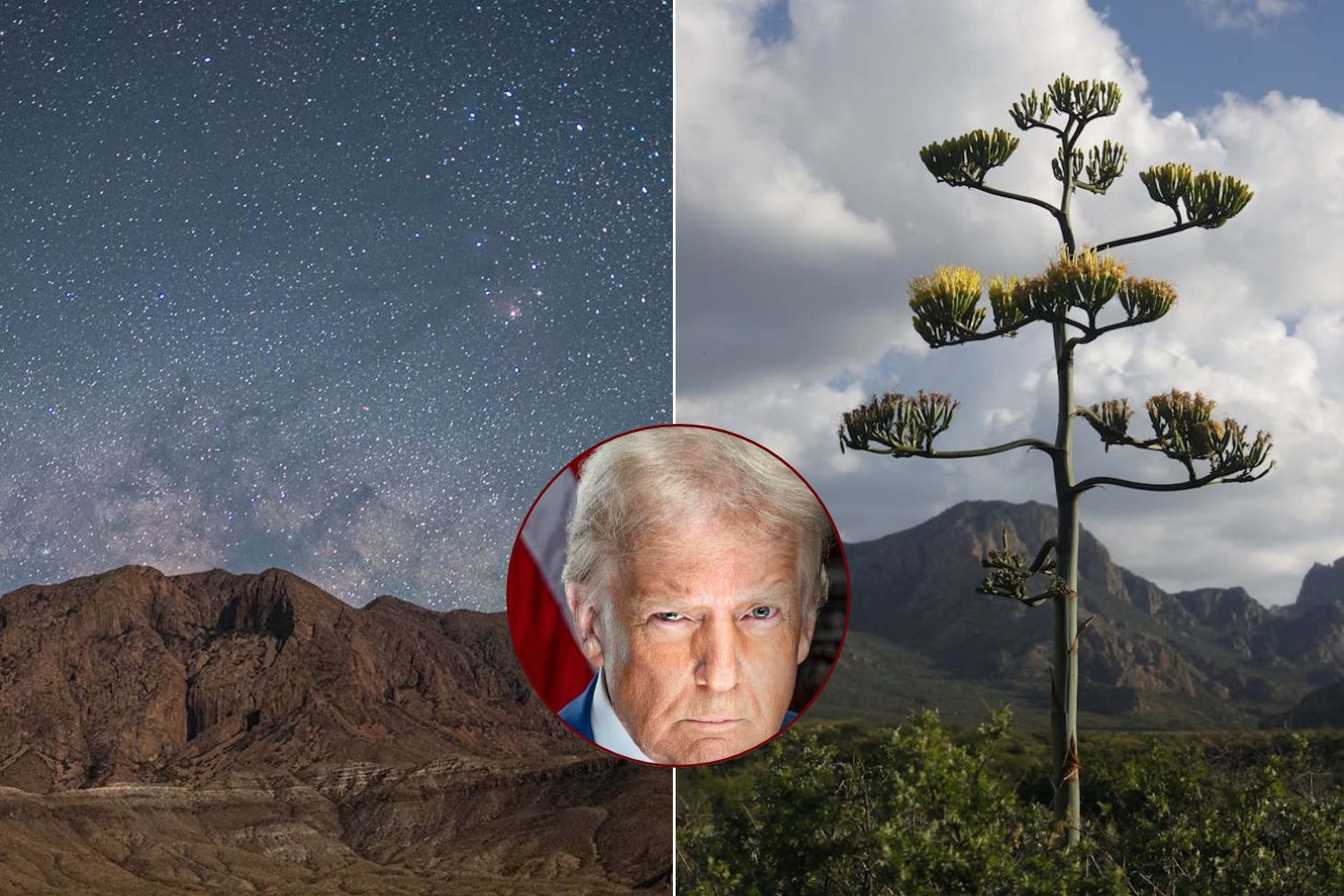
After having mercilessly demolished theGrandmother Tree“, the grandmother tree in Arizona, Trump and his ideas of border walls also prevail in Texas. Here, the limit between the United States and Mexico is not marked by a steel barrier, but by the curves of a river that flows between rock walls, canyons and expanses of desert. It is Big Bend National Park, one of the wildest and most spectacular places in the United States.
But the US Supreme Court has just authorized the Trump administration to resume work on the construction of border infrastructure in the Big Bend region, including interventions planned within the national park itself.
A decision that practically suspends the blockade imposed in October by a federal judge, who had stopped the project to evaluate an appeal presented by environmental associations and local entities. There is not yet a definitive ruling on the legitimacy of the intervention, but in the meantime the government can start again with the construction sites.
The wonderful park of Big Bend
Big Bend National Park extends for over 320 thousand hectares in southwestern Texas, along a large bend of the Rio Grande, the river that separates the United States from Mexico. Here the Chihuahua Desert meets the Chisos Mountains, while the river has carved canyons with impressive walls over the millennia. One of the most famous is Santa Elena Canyon, where the rock rises hundreds of meters above the water.
The park houses marine fossils, dinosaur remains, evidence of native populations and surprising biodiversity for such an arid environment. It is also part of a vast system of protected natural areas that extends on both sides of the border.
But the Big Bend has another peculiarity: it is one of the places where the darkness at night is still really dark, far from the light pollution of the big cities, so much so that it is part of one of the largest international reserves dedicated to the protection of the starry sky.
What Trump wants to build in the Big Bend
The Trump administration’s project concerns a border sector over 800 kilometers long, including physical barriers, new access roads, surveillance systems and other infrastructure intended for border control.
Inside Big Bend National Park, according to the plans described so far by the government, there is not the same nine-meter-high steel pedestrian barrier designed for other areas, but rather a discontinuous system of obstacles for vehicles, approximately 27 kilometers long in total, as well as roads and surveillance equipment.
To speed up the project, the Department of Homeland Security turned to a 1996 law, theIllegal Immigration Reform and Immigrant Responsibility Actwhich gives the Secretary of the Department broad powers to build infrastructure along the border. The legislation allows, under certain conditions, to disapply obligations under other federal laws.
The provisions involved include theEndangered Species Act, which protects threatened species, the National Environmental Policy Actwhich regulates the assessment of environmental impacts, and rules for the conservation of historic assets.
Federal judge Kathleen Cardone stopped the proceedings on October 2, finding that the plaintiffs had a real chance of proving that the administration had exceeded its powers.
But the Supreme Court saw fit to suspend that provision with a decision of eight judges against one. According to the majority, the 1996 law would limit the ability of the courts to intervene in exemptions ordered by the government. The Court also considered the federal interest in border security to be more prevalent than the environmental, landscape and recreational damage reported by the plaintiffs. In short, the judicial proceedings will continue, while the suspension of the blockade already allows construction to resume.
What environmentalists and residents say
The Center for Biological Diversity denounced the risk that the interventions would permanently compromise a natural landscape of extraordinary value. According to the association, the new infrastructure could lead to the clearing of desert vegetation, the transformation of canyon walls, habitat alterations and the loss of access to some areas of the Rio Grande.
Concerns also concern agricultural activities, livestock farming, nature tourism and local historical heritage.
For environmentalists, the point is that a road carved out of the desert or a cliff face modified by explosives cannot simply be restored with financial compensation.
And be careful: there are also some Republicans against the wall. The Texan senator John Cornyn for example, he invited the Trump administration to give up barriers in the most sensitive areas of the Big Bend, instead proposing greater technological surveillance, personnel and collaboration with local authorities.
What remains is that, in any case, the Big Bend affair raises a question that goes beyond the border between the United States and Mexico: to what extent can environmental protection be sacrificed in the name of national security? The Supreme Court, for now, has not definitively established whether all the Trump administration’s decisions are legitimate, but allowing work to resume creates a difference that, for a natural territory, can be enormous. And fatal.
