
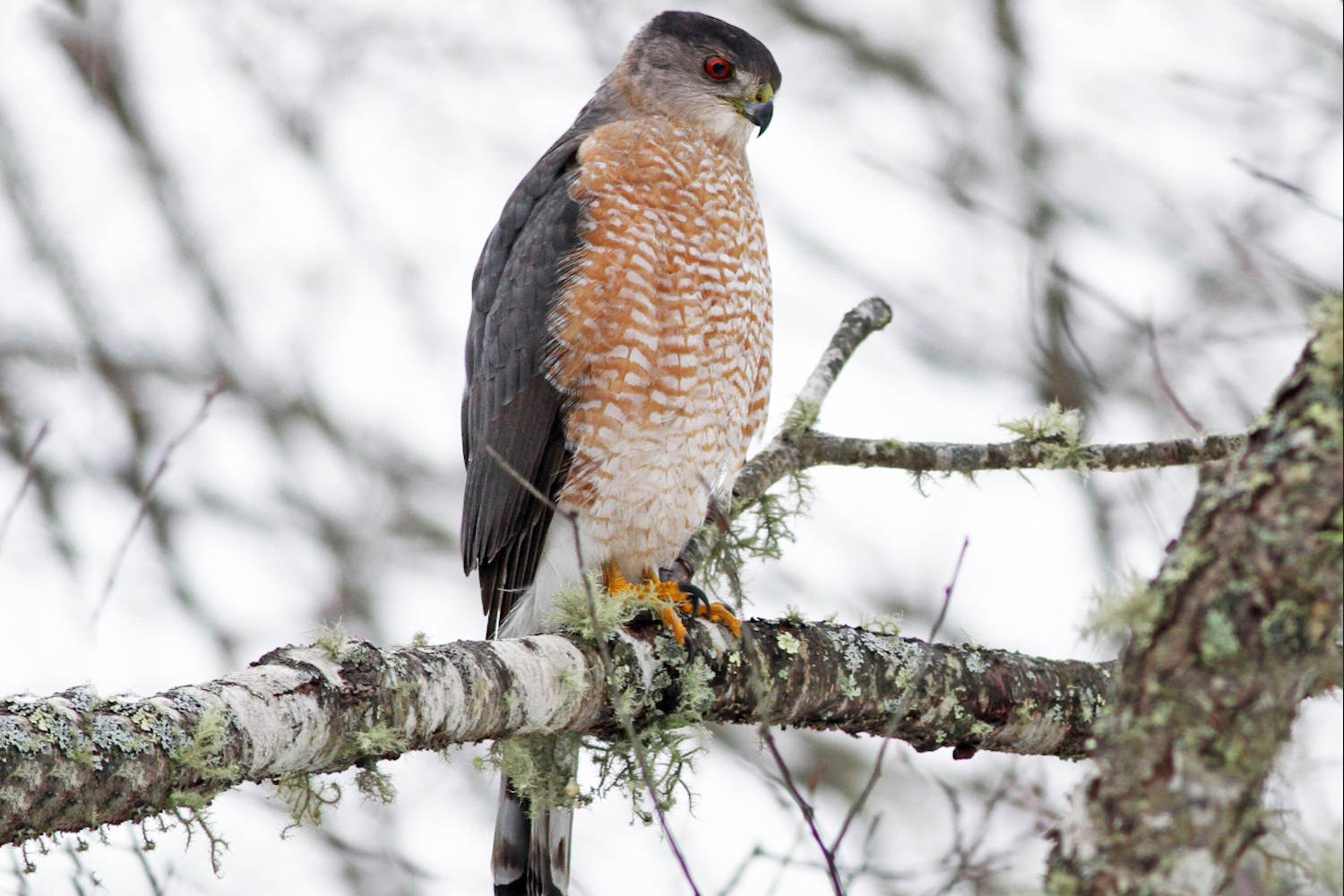
We could perhaps call “adaptation to man“The hunting strategy of a beautiful sparviere of New Jersey (USA): the bird of prey has in fact learned to use the stoplight To be procured, food more effectively. The observation, which then became a scientific publication, is the work of Vladimir Dinets ofUniversity of Tennessee (USA).
(…) I noticed something interesting at an intersection near my house – writes the researcher – The crossroads was not particularly busy and, even during the morning top hour, when I accompanied my daughter at school, there were usually only a few cars waiting for the green traffic light. But sometimes a pedestrian pressed a button, and this meant that the red light it lasted much longer, so also the car tail he stretched, reaching up to a Small tree on the roadside with a particularly thick hair. When this happened, the lamppost produced an acoustic signal, notifying the blind that it was sure to cross
Up to here, it seems a normal city dynamic. But nature never ends up surprising.
One morning in winter I was in the car waiting for the change of the traffic light and suddenly I saw one Cooper sparrows: emerged from that small tree, flew very low above the sidewalk along the row of cars, made a brusque curve, crossed the road between the cars and launched himself on something close to one of the houses
The bird (scientific name Accipiter Cooperii) is a bird of bitch widespread above all from southern Canada up to the South end of the North America that nests in forest areas and which generally feeds on birds captured in flight (often chases the feeders looking for prey).
A few days later I saw the same thing again and I decided to investigate – continues the researcher – I discovered that the targeted house from the attacks of the Poiana was inhabited by a nice large family to whom she liked to have dinner in the garden. The morning after theirs bread crumbs and other leftovers They attracted a small flock of birds: sparrows, doves and sometimes starlings. It was exactly what the sparviere was looking for
This sparviere, in practice, did not look for his usual prey, but others easier. And yet, to be sure he was not disturbed, he had to be sure he was not seen before. As? Behind one Fila of cars stopped at a traffic light.
(…) The bird always attacked when the car tail was long enough to provide Cover up to the small treeand this only happened after someone had pressed the pedestrian crossing button. As soon as the acoustic signal was activated, the bird of bitch flown somewhere towards the small tree, waited for the cars to align and then hit
In other words, the Sparviere had understood the connection between the sound and the final length of the car tail, and certainly had also one good mental map of the placebecause when the car tail reached his tree, the bird of prey could no longer see the point where his prey was found and had to get there by heart.
Cooper’s sparvieri actually rarely nest in cities, but winter visitors are common. So the bird observed was almost certainly a migratoryarrived in the city only a few weeks earlier. And he had already understood how to use road signs and patterns.
Other birds also have learned to adapt to the city: It is known, in fact, that the crows drop walnuts, clams and even small vertebrates on the busy roads to have them killed and/or crushed by cars, the necrophage birds regularly monitor the busy roads to immediately capture the animals invested, while those canteries collect insects dead from cars and even nest by car, trains and boats in motion. Furthermore, small birds sometimes use moving cars like mobile refuges from the hawks that chase them.
In general, however, the cities are certainly not the most suitable places for the life of birds: thelight pollutiontypical of the great certain urban, in fact it is putting them to the test, as well as that acoustic. Not infrequently, the birds are also victims of cars and heavy vehicles.
The next winter I saw a sparkling in adult plumage hunting exactly in the same way, and I am quite sure that it was the same bird. The next summer, the lunch acoustic signal he stopped working And the tenants of the house left, so there were no more flocks of birds. Since then I have not seen Cooper’s hawks in these parts
Observation that confirmed the argument of the researcher.
A city is a difficult and very dangerous habitat for any birdbut in particular for a large bird of prey specialized in lives live: we must avoid windows, cars, electric cables and countless other dangers while trying to capture something to eat every day. I believe that my observations show that Cooper’s sparvieri manage to survive and thrive there, at least in part, thanks to theirs great intelligence
The research was published on Frontiers.
Sources: Eurekalert / Frontiers
