
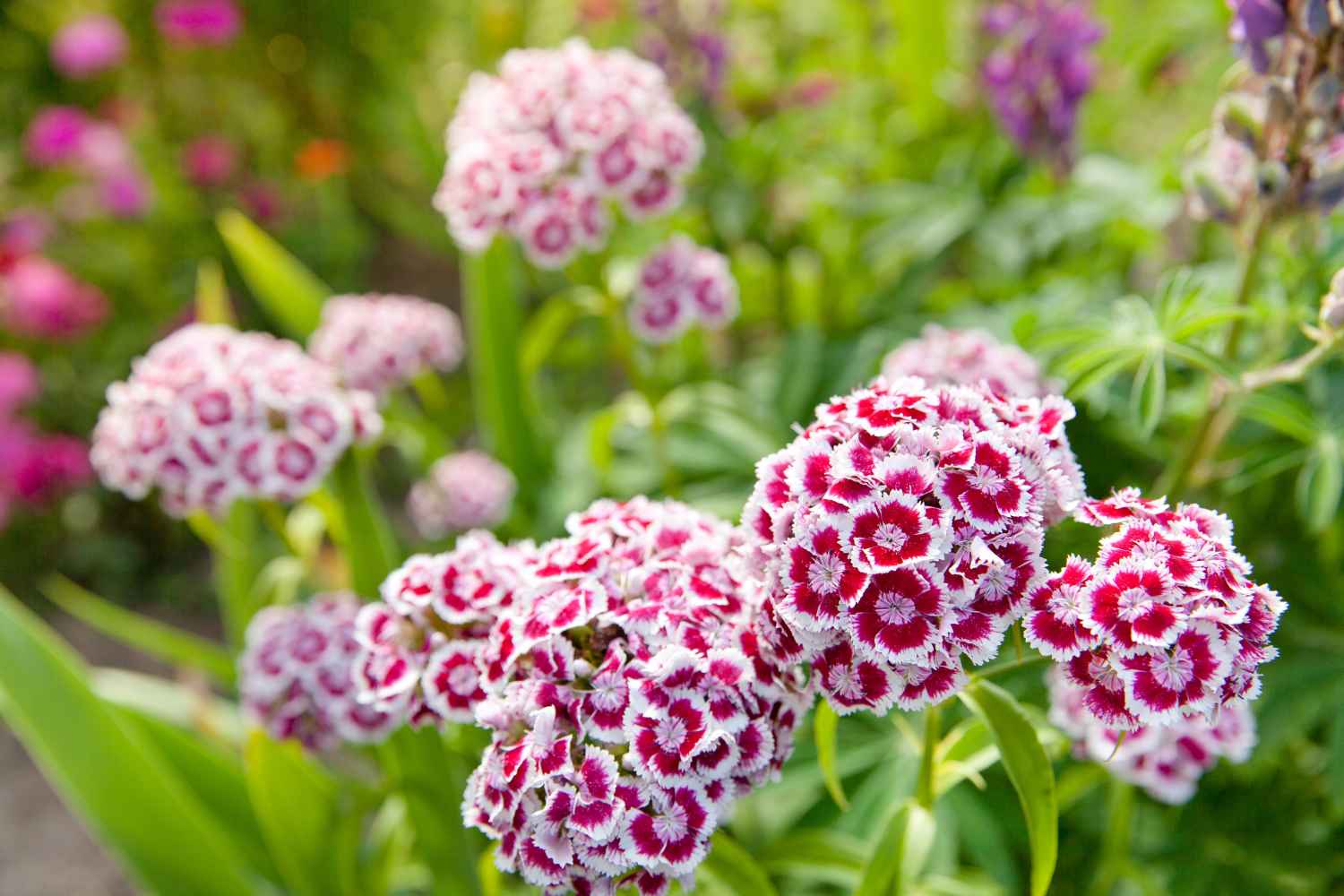
The carnation (Dianthus Caryophyllus) is a perennial plant widely cultivated to be used as a cut flower.
Carnation plants give natural color flowers with a thousand shades of pink, white, coral and red.
They have a ruffled appearance that stands out in floral compositions, and have a characteristic, spicy perfume, slightly similar to cloves.
Cleans in early spring (around April or May) a couple of weeks after the last ice cream. If you are lucky, you will see a flower in six weeks; Remember, however, that these plants usually do not bloom in their first year.
In addition, if you have pets it is good to know that carnations are slightly toxic to our 4 -legged friends.
How to take care of the carnation
The carnation is easy enough to cultivate. Here’s how to take care of it.
Where to place the carnation
Garofani love sunlight but they also grow well with a little partial shadow. For this, we advise you to plant them where they will receive the morning sun, in order to keep fresh flowers and bright colors.
What ground is most suitable for carnation
Garofani require excellent drainage and a alkaline groundwhich has slightly higher concentrations of calcium, magnesium and sodium.
How much water the carnation needs
THE Dianthus Carophyllus They are relatively resistant to drought, but they need regular water in the spring when their flowers are forming.
During periods of drought in the summer, they may need more water. However, be careful not to overdo it with irrigation, otherwise the leaves could yellow and the flowers of the flowers could fall.
Temperature and humidity
The carnations love a warm environment, but suffer with the extreme heat. During very hot periods, it is advisable to spray with a little water.
Fertilizer yes or not?
The newly grown carnations may need a small amount of slow sale fertilizer. The reason? A quick release fertilizer can burn the plant.
In addition, the excessive use of fertilizers can make the roots screwed, which can trigger conditions for radical rot.
When and how to plant the carnations in pot or in the garden
If you want plant seed carnationsyou can start them indoors in vase by placing them near a sunny window. You can also sow the Garofani outdoors after the end of the frost season, but it is unlikely that they flourish during the first year.
Cleans in the soil, sprinkling the seeds on the surface and cover slightly with the ground.
Keep them wet with a nebulizer and cover the vase with a to create a greenhouse effect.
The seedlings should sprout within three days. Once two or three leaves formed, put them in their containers and let them reach a height of at least 10 cm before transplanting outside.
How to propagate the carnations for cutting
In addition to growing carnations from the seed, there are two other ways to grow the plant, that is propagate it from cutting. Propagging carnations from cuttings is a very common technique.
How to proceed?
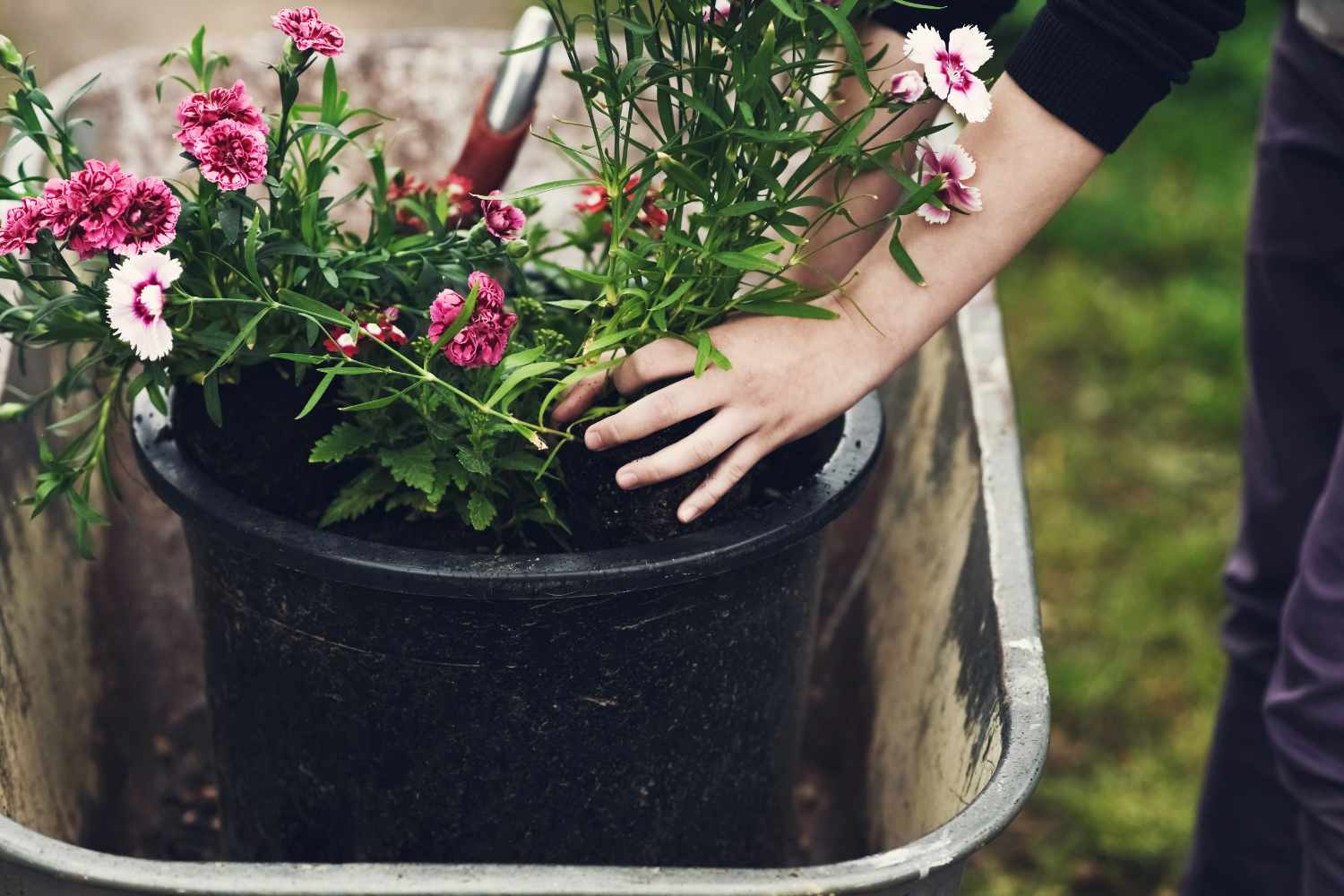
For the reservoration we advise you to choose a quite large vase. For this operation, choose a good quality soil and remember to water well, but not to saturate excessively or make the soil soaked.
What are common parasites and carnations of carnations
Garofani are vulnerable to parasites, including aphidsmites and larvae.
The larvae are a little more complicated to eradicate, but if your plant is infested you can try to remove them manually.
In addition, these plants are also susceptible to fungal diseases, such as the leaf stain, the rust and the rot of the botry flowers.
Common problems with carnations
Garofani are quite easy to cultivate and cure, but they could present some problems. Let’s find out in detail.
Flowers and/or brown leaves
If parts of the flower are brown, but also paper with the touch, together with gray hair spots, the plants suffer from rot flowers from botrytitis.
Rust and the foliar spot They may also cause browning and enriching the leaves.
In each of these cases, remove the rotten parts and do not water the plants from above to avoid excessively wet the sprouts and leaves. Distances plants to improve air circulation.
Yellowed leaves
If the leaves are becoming a very clear yellow, check the mites and their thin cobwebs on the lower side of the leaves. Use an insecticide soap to control the problem. Aphids could also cause discoloring the leaves.
Holes in gems
The larvae has probably fed on the buds and have created holes. Going forward, plants will need protection or pesticides.
Wanted and divided stems
Bacterial drying is typical of carnations and above all attacks younger plants, which are more vulnerable to the disease. In this case, remove the sick parts with a very sterilized cutting tool, to avoid further diffusion of the problem.
In addition, it pays particular attention when innate, avoiding wetting buds and leaves.
When the carnations flourish
The carnations are known for their abundant and prolonged flowering, which takes place mainly during the summer. The duration of flowering can vary depending on the variety: some species continue to bloom for weeks, while others have a shorter flowering, concentrated in a specific period.
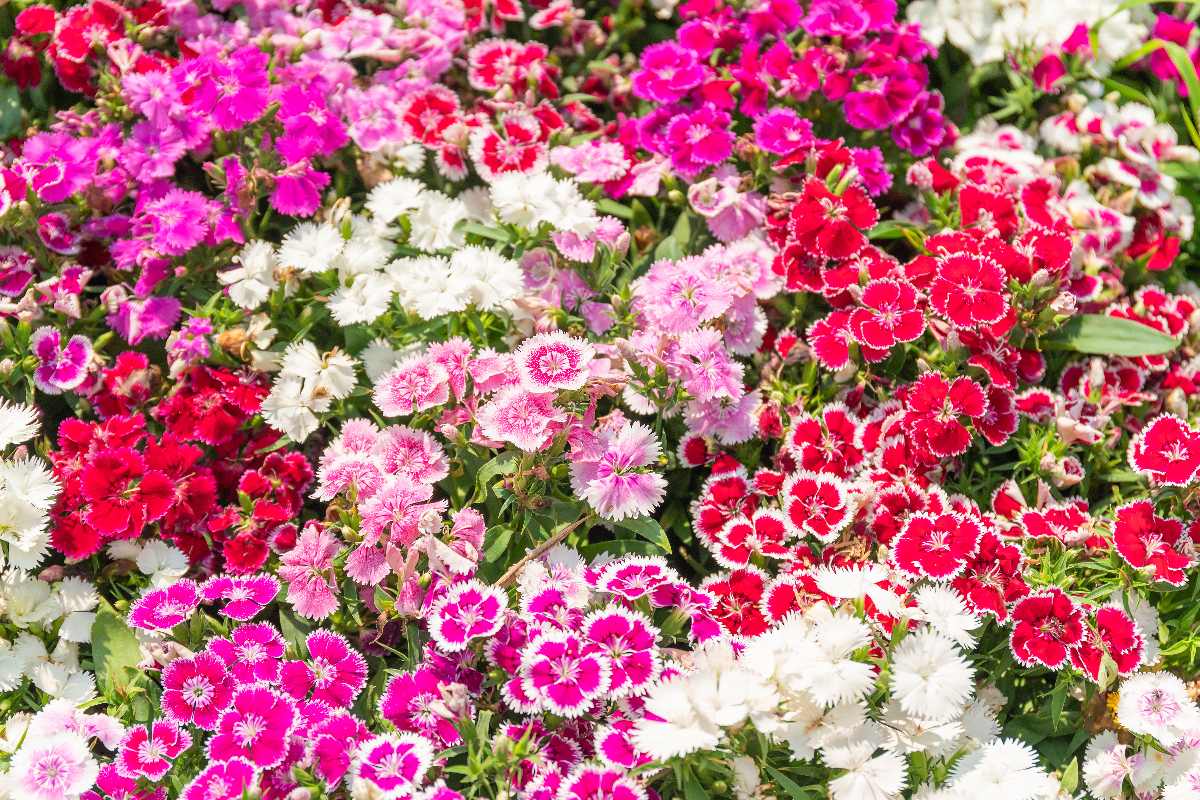
Carnation flowers are available in a wide range of colors, and the most common shades include:
Some carnations also present multiple shades and streaks, creating spectacular and unique effects.
Meaning and symbolism of the carnation
The dianthus It has been largely cultivated for more than two thousand years, based on its mention in the ancient Greek texts.
Defining his native location is difficult, but some botanists think that it originated somewhere in the Mediterranean.
Dianthus From the Greek it means “divine flower”, while “carnation” is a Latin word that means “crown” or “garland”.
Garofani symbolize charm, distinction and love, in particular maternal love. The flower is associated, in fact, with the tears of the Virgin Mary in the Christian legend.
Other flowers to be grown in pot or garden:
