
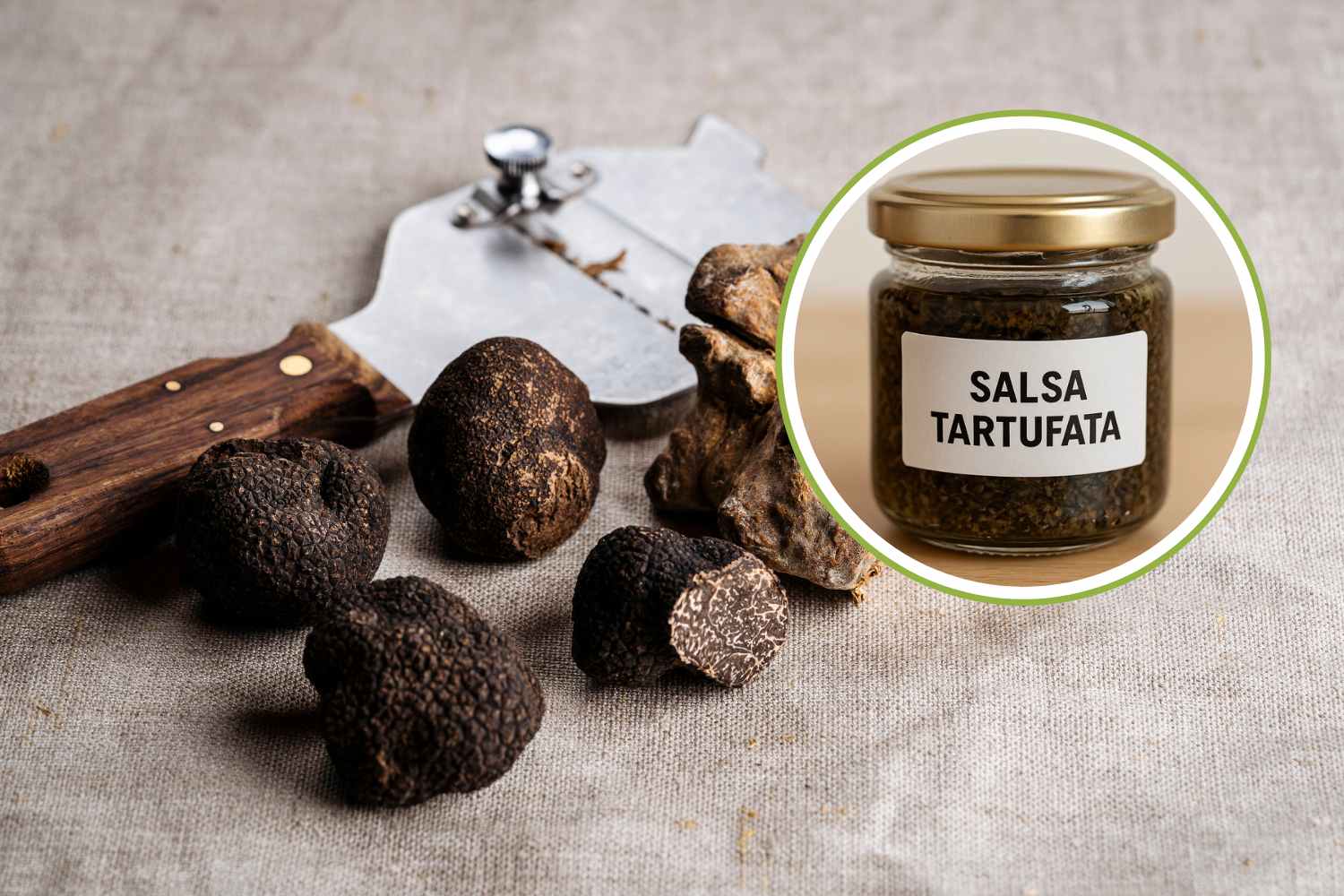
The truffle represents one of the most precious treasures of Italian gastronomy, with its unmistakable perfume and the unique flavor that make it the protagonist of refined and refined dishes, but when we walk through the supermarket shelves and we find products from the intense aroma of truffle at affordable prices, we should ask ourselves if what we are buying really contains this precious hypogeum mushroom.
The truth is that most truffle products available in supermarkets use a synthesis aroma obtained in the laboratory. This phenomenon has become so widespread as to have generated a real parallel market, where the illusion of truffle replaces the reality of the authentic product.
The deception of artificial aroma
The protagonist of this great mystification has a scientific name: bismetiltiometano. This aroma can be extracted from the truffle with high costs or produced in the laboratory through chemical synthesis processes. Paradoxically, this chemical compound, derived from oil, is also naturally found in truffles, together with other aromas, although in variable quantities.
The fundamental difference lies in the production process and in the purity of the final product. While natural truffle contains over 40 aromatic components that contribute to its complex bouquet, the smell in food is given by the aroma of bismethyltiomethane synthesis which should represent the 40 components of the white truffle. It is as if you try to reproduce a symphony with a single note.
How to recognize authentic products
The key to distinguishing authentic products from artificially flavored ones lies in the careful reading of the label. According to European legislation, bismethyltiomethane is a natural aroma if it is obtained from the truffle. If, on the other hand, it is distilled by oil, for the legislation, it is in any case “truffle aroma”. This apparently thin distinction makes the difference between a genuine and an artificial product.
Manufacturers often use deceptive marketing strategies to mask the presence of artificial aromas. Brodi, extracts, infusions, pieces of truffle are nothing more than a trick to be able to insert something that gives the idea of the “presence” of the truffle among the ingredients, when in reality the predominant flavor comes from synthetic aroma.
The fake truffle industry
The artificial truffle products market is flourishing and concerns a wide range of foods. Biscmetiltiometano is also very used, as expected, in industrial products with “truffle aroma”. We are talking about creams, sauces, dips, prepared for bruschetta that offer products from the intense smell of truffle, while costing a few euros.
This massive diffusion has created a distortion in the market, where the average consumer gets used to artificially intensified flavors that do not correspond to the reality of the authentic truffle. In truffle oils with low costs, however, there is always the presence of bismethyltiomethane, but summarized in the laboratory starting from oil: it does not hurt health, it is legal, and is one of the most common chemical aromas used to simulate the smell of the truffle.
The consequences for the sector
This phenomenon does not damage only the consumer, who often acquires products by believing to taste authentic truffle, but also the entire Italian truffle chain. Although this bismethyltiomethane is, specifically, an organic sulfur compound that is already naturally present within the truffles themselves, for commercial use it is artificially extracted, creating unfair competition towards craft producers.
The proliferation of these artificial products risks compromising the perception of authentic truffle by consumers, who may no longer recognize the difference between a genuine and synthetic product. This phenomenon represents a threat to Italian gastronomic traditions and for the economy of truffle areas.
Tips for the conscious consumer
To avoid falling into these commercial trains, it is essential to develop greater awareness in the purchase. First of all, it is important carefully read the list of ingredientspaying particular attention to the presence of words as a “truffle aroma” or “natural truffle aroma”.
The presence of visible pieces of truffle in the food does not automatically guarantee the authenticity of the flavor, since they are often small quantities used more for the appearance than for the aromatic contribution.
Another important indicator is the price: truffle products sold at too low prices should be suspicious of the consumer. The authentic truffle has high production and collection costs, and these inevitably reflect on the final price of the product. Finally, it is always preferable to purchase from specialized and recognized producers, which guarantee transparency in the production and quality of the ingredients used.
