
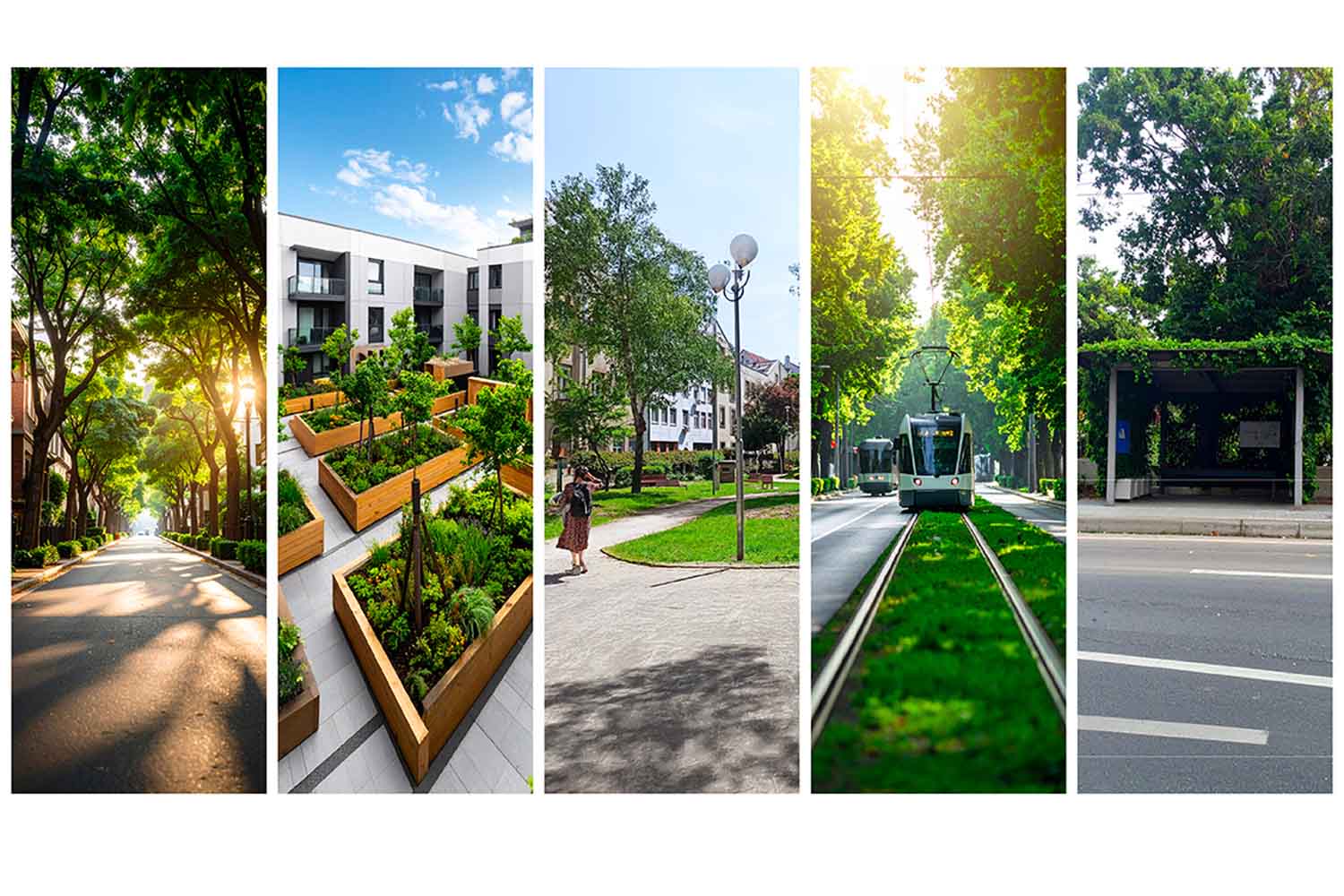
Green shelters at bus stops, pocket parks stuck between cement and traffic, microforeste planted in abandoned lots: they are just some of the 25 “Green” solutions proposed by ENEA To defend Italian cities – Rome in the first place – from the phenomenon of Urban heat islandsaggravated by the asphalt, by the buildings, traffic and planning that for decades has ignored public green.
The project, entitled “Climate adaptation – the urban heat island effect in the city of Rome”is co -financed by the European Union and involves Enea, Roma Tre University, Ecological Institute of Berlin and Pwc Italia (which coordinates). The goal? Offer concrete and replicable tools To help local administrations to plan targeted interventions, in particular in Municipals I and Vwhere the climatic risk is higher.
What is the island of urban heat and how to fight
The heat islands They are urban areas where the air temperature is higher than the surrounding areas. The fault lies with the sun itself, but of thewild urbanization: When the trees are removed to make room for asphalt, cement and parking, the city turns into a thermal trap. Inert materials accumulate heat during the day and slowly release it, even at night. Result? Suffocating temperatures, scarce air quality and a strong impact on healthespecially for the elderly and fragile people.
Enea developed her 25 solutions by focusing on a simple principle: bring nature back to the cityeven in tiny spaces, even where it seems impossible. He did it involving citizens and working with Roma Tre Universitywith a participatory and local approach. In many cases, the solutions also provide The reuse of rainwater For irrigation, within a circular and sustainable model.
Rome as a urban laboratory
The classic trees and green roofs work, of course. But Rome It is a complex city, often hostile to structural transformations. For this Enea also proposed solutions flexible and multifunctionalcapable of integrate green even where there is no space. Here are some examples:
To make all this possible, the project also includes training courses for public administratorsso as to strengthen the skills in green management and favor New Green Jobsfrom maintenance to urban design, as he explains Elisabetta SalvatoriENEA responsible for integrated and Nature-based solutions:
Urban nature is a resource for people’s health. Heat waves are no longer exceptional events: they become the norm. And they hit hard, especially those who already have health problems. It is necessary to act now, with interventions suitable for the context, respectful of the local ecosystem and really sustainable. Training is the key to planting trees is not enough. We need to do it well: native species, low allergenic impact, right tree in the right place. Only in this way can you really make the difference.
The plan is part of the framework of the New European law for the restoration of naturewhich requires Member States to reach At least 10% Arborea coverage In each urban center by 2030. A deadline that, without concrete actions, will remain on paper.
Here are the 25 enea solutions
- Road trees
- Urban forests
- Pocket parks
- MICROFORESE URBAN
- Green parking lots
- Long green tracks, road margins and traffic corridors
- Green canopies on bus stops and trams
- Medium and large parks
- Tree -lined flower beds for water and cooling
- Vegetable urban furnishings
- Vegetable pergolas
- Community gardens
- Gardens and Urban Orti Furniture
- Vegetate tiles
- Green lounges mobile for public spaces
- Green roofs
- Green walls
- Green facades
- Gardens on the facade
- Rain gardens
- Vegetable draining channels
- Green barriers
- Retention basins
- Infiltration basins
- Green belts
