

Here they are again. Summer arrives and punctually also present themselves, as always: the mosquitoisethat annoying seasonal partner who transforms our outdoor evenings into a battleless battle. But where do all these mosquitoes are born that persecute us?
The truth is simple and at the same time surprising: they are probably being born right under our nose, literally.
The secret of mosquitoes: very little water is enough
Forget swamps, ponds and rainforests. Mosquitoes do not necessarily need large acquitrinous areas to reproduce: they are enough for them even less. Let’s talk about ridiculous quantity of wateras an always full sauer, a forgotten bucket in the garden, a clogged gutter. Even those few millimeters of water that accumulate in a broken vase can become a perfect nursery for future generations of insects.
It is almost incredible to think how efficient mosquitoes are. A single female can lay up to 300 eggs in one time. Think about it: two weeks are enough and that apparently harmless Pozzanghera will turn into a small mosquito factory.
Where the future mothers are looking for home
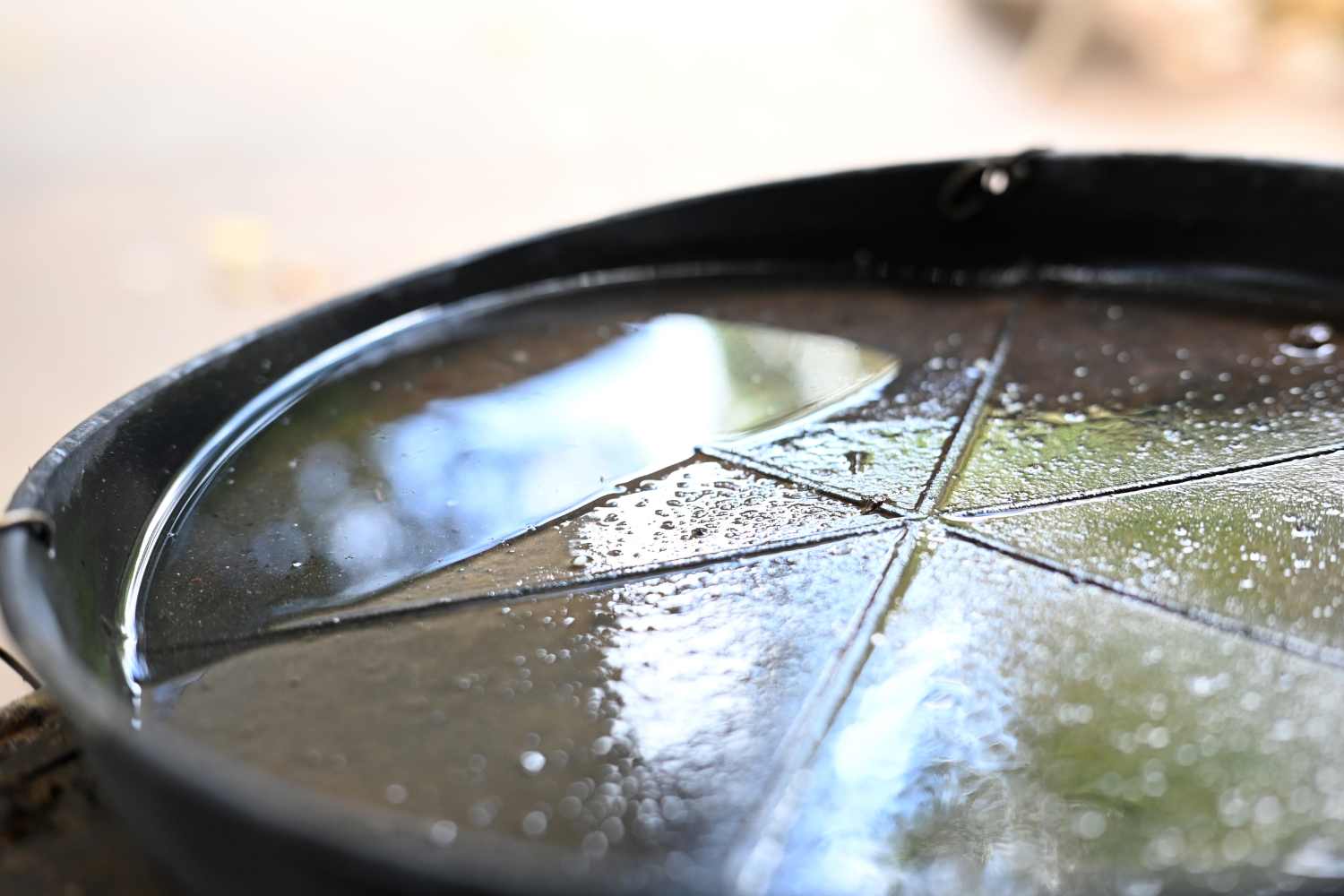
The female specimens – they are always the protagonists when it comes to stings – after mating are put in search of the perfect place. They certainly don’t need a dream location: Any container with a few millimeters of water inside will be more than enough.
The eggs are laid directly on the surface of the water, or along the wet edges of the containers. Then the countdown begins: then a few days are enough – usually between 5 and 10 – because they hatch and become larvae. In the hottest months, the process accelerates further. In practice, it’s like having a organic timer that takes every two weeks.
How to recognize the enemy
Recognize mosquito eggs It is not an easy undertaking. They are elongated and really tiny, often black and/or brunastre depending on the species, and are placed in compact groups, also called “rafts”. They are practically invisible to the naked eye, especially if placed above dark surfaces.
Easier it is to spot the larvaewhich look like small transparent girins, graying, which move in shots under the surface of the water. Do you see them swing vertically, with your head down and the “tail” upwards? Here, that’s the time to say: “I caught you!”
The winning strategy: hit at the source
Have you identified eggs and/or larvae? The solution is soon called: You simply have to eliminate waterso you will empty the container, you carefully jack it and let it dry and, if possible, you will keep it upside down, or covered, to prevent it from collecting the new rainwater.
For i Always saucers full of waterthere is a simple trick: put some sand insidewill absorb humidity and prevent mosquitoes from using that surface as a deposit.
When the water cannot be deleted
Do you have a fountain in the garden that you cannot dry up? Let’s consider the idea of hosting fish that can eat larvae and reduce their number. Of course, this choice requires a certain awareness and commitment to take care of these animals daily.
The control that makes the difference
The real winning weapon against mosquitoes is prevention, because the mosquitoes are “invisible”, and they know how to be very creative. Have you ever checked the manholes of your garden? That gutter that loses just a few drops? And what about the empty vases that collect rainwater, or those toys forgotten in the garden after a thunderstorm? Even a considerable leaf can become a tiny egg pool. Mosquitoes transform any wet angle into a potential nurserytherefore remember to control even the most unthinkable places: you may find that your enemy hides right where you would never have imagined.

Green spaces patrolled at least once a weeklook at the hidden corners, check the saucers, check that there are no stagnation. You will have to invest some of your time, but it is a routine that will save you weeks of evening battles with the dear mosquitoes.
