
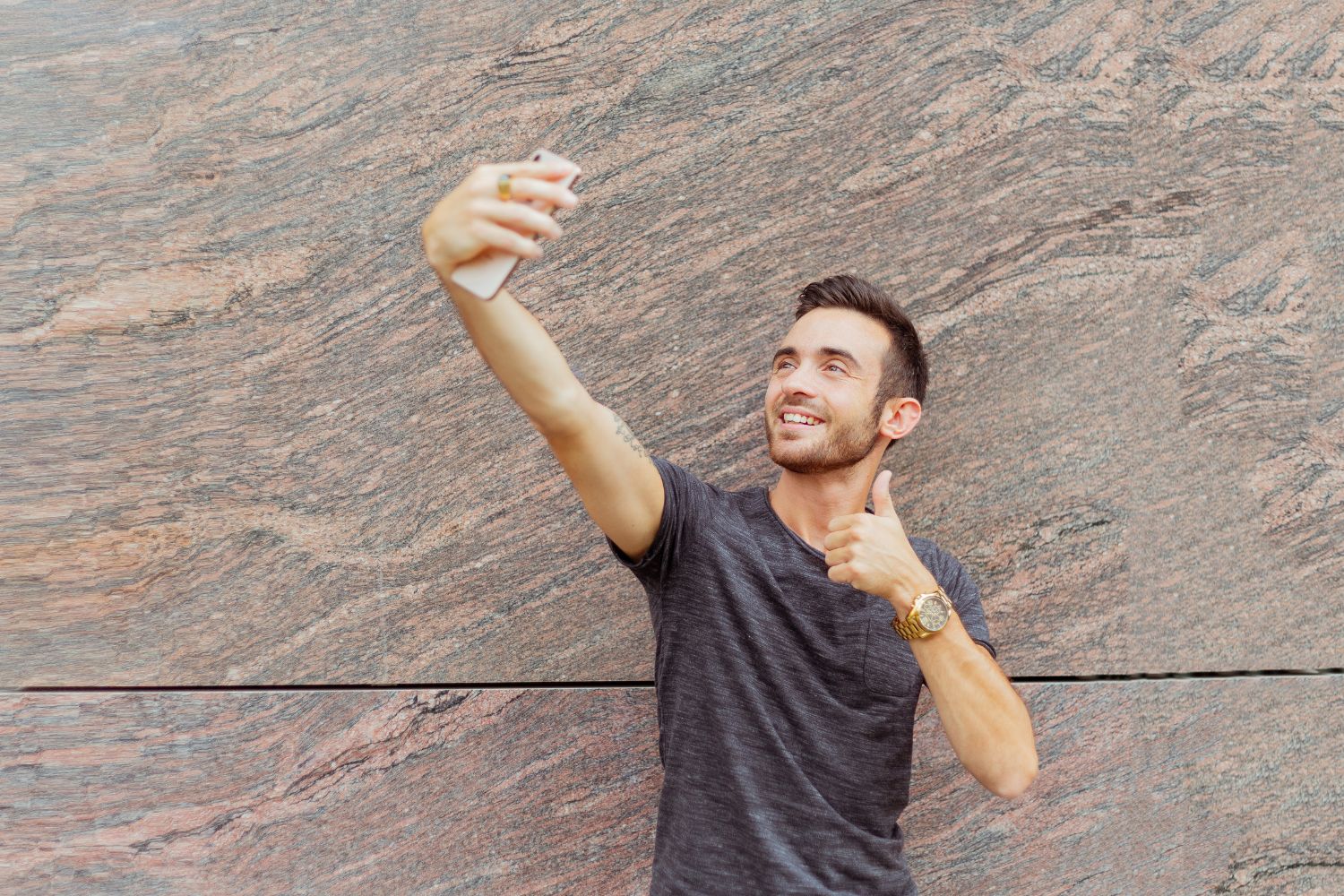
We live in an era when Each post, each photo, every selfie becomes a small performance. And if “the whole world is a stage”, as Shakespeare wrote, today our audience is the Instagram feed. But maybe not everyone knows that There is a side of the face that works better in front of the camera. And no, it is not just a matter of personal or light tastes: Science explains why in selfies, the left side likes more.
Yes, because even if many can’t stand them, selfies are now part of our way of telling us. But be careful: not all selfies are the same, e Choosing the right side (indeed, left) can make the difference.
The left side is more expressive
Apparently, ours brain is responsible for this visual preference. The face muscles that express emotions are controlled by the opposite hemisphere of the brain. And since the right hemisphere is the most involved in emotional elaboration, he is he a Check the left side of the face.
Result? There Left cheek moves more, moves first and better expresses emotions. When we look at a face, even without realizing it, it seems more “alive” us if it is turned to the left. It is an ancient instinct, a sort of “non -verbal language” that our brain reads without realizing it.
And in fact, The images that show the left side of the face are perceived as more empathetic, sincere, happy. Even when the photos are digitally mirrored, the impression remains: that side continues to seem more engaging.
The data speak clearly
It is not just a theory. Scientists analyzed Millions of selfies posted in the city such as New York, Bangkok, Berlin or Moscowand they discovered that Most show the left cheek. And there is more: Selfies showing the left side receive 10% more on average of likes Compared to those with the right cheek.
One study on 20 large Instagram profiles has calculated that A simple movement of the head to the left can bring over 330,000 more likes. A huge difference, especially for those who work in the world of social media. It is not surprising that even in digital marketing this “unwritten rule” is followed: out of 2,000 advertising posts examined, 60% showed the left side of the face of the model.
Even famous cooks seem to know. Out of 493 COVERS OF COOKS, 40% show the chef with the left cheek in the foregroundagainst 32% showing the right.
The left side is that of love and emotion
But this preference does not stop at selfies. AND A deep, almost instinctive trendwhich emerges in many contexts. For example, Most mothers keep their children in her arms on the left side. In this way, children have a privileged view of the most expressive face of the mother – and, not surprisingly, also of her heart. This behavior has been observed.
Even in the past, the artists seemed to know (intuitively) this “emotional rule”. In a study on 1,474 European portraits from the 16th to the twentieth century68% of women and 56% of men were depicted with the Left cheek facing the viewer. Let’s think about Gameat the Girl with pearl earringor to Whistler’s mother: all show the left side.
Curiously, in portraits painted by the same artists on themselvesit is more common to see the right side. But there is an explanation: Self -portraits were made using a mirrorso to paint the left cheek, the artist had to show it in the mirror – and the final result seemed to show the right side.
Scientists also experienced this phenomenon in the laboratory. They asked a group of people of Imagine placing for two types of portrait: one for the family, where to show affection and love; And one for the Royal Society, where to appear intelligent but detached. Result? In the emotional context, most chose to show the left cheek. In the rational context, the percentage has dropped.
This shows us that The choice of the side of the face we show speaks for usoften more than we believe. The message is clear: If you want to seem more authentic, engaging and emotional, show the left side of the face.
And maybe, the next time you take a selfie, you will do it with more awareness. Not only to get more likes, but to really communicate something about you.
