
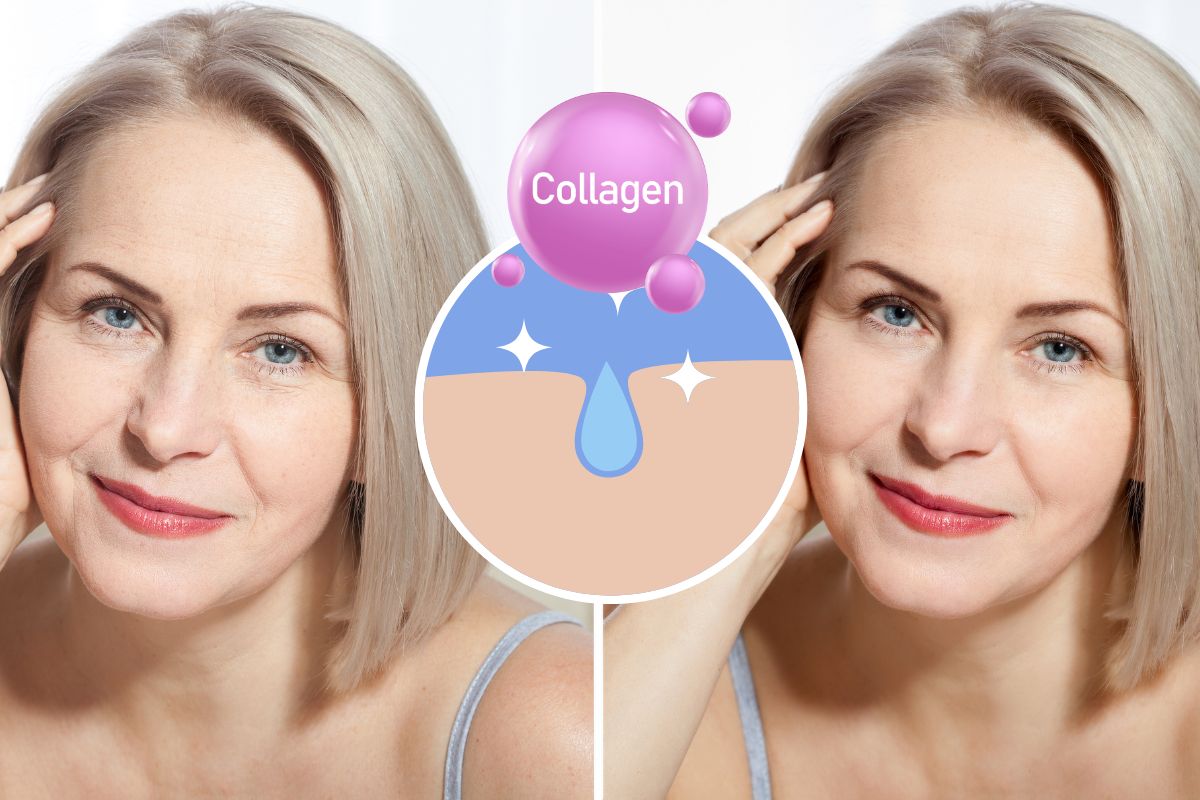
Online, in the pharmacy, in aesthetic institutions and on social networks, practically everywhere Collagen is exalted for the ability to know how to restore its compactness to the skin. It is even found in the 48 Collagène Café menu in Paris, where a small Collagène Shot Dermo Ioniq is served (a drink containing 10 g of collagen, vitamin C, extract of black currant gems and resveratrol), accompanied by a Neptune Kiss (chocolate bite, hazelnuts, anacardi, vanilla and sea collagene).
In Japan and Korea they are now taking every morning, how do you drink coffee at the counter. “The cure of collagen to drink is the new gesture of essential beauty!” He announces the aroma-zone brand for marine collagen of his production.
Captivating but unfounded promises
The alleged benefits are declined at will. For Collagène Peau (Naturavignon), “reduces the appearance and volume of wrinkles thanks to the association of glue and hydrolyzed collagen and elastin that has clinically tried anti-aging effects”, while for the Pré-Collagène Vegan of Argeryys “favors the hydration and compactness of the skin/reduces the appearance of the signs of the age (wrinkles and wrinkles and wrinkles and wrinkles and wrinkles Rughette) “
In the form of capsules, sticks, dust and gummies, It would be the ideal solution to combat skin agingwithout forgetting the contribution to hair beauty and al good functioning of the joints.
But which credit to give to these statements? Does collagen really work? Let’s try to clarify.
What is collagen really
Collagen is simply The most abundant protein of the human body. “This is the main compound of connective tissues such as skin, bones, ligaments, tendons and cartilage”, explains the Institut National de la Santé et de la Recherche Médicale (Inserm).
The name derives from the Greek Kolla, which means precisely “glue”, and by Gennân, which means “generating (glue manufacturer)”. Summarized by the body, contributes to the elasticity of the tissues. “It is a big protein, a bit like the bricks of a house, which works like a plot on which the other constituents are fixed,” specifies Professor Francis Berenbaum, researcher of the anterm and head of the rheumatology service of the Saint-Antoine hospital in Paris.
The scientific reality behind the promises
The problem is that collagen production decreases with age and The idea that external collagen can be filled with this deficit is very seductive, as well as misleading. “The connection is soon done, but it doesn’t work like this,” says Professor Berenbaum.
In the form of cream or serum, Collagen works to … hydrate the skin! “He is an excellent moisturizer, like hyaluronic acid, frequently integrated into cosmetics,” explains Martine Baspeyras, dermatologist and president of the French Aesthetic Society in Dermatology. But In no case can collagen act deeply.
“A collagen -based cream to stop aging has no sense. These large molecules are unable to cross the epidermis barrier “, underlines Dr. Laurence Michel, a researcher of the area on inflammatory skin diseases and aging.
The illusion of peptides
The industrialists explain that they fragment collagen into small bricks, peptides, to facilitate their absorption. “Even in this form, they are unable to repair the dermal structure“, The specialist points out.
As for the collagen orallyProfessor Berenbaum demolishes the practice, in no uncertain terms: “No serious study has shown that by laying collagen, this will replace the missing collagen. In reality, the body fragmes it into amino acids or in very small peptides, the ‘cut into mini-mattons’, then uses it where it needs it, not specifically to replace the collagen that would be missing. “
Clinical studies: more marketing than science
The brands often highlight some clinical study to support the goodness of collagen, however, as Professor Berenbaum reminds us, the reality is very different, since “The rare studies that have been done are of bad quality and therefore absolutely nothing can be concluded“.
Dr. Baspeyras goes against the current, downsizing the negative prejudices on collagen: “I ended up finding a little more convincing studies in Nutrients magazines and International Journal of Dermatology. They conclude that the ingestion of hydrolyzed collagen for 90 days slightly reduces skin aging.”
So do you recommend it to your patients? “I tell them that there is enormous marketing behind all this and that before buying food supplements, you have to try to eat correctly, protect yourself from the sun, hydrate well! Do simple things before ruining you for products that are of no use, or almost nothing! “
The origins of industrial collagen
The brands willingly show the origin of their collagen: Marino, vegetable, cattle … For the needs of the cosmetic and pharmaceutical industry, the molecule is extracted from meat or pork skin products, for example), the sea (scales, skin and fish lises) or from the plant world.
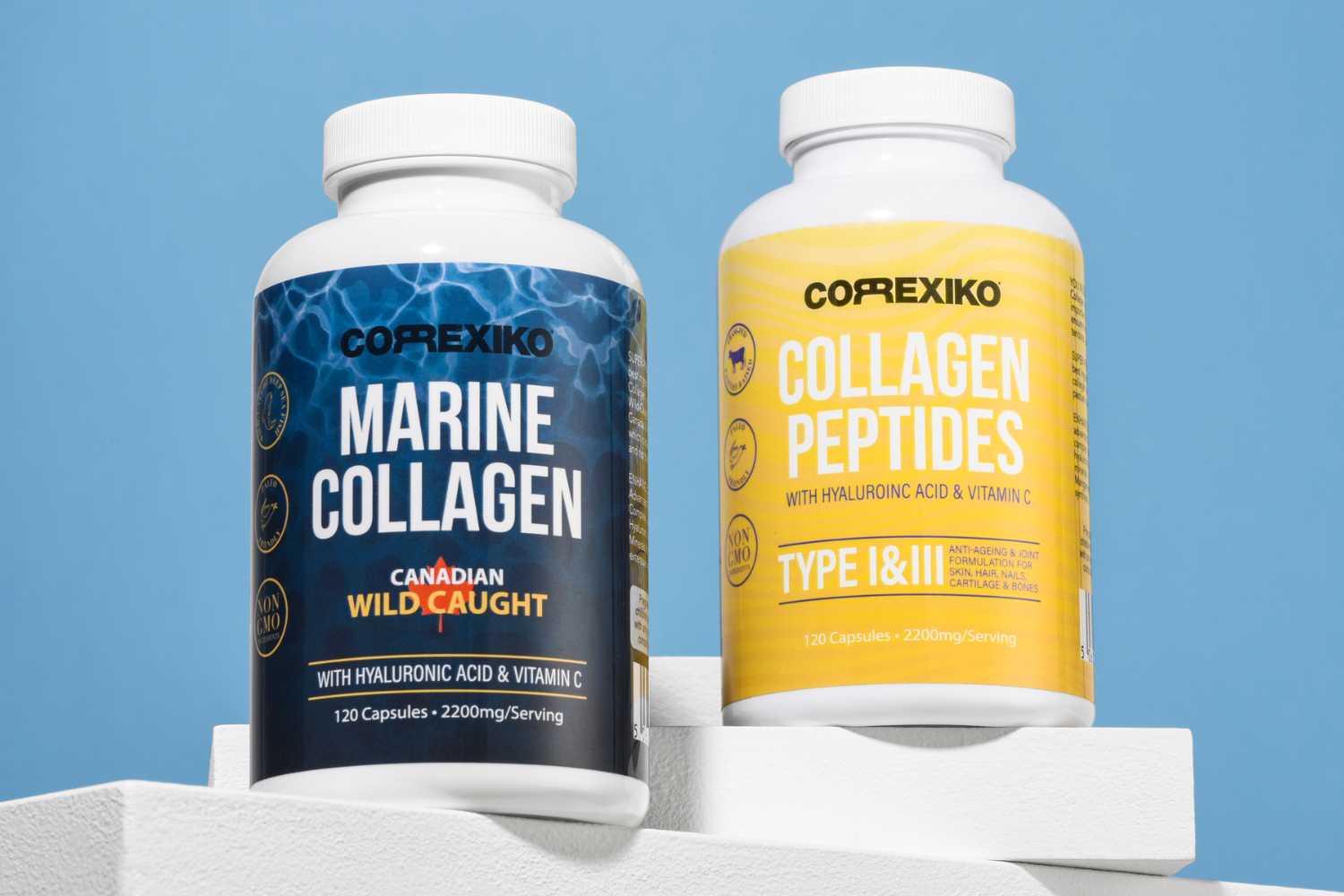
“Whatever its origin, the collagen molecule is almost similar“, The researcher Laurence Michel points out. These molecules are then hydrolyzed to obtain smaller molecules called” peptides “. They are easy to incorporate into cosmetics, drinks, etc. Hoping that the peptides go to act to recompose in collagen or start the production of collagen is illusory“, The specialist points out.
Common sense first of all
The conclusion is clear: Before investing in expensive collagen supplements, it is better to adopt a healthy lifestyle. Good nutrition, sun protection and adequate hydration remain the most effective strategies to keep the skin healthy. Common sense, at a low price, always remains the best anti-aging medicine.
