

The vegetable nut is one of the most used ingredients in the kitchen, especially when you want to add a little flavor to soups, soups, risotto and fast dishes. It is easily found on supermarket shelves, but behind that little cube they often hide ingredients and little -known processes, which are not as healthy as they seem. In this article we try to truly understand what the vegetable nut is, how to do it and why it is not exactly the best as an ingredient.
What is the vegetable nut?
The theory vegetable nut looks like a simple product, which contains only vegetables. But if we look carefully at the list of ingredients, we realize that it is actually composed of much more. The salt is the main one, coming to cover up to 60-70% of the composition. This makes it an ingredient that should be used in moderation, considering that a vegetable nut cube can contain more than half of the daily dose of recommended rooms. Another fundamental ingredient is oil, often palm oil, which serves to give consistency to the nut and to keep it longer.
But it is not only the salt and oil that are part of the nut. There are also plant extracts, which can come from onion, carrot, celery, tomato and other vegetables. These, however, are freeze -dried or dehydrated, losing most of the natural nutrients. In addition, to give that intense flavor that everyone knows, many dice contain monosodic glutamate (MSG), which is a flavor enalcount. Although EFSA (European Food Safety Authority) consider it safe, there are those who accuse the glutamate of causing headache or other annoyances in some people (Chinese restaurant syndrome, so to speak).
How do you do the vegetable nut?
The production of industrial vegetable nut follows a fairly simple process that hides several phases. It begins with the preparation of the vegetable ingredients, which are cooked and concentrated to extract the maximum possible flavor. The concentrate is then mixed with salt, oil, additives and aromas, all to give the product the solid consistency we know.
The liquid part is removed, and the resulting cube or powder are dried. This process, which takes place at high temperatures, could compromise the nutritional quality of the original ingredients, reducing the content of vitamins and minerals.
The “hidden” ingredients of the nut
Although the vegetable nut is labeled as “vegetable”, many of the products on the market contain a good dose of ingredients that it would be better to avoid. Among these, the monosodic glutamate (MSG), which is a substance that increases the perception of taste, therefore capable of making the nut much tastier. Although the WHO (World Health Organization) has never given the MSG a direct alert, many people prefer to avoid this additive, especially if they sensitive to it. It is not uncommon for glutamate to cause reactions such as headache, sweating or palpitations, even if long -term health risks are still widely debated.
In addition, palm oil is another ingredient which, although cheap and easily available, brings with it problems both in terms of health and environmental. It is rich in saturated fats, which increase the risks for the cardiovascular system, and its production has a negative impact on the environment.
The alternatives
If you worry about health and you want to avoid additives, the simplest solution is to prepare a vegetable broth at home. In this way, you can choose your fresh ingredients, without adding excess rooms or preservatives. If you don’t have time, there are glutamate -free and palm -free vegetable nuts on the market, which could be a better choice. Although the cost can be higher, the quality of the ingredients is much better.
For those who have little time available, there are also homemade vegetable nuts, made with fresh herbs and spices, or with dehydrated vegetables but without additives. Another trick is to use natural condiments such as Tamari (a more natural soy sauce), or the miso, which give flavor to the dishes without the need to resort to industrial nuts.
The vegetable nut is certainly practical, but it is important to know what really is inside. Although the name suggests that it is a completely natural product, the reality is that it contains ingredients that are not always healthy, such as excess salt, unhealthy vegetable oils and additives such as monosodic glutamate. For those who want to make more aware choices, preparing a broth in the house is the best solution, while at the supermarket it is possible to find glutamate -free alternatives and palm oil, which are healthier and respect our body and the environment more.
How to prepare the vegetable nut at home
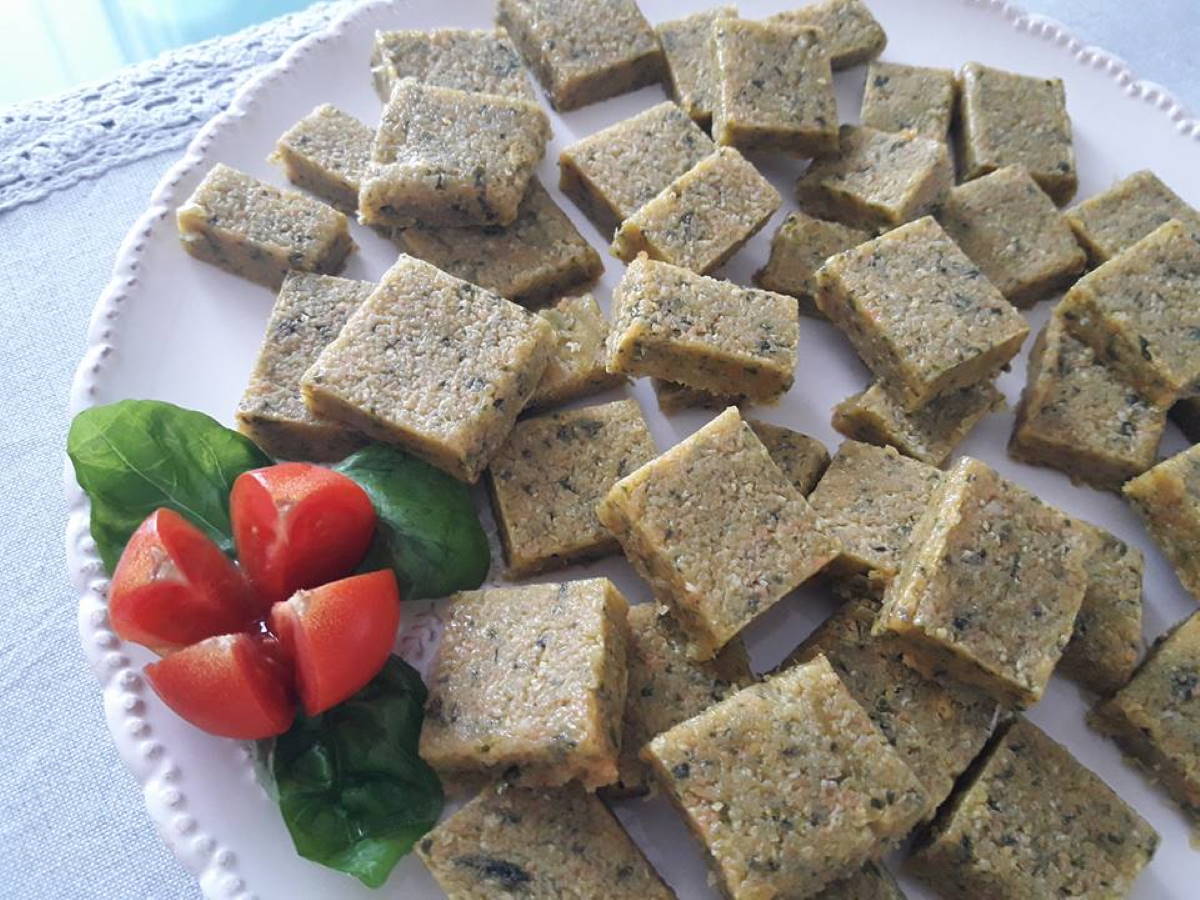
But why buy a product full of preservatives and additives when it is possible to prepare it at home, with fresh and genuine ingredients? With a good self -produced nut we can stock up throughout the season and always have a healthy and natural ingredient ready. In a few steps, in fact, it is possible to obtain a perfect nut to be kept in the freezer and use every time you need.
Ingredients:
Procedure:
Start washing and finely chopping the vegetables. Heat the oil in a non -stick pan and let the vegetables dry for about 10 minutes, stirring occasionally. After this time, add the salt and continue to cook for another 10 minutes, so that the vegetables release their flavors. When the vegetables are well cooked, use an immersion blender to chop finely, until a homogeneous mixture is obtained. Put it back into the pan, mix and let it dry well.
Once the mixture has cooled a little, pour it on a sheet of parchment paper, giving it a rectangular shape. Leave to cool completely and then cut into squares. At this point, arrange the squares on a tray, ensuring that they do not overlap, and put them in the freezer. When they are well frozen, transfer them to a glass container and keep them in the freezer until you need it. With this homemade vegetable nut, you will always have a natural seasoning and without preservatives at hand to enrich each dish.
Don’t you want to lose our news?
