
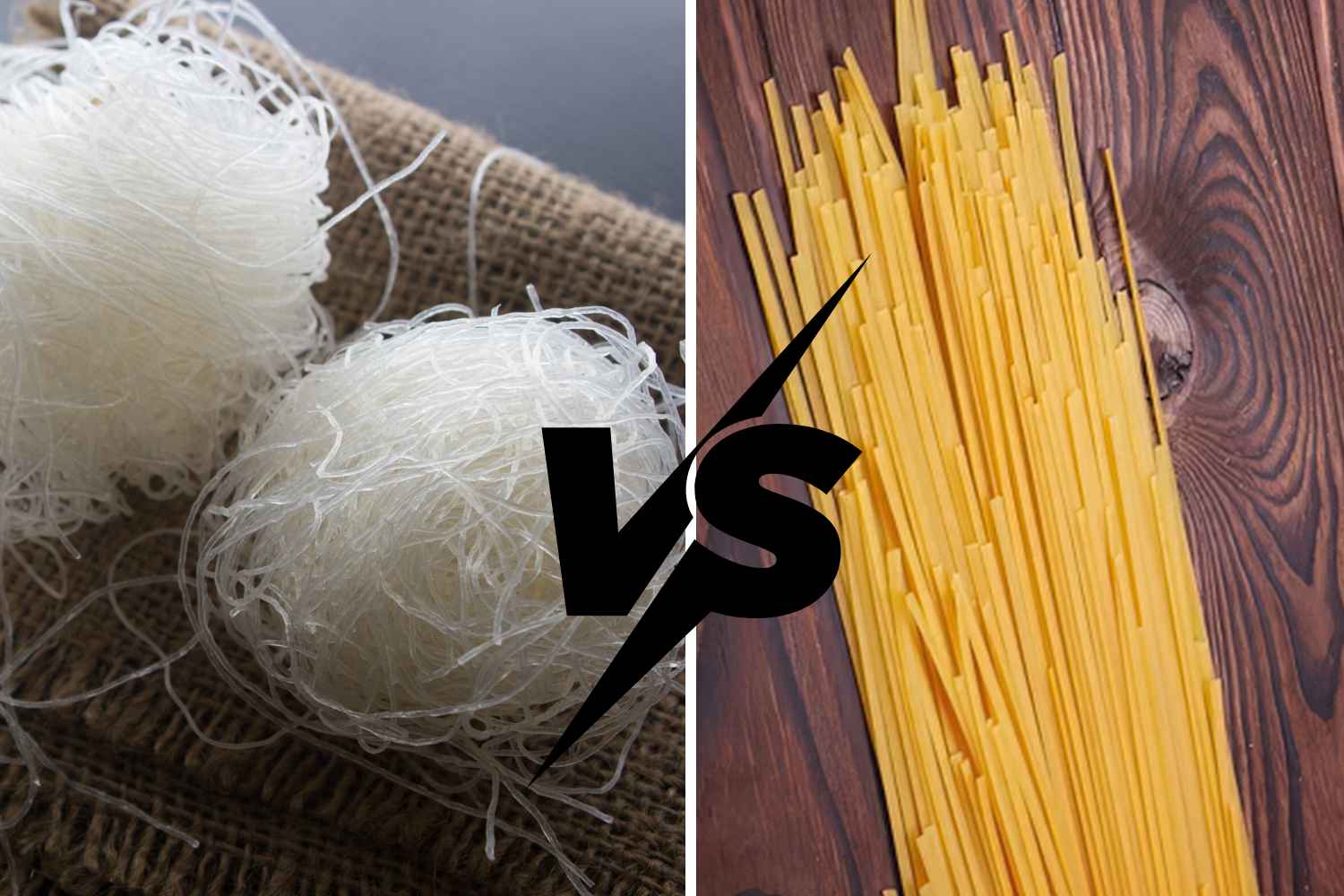
They seem light, almost transparent and very different from the pasta we usually bring to the table. Soy spaghetti, also known as glass noodles or soy vermicelli, are now easy to find even in Italian supermarkets. But from a nutritional point of view, are they really a lighter and healthier alternative to classic pasta? To clarify it is Oeko-Test, who analyzed the characteristics of these particular noodles by comparing them with those of pasta.
First of all, however, it is important to clarify that soy noodles are not really spaghetti in the traditional sense of the term. Unlike Italian pasta, which is generally produced with durum wheat semolina and water, so-called glass noodles are made mainly with water and starch.
The name can also be misleading. In fact, not all of these products are prepared directly with soy: the starch used can come from various plants, especially mung beans, but also peas, corn and other legumes. It is precisely the starch that gives spaghetti their characteristic appearance: after being immersed in hot water they become almost transparent, hence the name “glass spaghetti”.
Their preparation is also very quick. Unlike traditional pasta, it is not necessary to cook them for a long time in boiling water, generally it is sufficient to let them soften for a few minutes in hot water and then drain them.
Are soy noodles healthy?
However, the fact that they are very different from pasta does not mean that they are healthier. Second Oeko-Testtheir main limitation from a nutritional point of view is precisely their composition.
Soy spaghetti is in fact made up largely of starch and therefore provides mainly carbohydrates. In 100 grams of dry mung bean starch product, for example, the carbohydrate content can reach approximately 86 grams.
Carbohydrates are naturally not a problem. On the contrary, they represent a fundamental component of nutrition and provide energy to the body. The point is that, when considered alone, these spaghetti offer relatively few other nutrients: they contain very limited amounts of protein, fat, vitamins and fiber.
For this reason it is not correct to consider them a “healthier” food simply because they have a lighter appearance or because they belong to Asian cuisine. Among other things, they contain a relatively high number of calories (about 350 per 100 grams of cooked soy vermicelli).
The comparison with traditional pasta makes the difference even more evident. Pasta prepared with durum wheat semolina not only provides carbohydrates, but also a certain amount of proteins and fibre. Its nutritional profile is therefore more complete than that of soy spaghetti.
This does not mean that traditional pasta is always the best choice. Much depends on the type of pasta we choose and the entire meal in which it is included. In particular, wholemeal pasta represents an interesting choice because it retains a greater quantity of grain components and can provide more fibre, as well as minerals such as iron, zinc and magnesium and some B vitamins.
According to the German Nutrition Society (DGE), for this very reason wholemeal pasta should be preferred to refined pasta whenever possible, and the higher fiber content also contributes to a greater feeling of satiety.
This does not mean that pasta should be consumed recklessly or that soy noodles are an unhealthy food. They are simply different products, with different nutritional characteristics.
If the goal is to choose a more complete and satiating food, wholemeal pasta may have an advantage. If, however, you want to vary your diet and experiment with new dishes, soy spaghetti can be a valid alternative, as long as it is part of a balanced meal, as the basis for a complete dish. Their rather neutral flavor makes them particularly suitable for accompanying vegetables, tofu, legumes, fish or meat, as well as seeds and condiments.
An advantage for those who cannot eat gluten
Then there is a situation in which soy spaghetti can represent a particularly interesting alternative to traditional pasta, i.e. when it is necessary to avoid gluten.
Since they are generally produced from vegetable starches and not from wheat semolina, they are gluten-free. For those suffering from celiac disease, however, it is not enough to take the absence of wheat for granted: it is necessary to always check the label and choose products specifically certified and suitable for a gluten-free diet, because any contamination during production can also be a problem.
