
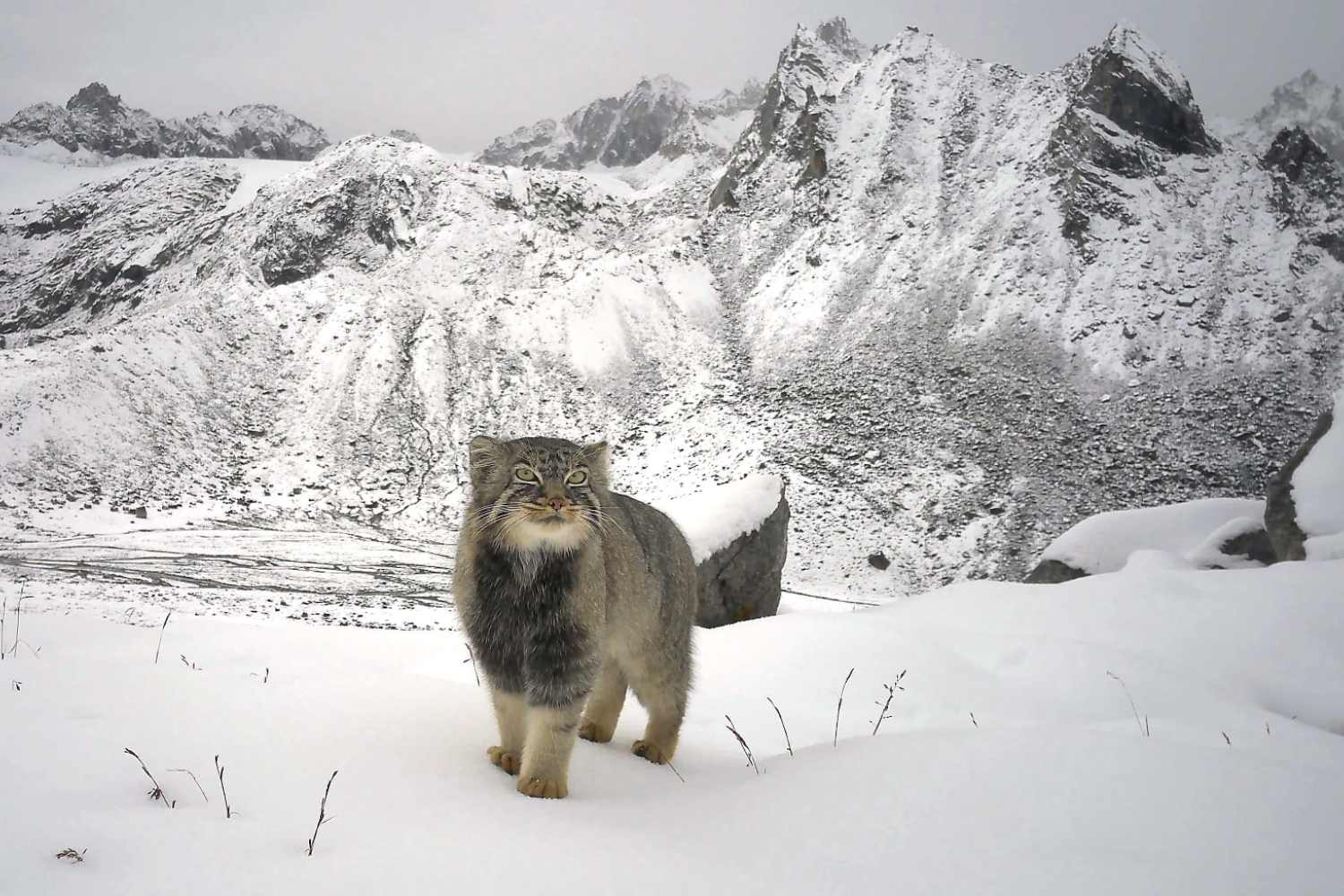
Nobody had ever immortalized him in this part of India and now there is the test: the Pallas cat, also known as Otocolobus Manulwas photographed almost 5,000 meters above sea level in the Arunachal Pradesh. For scientists it is much more than a simple shot because the sighting shows that this feline also lives in Eastern Himalayas, so far excluded from its official distribution.
The expedition that made the discovery possible was not a walk. The WWF India and the local forest department have installed over 130 phototrappole in impervious areas between West Kameng and Tawang, covering more than 2,000 square kilometers. Freezing temperatures, snow and storms did not stop the researchers, determined to reveal the secrets of these mountains.
Not only the Pallas cat: record among the Himalaya predators
The phototrappole gave much more than a single shot. A leopard common at 4,600 meters were immortalized, a nebulous leopard at almost 4,650 meters and even a marbled cat over 4,300 meters. To complete the picture, a Himalayan owl and a flying squirrel with a gray head, both at altitudes never recorded first in India.
These records confirm that the Alpine pastures of the Arunachal Pradesh are a true treasure of biodiversity, inhabited by predators and species that seem to live at the limits of the possible. The discovery strengthens the image of the region as a global wildlife hotspot.
The help of local communities
Behind each image there are days of travel, curtains planted in the snow and the collaboration of the communities. The Brokpa shepherds, who have coexisted with these mountains for centuries, have been an integral part of the project. The phototrappole also resumed them with cattle, a symbol of a fragile balance but still alive between man and nature.
For WWF India, this synergy between science and tradition is the only way to defend such delicate ecosystems. The international program “Trans-Himalayan Rangelands reviving“, Also supported by the British government, it is proof that research and daily life can intertwine in the protection of the Himalayas.
A reference to conservation
Dr. Ricei Kumar Sharma defined the result a “powerful reminder“Of how little we know about high altitude life. The forest department speaks of a”milestone“That reaffirms the importance of the Arunachal Pradesh in the world conservation scene. The hope is that these results attract new investments and international support to continue monitoring and protecting the mountains that keep the Pallas cat and many other invisible treasures.
Don’t you want to lose our news?
You may also be interested in:
