
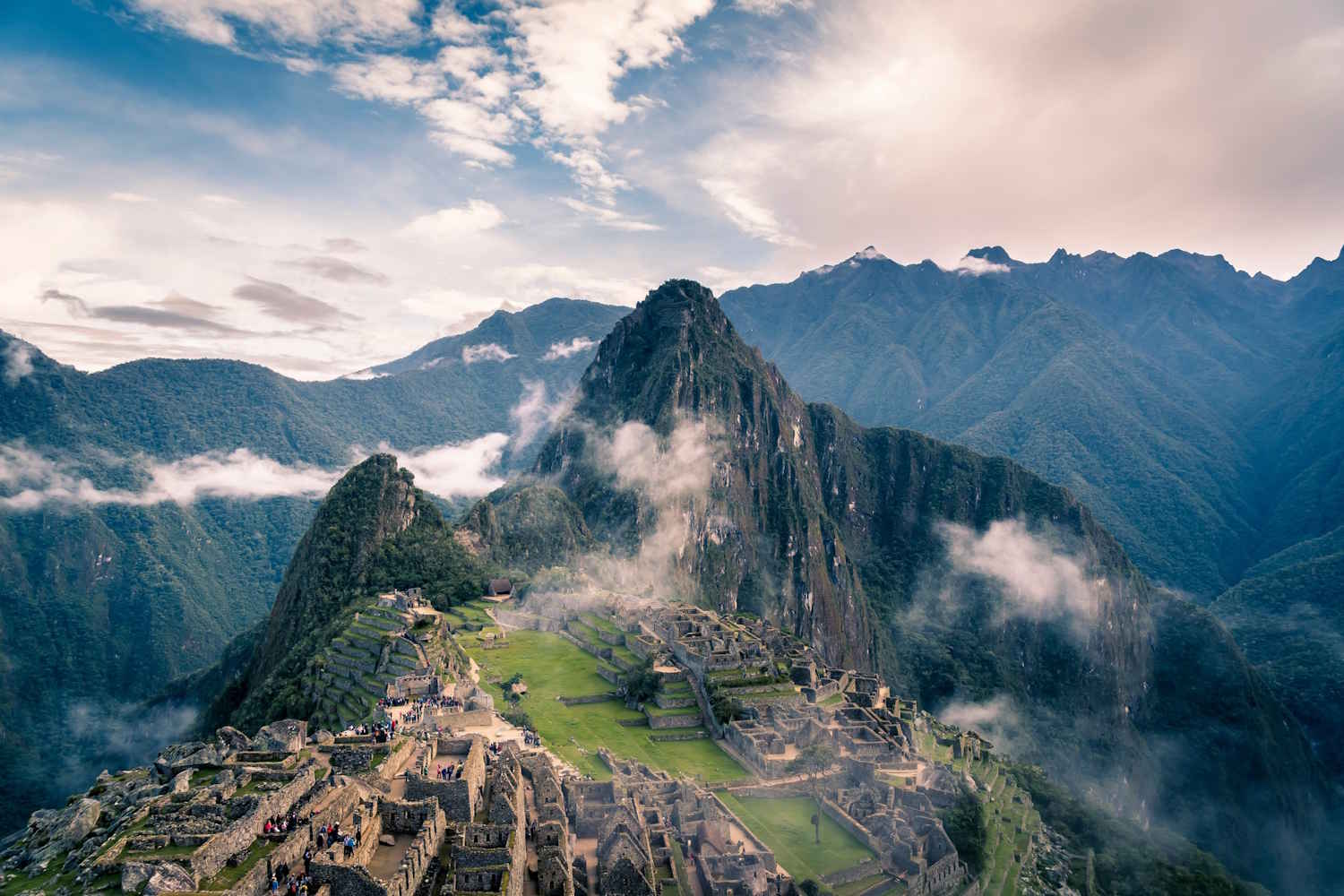
It was 2007 when it was announced that, after a global competition and more than 100 million votes, Machu Picchu would become one of the new seven wonders of the world.
Now, the New7Wonders project warns: “The justifiable and credible stay of Machu Picchu on the list is at risk“And that everything depends on the” decision -making process “of the Peru government.
The reason? A combination of uncontrolled tourism, social conflicts, increase in prices, logistical problems and corruption accusations in the sale of tickets.
Overurorism and the lack of sustainable management
Currently, Machu Picchu receives between 4,500 and 5,600 visitors per day, depending on the season. The Minister of Culture of Peru, Fabricio Valencia, reported that only for 2025 it is expected that more than 1.5 million tourists will visit the archaeological site, exceeding pre-plays.
However, according to the New 7 Wonders organization, the excessive increase in tourism was not accompanied by sustainable management or adequate investments in infrastructure and transport.
Communication to Pueblo y at Estado Peruano
Posted by New7Wonders on Sunday, September 14, 2025
In the last week, over 900 tourists were stuck near the Inca Citadel after the interruption of the Perurail passenger service.
The suspension was decided following the obstruction of a railway section in the mountain region of Cusco, where they fell “Rocks of various sizes“. A similar episode risks hitting tourism hard, the main source of income in the area. The real causes of technical problems, however, have not yet been clarified.
Perurail made it known that “third parties” would have dug near the line, undermining the stability of the tracks and complicating the evacuation operations of visitors. According to the Minister of Tourism Desilu Leon, on the local radio, about 1,400 tourists had already been evacuated on Monday, while another 900 were still blocked to Aguas Calientes, the inhabited center closest to the entrance of the archaeological site.
The story is part of a context of protests that broke out after the expiry of the concession to the consectu bus company, which managed the connections between Aguas Calientes and Machu Picchu. The assignment passed to a new operator chosen by a neighboring district, but the local demonstrators blocked the activity of the new company, fueling further tensions.
What does it mean to lose the title of “wonder of the world”?
The loss of this prestigious recognition would be beyond a simple symbolic question. For Machu Picchu he would mean seeing his international status reduced, with an inevitable drop in visibility and attraction in global tourist circuits. A blow that would translate into heavy economic consequences for Peru, where tourism linked to the site represents one of the main sustenance resources for entire local communities.
But it’s not just about economy. Machu Picchu embodies national pride, historical memory and the link with the Andean cultural roots. A possible deterioration or the loss of the title of “wonder of the world” would affect the collective perception of the value of the site, undermining not only the image of the country in the eyes of the world, but also the identity consciousness of its citizens.
In this sense, defending Machu Picchu is not only an act of protection of cultural heritage, but a social, economic and moral responsibility that concerns both Peru and the international community.
