
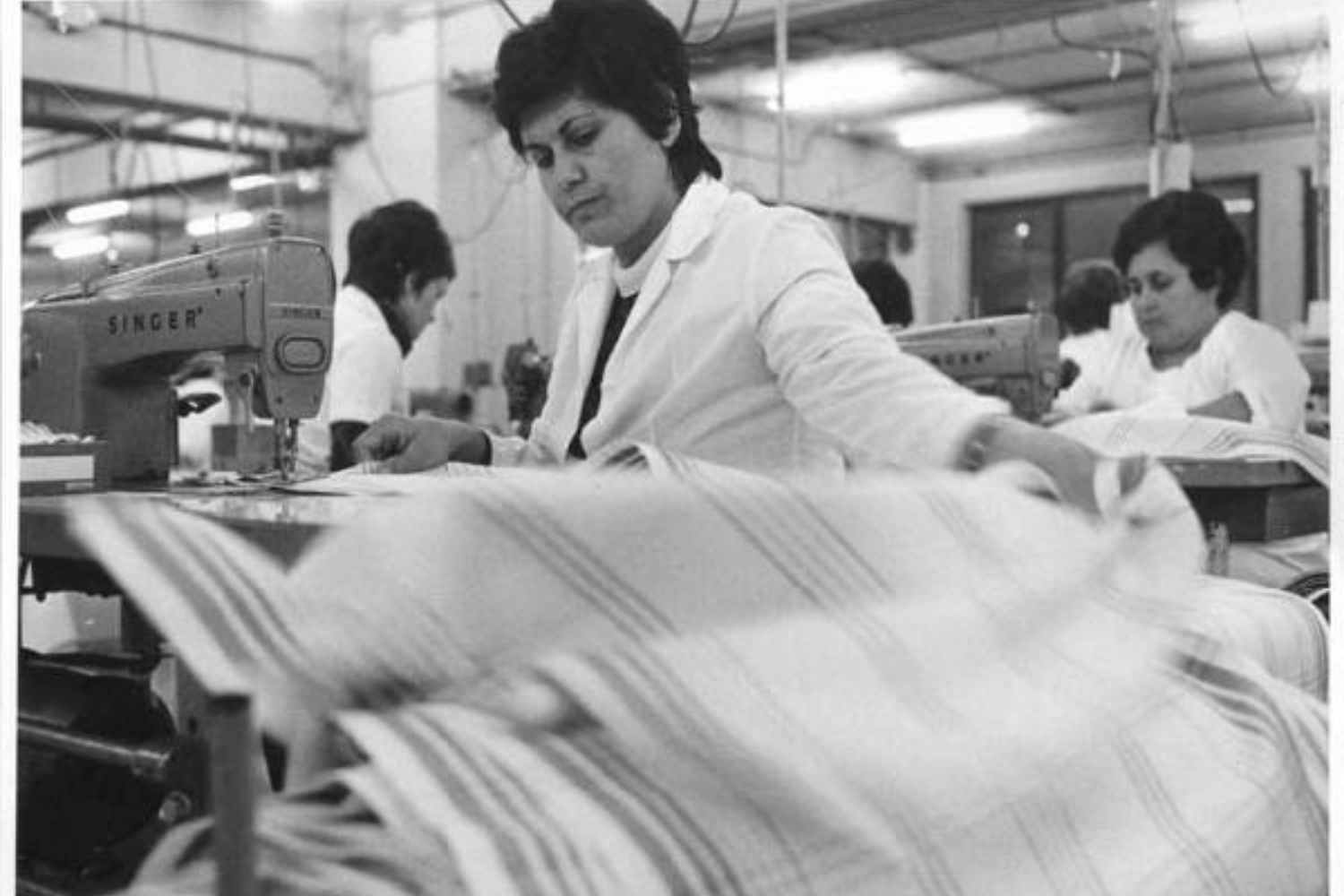
An unreal silence took the place of the hum of the frames. The gates of the Bassetti plant in via per Legnano, in Rescaldina, were sealed with heavy chains. A definitive, announced closure that puts the point to an industrial history almost two hundred years long and turns off the lights on the last, great garrison of the textile tradition of the Upper Milanese. For the approximately 70 remaining workers, the future had already been written in recent months with the relocation to the Cuggiono headquarters, while offices and company shop had moved to Legnano. A progressive dismantling that accompanied the inevitable epilogue.
The roots of this story have in the mid -nineteenth century, when Carlo Baroncini, cousin of the founder Giovanni Bassetti, opened an emporium of valuable linen in the heart of Milan. To free himself from external suppliers, he started a small hand weaving in Rescaldina, who in a short time came to count over one hundred frames. It was the seed of a company destined to mark the identity not only of a country, but of an entire territory.
In the years of the economic boom, Bassetti became synonymous with innovation. It was a pioneer company, capable of revolutionizing the market with the introduction of “ready to use” linen and to guess, among the first in Italy, the power of mass advertising. The inauguration of the new Rescaldina production site, proudly greeted with “the most modern factory in Europe for the oldest industry in the world”, represented the peak of unstoppable growth, consolidating the brand as the undisputed leader of the sector.
But the industrial fairy tale began to creak from the 1980s. A strong debt led the family to give in control, first to the Marzotto group and following the Zucchi group. Meanwhile, international competition and the profound transformations of the global market have gradually eroded the industrial weight of the factory, leading to an inexorable drop -down drop and the downsizing of the activities.
Conversion in sight?
Today, on the future of the immense area a great question mark falls. The property has already expressed the intention of turning the page, aiming for a radical conversion with an expansion of the surfaces to be allocated to logistics. A project that clashes, however, with the will of the municipal administration to protect the legacy of a place with a “strong emotional value”, as underlined in previous communications. The Municipality has placed clear stakes: the new pole will have to guarantee viable sustainability, preserve the historic building on via Saronnese and, above all, safeguard the precious company museum that houses the memory of Bassetti. The fate of the former factory remains suspended, in a delicate balance between the new market logic and the duty not to erase the traces of a story that belongs to everyone.
