
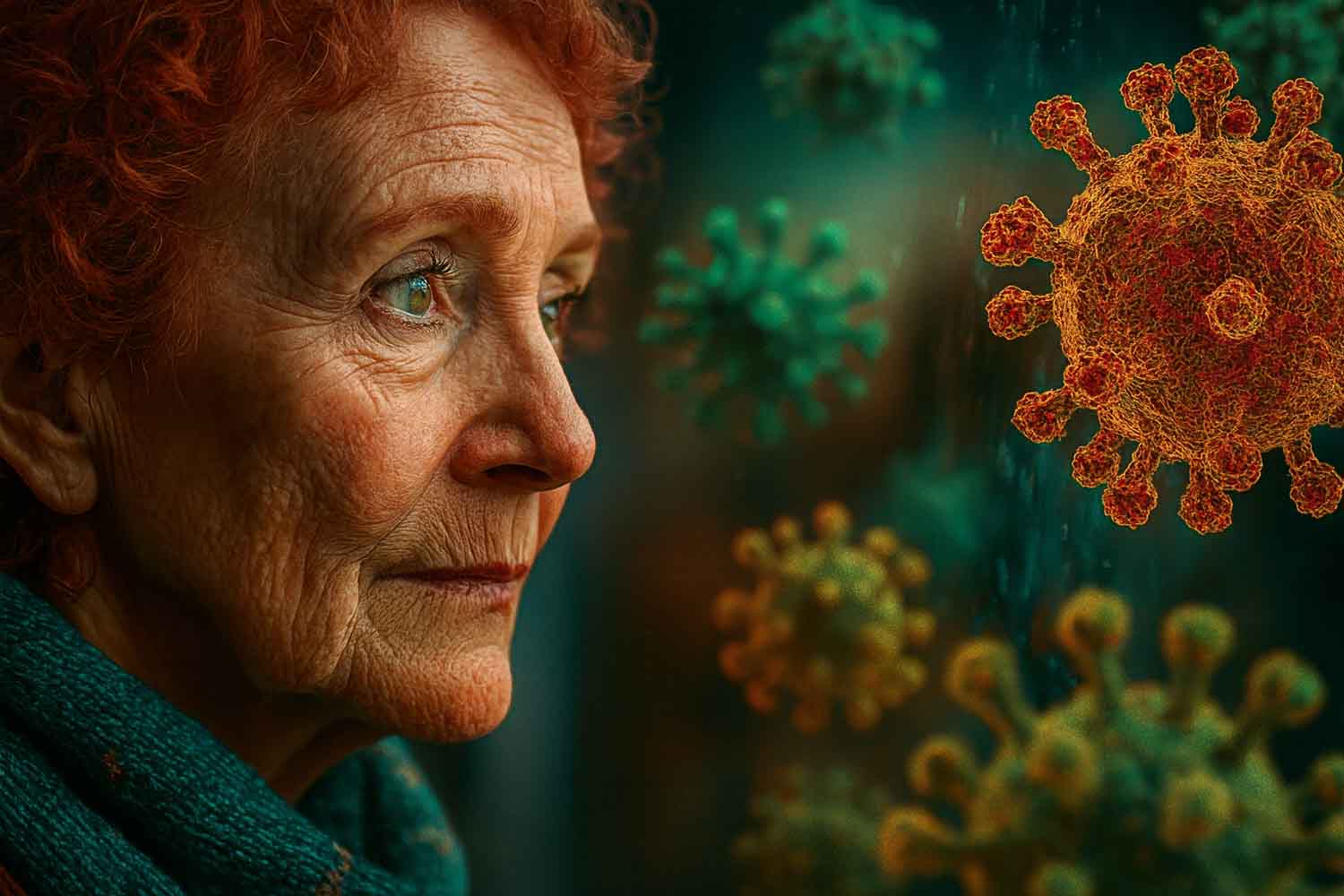
In recent years, numerous studies have highlighted a surprising figure: the vaccines, in addition to protecting from viral infections, could offer a protective effect against dementia, one of the most devastating and careless neurodegenerative diseases. Among all, the vaccine against the fire of Sant’Antonio (Herpes Zoster) proved to be the most effective, with a reduction in the risk of dementia equal to 20%.
This vaccine, initially introduced in 2006 to prevent the painful rash typical of the Zoster virus, attracted the attention of the scientific community. A search published on Nature In 2025 he monitored almost 300,000 elderly people in Wales, comparing groups born a few weeks later but with different access to the vaccine, according to the date of birth. After seven years, those who had received the vaccine showed a risk of dementia of 3.5% lower in absolute terms, equal to a relative reduction of 20%.
The most recent and powerful version of the vaccine, Shingrix, is now recommended by the centers for the prevention and control of diseases for all adults over 50 years of age, or for the youngest with a compromised immune system. Yet, in 2022, only a third of the eligible Americans had received at least one dose.
Even influence, RSV and Tdap show similar effects in brain protection
It is not just the vaccine against Herpes Zoster that shows a link with the reduction of the risk of dementia. Convincing data also emerge from other vaccines widely used, such as those against seasonal influence, RSV (syncitial respiratory virus) and TDAP (tetanus, difterite, pertussis).
A large US study out of over 200,000 elderly people confirmed that both the living vaccine Zostavax and the recombinant SHINGRIX one were associated with a lower risk of dementia, with a net advantage for Shingrix: on average, guaranteed 164 days more without dementia than Zostavax.
In 2022, another investigation published on Journal of the American Geriatrics Society He found that the people who had received both the vaccine against Herpes Zoster and the TDAP showed a halved risk of developing dementia compared to those who had not received any vaccination.
Even the influence vaccines show significant benefits. Research conducted on 1.8 million Americans over 65 revealed a 40% reduction in Alzheimer’s risk in vaccinated subjects. Another 2024 study on over 70,000 individuals recorded a 17% drop in the risk of dementia.
The RSV Arexvy vaccine, recommended for people over 60 years of age, was associated with a 29% reduction of dementia diagnoses in the 18 months following vaccination. This was confirmed by a team from the University of Oxford, underlining that the protection occurs despite the virus has only mild effects in most cases.
Why could vaccines also work against dementia?
Although the correlation between vaccinations and reduction of dementia is supported by consistent data, scientists invite prudence: most of these studies are observational and cannot demonstrate a direct bond of cause-effect.
Three main hypotheses are taking shape:
- Prevention of serious infections: diseases such as flu, herpes zoster and RSV can accelerate brain aging. A study on Nature Aging of 2024 highlighted how these infections stimulate inflammation that favor brain atrophy, thus increasing the risk of dementia.
- Effect of the adiuvants in vaccines: some vaccines, such as Shingrix and Arexvy, contain an adjuvant called AS01, which stimulates the immune system. Laboratory studies suggest that this substance can activate immune cells capable of protecting the brain. However, further studies are needed to confirm these effects in humans.
- Reduction of stroke risk: the Herpes Zoster virus is associated with an increase in the probability of stroke, a well -known risk factor for dementia. Avoid infection could therefore also reduce the incidence of cerebrovascular events.
It is interesting to note that, in different analyzes, the protective effect of vaccines appears more marked in women than men, even if the reasons are not yet clear.
A revolutionary idea: prevent dementia through vaccines
The possibility that a simple vaccination can protect the brain from the onset of dementia represents an epochal turning point. In a world where side effects are often negative, we could find ourselves faced with a beneficial secondary effect capable of radically modifying the aging of the population.
As Dr. Robert H. Shmerling wrote for Harvard Health Publishingvaccinating today means protecting yourself from painful diseases such as herpes zoster and, potentially, for much more.
However, it should be remembered that vaccines are not a miraculous solution. They work better if integrated in a healthy lifestyle. According to the Lancet Commission of 2024, up to 45% of cases of dementia could be avoided or delayed thanks to changes in the lifestyle: regular physical activity, blood pressure control, reduction of the consumption of alcohol and treatment of auditory loss are all key factors.
You may also be interested in:
