
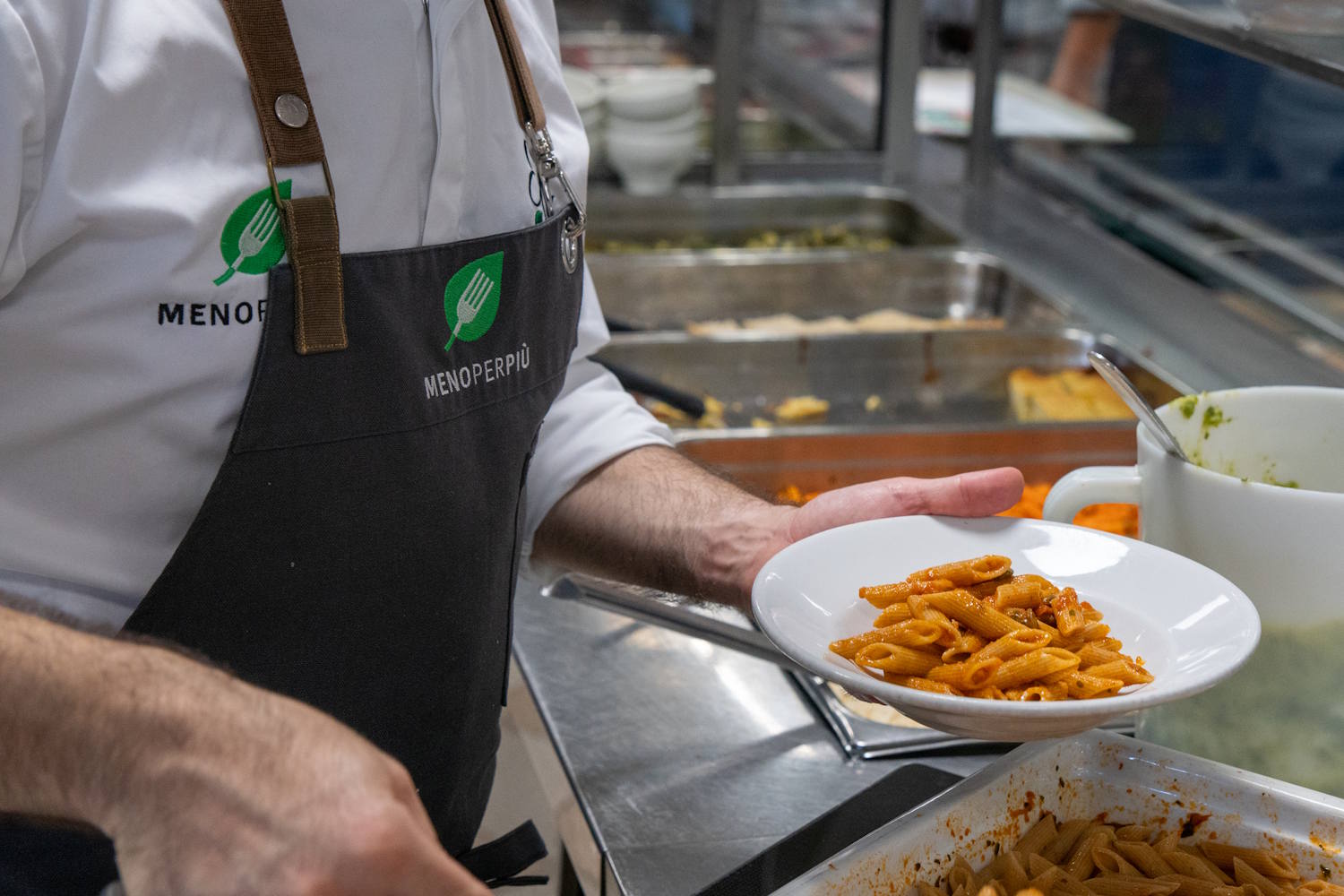
On the occasion of World Food Day scheduled for 16 October, the day on which the world celebrates the importance of food and its impact on the planet, a sobering fact arrives: Lombardy’s university canteens are still far from a sustainable food model.
The new report says so “Canteens for the Climate”created bybeing Animali, Legambiente Lombardia and Terra!, with the support of the Cariplo Foundation.
With over 330 thousand students and tens of thousands of employees, Lombardy’s universities could be a decisive driver for the food transition. In fact, canteens are places where every day you can choose – and teach – a healthier and more planet-friendly catering model. But the report tells of a reality still made up of old specifications, opaque menus and economic criteria that prevail over quality and sustainability. Only a few universities show the courage to really change.
Four excellences from which to start again
Among the most virtuous experiences, the report highlights four examples that demonstrate that transformation is possible:
Small, big revolutions that demonstrate how collaboration between universities, public bodies and civil society can produce concrete results.
Canteens still stuck in the past
Outside of these cases, however, the picture remains worrying: over two thirds of the specifications analyzed are obsolete and not very transparent, with lacking information on the ingredients and poor controls on the quality of the service. In many cases, the environmental impact of food is not even taken into consideration.
Yet, according to the EAT-Lancet Commission, food systems are responsible for almost 30% of global greenhouse gas emissions, but reforming them could reduce these emissions by half. Reducing meat and increasing vegetable proteins is not only an ethical choice, but a climate necessity.
The worst universities
The “Canteens for the Climate” report on university catering in Lombardy does not assign a score or a formal ranking to define the “bottom” universities, but, in any case, the analysis highlights several universities that present significant critical issues and ample room for improvement, in particular with regard to the offer of plant-based dishes, the updating of specifications and transparency.
From the report, the universities which, based on the analysis of the specifications and sampled menus, show the worst performances or the most critical deficiencies in terms of sustainability and plant-based offerings are:
1. IULM Free University of Languages and Communication – Milan
2. “Statale” University of Milan (Milan branch and decentralized Lodi branch)
3. University of Insubria – Varese and Como
4. University of Pavia (Canteens with dated specifications)
In general, the main critical issues that place these universities at a disadvantage concern the obsolescence of the specifications (dating back to before 2020) and the consequent absence of binding indications relating to plant-based menus, compromising transparency and the possibility of informed choice by students.
“Canteens can be engines of change”
University canteens can and must adopt more sustainable, healthy and equitable models, abandoning an obsolete and not very inclusive paradigm – declare the three associations. The tools are there: guidelines, good practices and regulations. Now we need the will to apply them systematically and with rigorous controls.
In May, ANDISU (National Association for the Right to University Education) released the new Guidelines for Sustainable University Catering, which promote a greener and more conscious approach, reducing waste and favoring plant-based and local ingredients.
The food we serve every day in universities is not just nourishment: it is culture, education, the future. Choosing a plant-based menu means reducing emissions, protecting biodiversity, saving water and giving a concrete example to the new generations.
University canteens can become true laboratories of ecological transition: places where sustainability is learned, practiced and shared – one meal at a time.
