
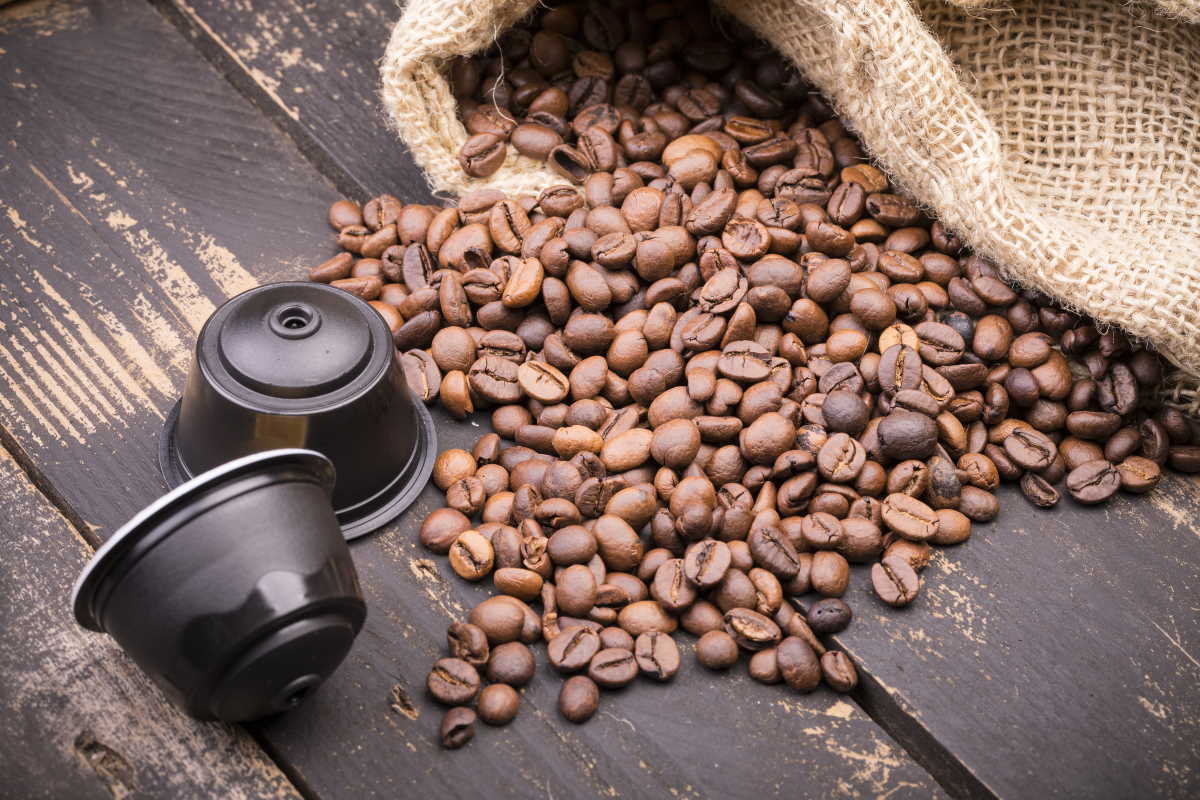
Dolce Gusto capsules have become a must for coffee lovers looking for convenience without giving up a creamy, rich espresso. But not all capsules are the same: from flavor to sustainability, the choice is not always easy.
Dolce Gusto capsules are notable for their plastic construction and larger size than Nespresso capsules, but plastic can complicate recycling. This is why it is not enough just to choose based on taste, but you must also pay attention to the quality of the product and the environmental impact. Altroconsumo tested 20 compatible capsules, discovering which options offer the best value for money and which ones to avoid. If you’re a coffee enthusiast and want to know more about what to put in your cup, read on to find out which are the best choices according to the test.
Altroconsumo analysis: how Dolce Gusto capsules were tested
Altroconsumo analyzed 20 capsules compatible with the Dolce Gusto system, evaluating aspects such as creaminess, aroma, quality-price ratio and environmental sustainability. Each product was subjected to tastings by both experts and consumers, to examine the organoleptic quality and food safety. The analysis also verified the presence of contaminants such as ochratoxin A and acrylamide, as well as the ecological impact of the packaging.
The results: the best Dolce Gusto compatible capsules
1. LAVAZZA ESPRESSO CREMOSO – Score 68, Quality: Good, Average price €0.33/capsule
Lavazza Espresso Cremoso stands out for its creaminess and balanced taste. With a score of 68, it is one of the best options for those looking for a creamy and well-rounded coffee. The price of €0.33/capsule is competitive, considering the quality.
2. CARRARO 1927 INTENSE AROMA AND TASTE – Score 67, Quality: Good, Average price €0.17/capsule
Carraro 1927 Aroma e Gusto Intenso stands out for its intensity and rich aroma. With a score of 67 and a very economical price, it is an excellent option for those looking for an intense coffee at an affordable price.
3. CONAD ESPRESSO FULL BODY – Score 66, Quality: Good, Average price €0.25/capsule
Conad espresso coffee is appreciated for its robustness. With good quality at an affordable price, it is ideal for those who love a coffee with a strong body.
4. CAFFÈ VERGNANO 1882 CREMOSO – Score 64, Quality: Medium, Average price €0.33/capsule
Vergnano 1882 Cremoso is an interesting choice, although it doesn’t excel in quality compared to other options. Its creamy taste and medium price make it a decent choice for those looking for something simple.
5. LOLLOCAFFÈ ARGENTO ESPRESSO – Score 64, Quality: Medium, Average price €0.23/capsule
LolloCaffè Argento Espresso offers a good, if not amazing, coffee experience with average quality. It is an economical option for those looking for a daily drink but without too many pretensions.
Best buy: COFFEE BERNINI ORO DI NAPLES – Score 59, Quality: Medium, Average price €0.14/capsule
As with Nespresso capsules, also in the case of Dolce Gusto capsules, Caffè Bernini Oro from Naples wins the title of “Best Buy” for its excellent quality-price ratio. At only €0.14/capsule, it is one of the cheapest and most convenient options, albeit with an average quality.
How to choose the right Dolce Gusto capsules
Beyond taste, packaging sustainability is a growing concern among consumers. Plastic capsules are more difficult to recycle, so it is essential to consider the ecological impact when purchasing them. Furthermore, as with Nespresso capsules, it is important to evaluate the organoleptic quality, the presence of contaminants and food safety, for a coffee that is not only good, but also safe.
The complete ranking of Dolce Gusto capsules:
- LAVAZZA ESPRESSO CREMOSO – Score 68, Quality: good, Average price €0.33/capsule
- CARRARO 1927 INTENSE AROMA AND TASTE – Score 67, Quality: good, Average price €0.17/capsule
- FULL-BODY CONAD ESPRESSO – Score 66, Quality: good, Average price €0.25/capsule
- CAFFÈ VERGNANO 1882 CREMOSO – Score 64, Quality: average, Average price €0.33/capsule
- LOLLOCAFFÈ ARGENTO ESPRESSO – Score 64, Quality: average, Average price €0.23/capsule
- KIMBO ESPRESSO NAPOLI – Score 64, Quality: average, Average price €0.26/capsule
- COFFEE BORBONE NOBLE BLEND – Score 64, Quality: average, Average price €0.28/capsule
- NESCAFÈ DOLCE GUSTO NAPOLI – Score 64, Quality: average, Average price €0.33/capsule
- DON JEREZ (EUROSPIN) ESPRESSO – Score 63, Quality: average, Average price €0.21/capsule
- COOP ESPRESSO 100% ARABICA – Score 63, Quality: average, Average price €0.28/capsule
- CAFFÈ TROMBETTA L’ESPRESSO DOLCE – Score 61, Quality: average, Average price €0.24/capsule
- CARREFOUR EXTRA INTENSE – Score 61, Quality: average, Average price €0.22/capsule
- GIMOKA CREAMY ESPRESSO – Score 61, Quality: average, Average price €0.24/capsule
- KARISMA (MD) 100% ARABICA – Score 61, Quality: average, Average price €0.21/capsule
- SEGAFREDO ZANETTI CLASSICO – Score 61, Quality: average, Average price €0.28/capsule
- COFFEE BERNINI ORO DI NAPLES – Score 59, Quality: average, Average price €0.14/capsule
- COFFEE CORSINI 1950 CREAMY – Score 59, Quality: average, Average price €0.22/capsule
- BELLAROM (LIDL) ESPRESSO BARISTA – Score 59, Quality: average, Average price €0.21/capsule
- TRINCA COFFEE CREAMY BLEND – Score 59, Quality: average, Average price €0.25/capsule
- BONDI’ CREAMY COFFEE – Score 58, Quality: average, Average price €0.15/capsule
How the test was carried out
The methodology of the investigation
The analysis examined various aspects crucial to evaluating compatible capsules, with particular attention to the quality of the coffee, food safety, clarity of labels and the environmental impact of the packaging.
Regarding the quality of the coffee, the following were considered:
Furthermore, the presence of potentially harmful substances was verified, such as:
The organoleptic evaluation was carried out by combining consumer tastings with sensory tests carried out by certified experts, applying the IIAC (International Institute of Coffee Tasting) method.
The experts also checked the mandatory information on the packaging (such as the product name, batch number, expiry date and net weight) and optional information (such as the origin, composition of the mixture, degree of intensity and storage instructions).
Finally, the ecological impact was a key factor. Packaging was analyzed from various aspects, including:
All these factors contributed to the final score, with the following weights: tasting had an impact of 40%, quality indicators had a weight of 28%, contaminants had a weight of 12%, and labeling and packaging had a weight of 10% each.
