
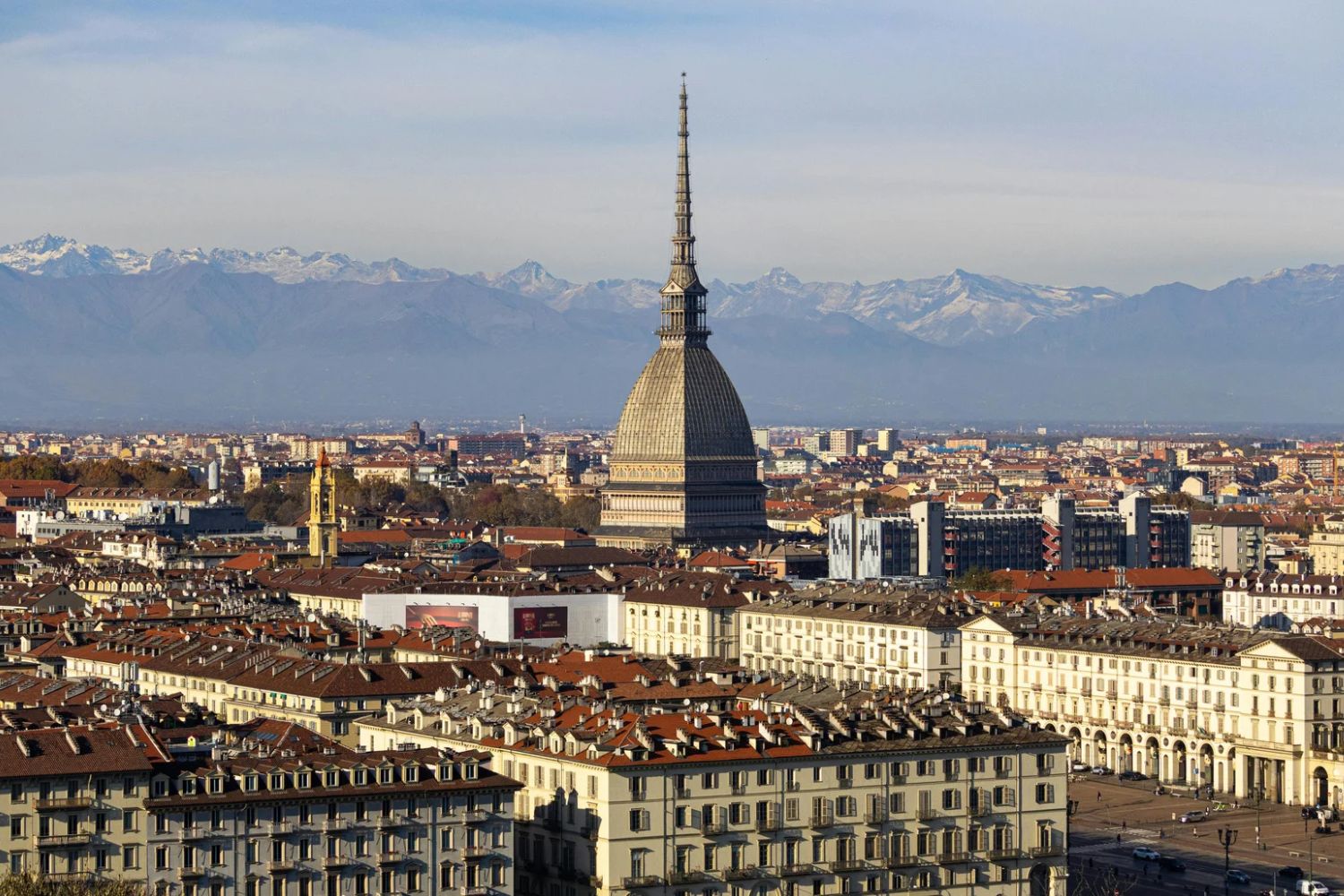
There are 5 Italian cities analyzed and none are even among the top 10 places. If you live in Milan or Turin, the data tells a reality that is anything but reassuring: the two cities are among the last five in Europe for air quality and sustainable mobility policies. And Florence, Rome and Bologna are not doing any better.
This is stated in the new City Ranking 2026 – Free to Breathe by Clean Cities, the European coalition that brings together over 150 environmental and civil society organisations. The report analyzed 40 large European cities based on data from the European Environment Agency (EEA), assessing not only how polluted the air is, but also what administrations are doing to improve it.
The result? Milan stops in 36th place, Turin in 37th.
The ranking of Italian cities
Among the five Italian cities examined, the best situation is that of Florence, which however does not go beyond 22nd place.
Here are the positions:
@Clean Cities
The ranking assigns ratings from A, reserved for the cities with the best results, to F, for those with the worst performances.
The concentrations of nitrogen dioxide (NO₂), largely linked to road traffic, and fine particulate matter (PM2.5), produced by various sources, including transport, heating and production activities, weigh on the Italian results.
Milan also records an average PM2.5 concentration of 19.5 micrograms per cubic meter, almost double the new European annual limit of 10 µg/m³ expected for 2030.
Only three European cities already comply with the new limits
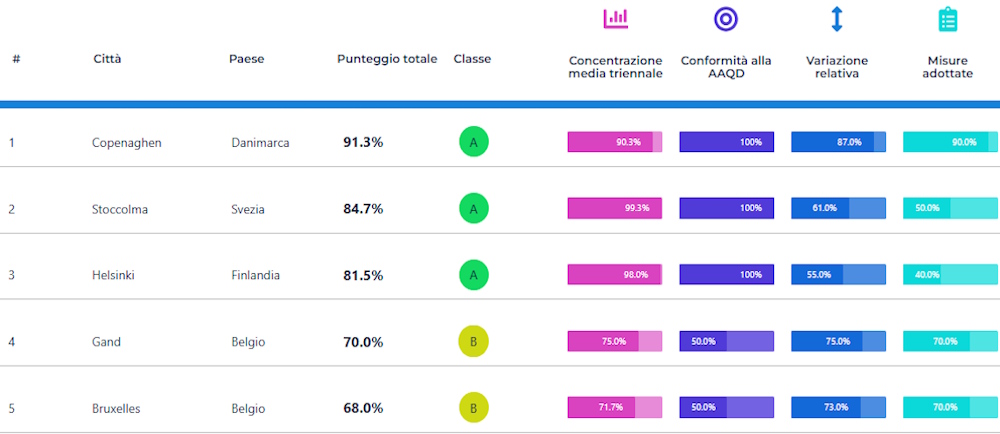
If Italy is struggling, the European picture is not much more encouraging. According to Clean Cities, 37 of the 40 cities analyzed exceed at least one of the four annual and daily thresholds considered for NO₂ and PM2.5 by the new European air quality directive.
Eighteen cities even exceed all four thresholds. The only ones to already respect them today are Copenhagen, Stockholm and Helsinki, which also occupy the first three places in the ranking.
@Clean Cities
It is no coincidence: Copenhagen, the first in Europe, has invested in a widespread cycle network, electric buses, low-emission zones and school roads. Measures that contribute to reducing citizens’ exposure to pollution produced by traffic.
London, in 16th place, has also recorded progress in reducing nitrogen dioxide, also thanks to the restrictions introduced with the Ultra Low Emission Zone. Paris, 24th, has instead focused on cycling mobility and reducing the space allocated to cars.
Different experiences, but with a common element: improving the air requires continuous policies, not occasional interventions.
The expiration of the new European directive
The report comes at a particularly delicate moment. By 11 December, European Union member states will have to transpose the updated directive on air quality, which introduces stricter limits to be respected by 2030.
The Clean Cities research took four indicators into consideration:
Although the ranking does not constitute a formal verification of cities’ legal compliance with the directive and the data relating to 2025 are still subject to possible updates, it remains a difficult signal to ignore: many European cities must accelerate to be prepared for 2030.
Two petitions
On the occasion of the publication of the ranking, Clean Cities launched two petitions addressed to the municipal administrations of Milan and Turin. The requests concern concrete interventions on urban mobility: more safe cycling infrastructures, school roads, less polluting public transport and solutions to reduce emissions linked to vehicle circulation.
The petitions are available on the sites dedicated to Milan and Turin.
