
Can an exotic fruit become a symbol of Calabrian biodiversity like bergamot and chili pepper? The answer, more than positive, comes from annona, also known as ‘also’ cirimoia or cherimoyawhich for centuries has found its ideal habitat at the tip of the country. An unconventional protagonist of the southern agri-food tradition tells a story of adaptation and discovery that is worth knowing.
The origin of the fruit has as its starting point the South American Andes, where it grows spontaneously. It was then the Spaniards who introduced it to Calabria at the end of the eighteenth century: the province of Reggio Calabria proved to be perfect for its cultivation, thanks to the Mediterranean climate, a mild temperature which, together with the excellent exposure, creates optimal growth conditions. Today annona is part of the De.co products, the municipal designation of origin, with the official name of Annona di Reggio. The plant belongs to the family of Annonaceae and also grows in Spain, Portugal, Israel and in some African and Asian countries.
The particular appearance of the annona
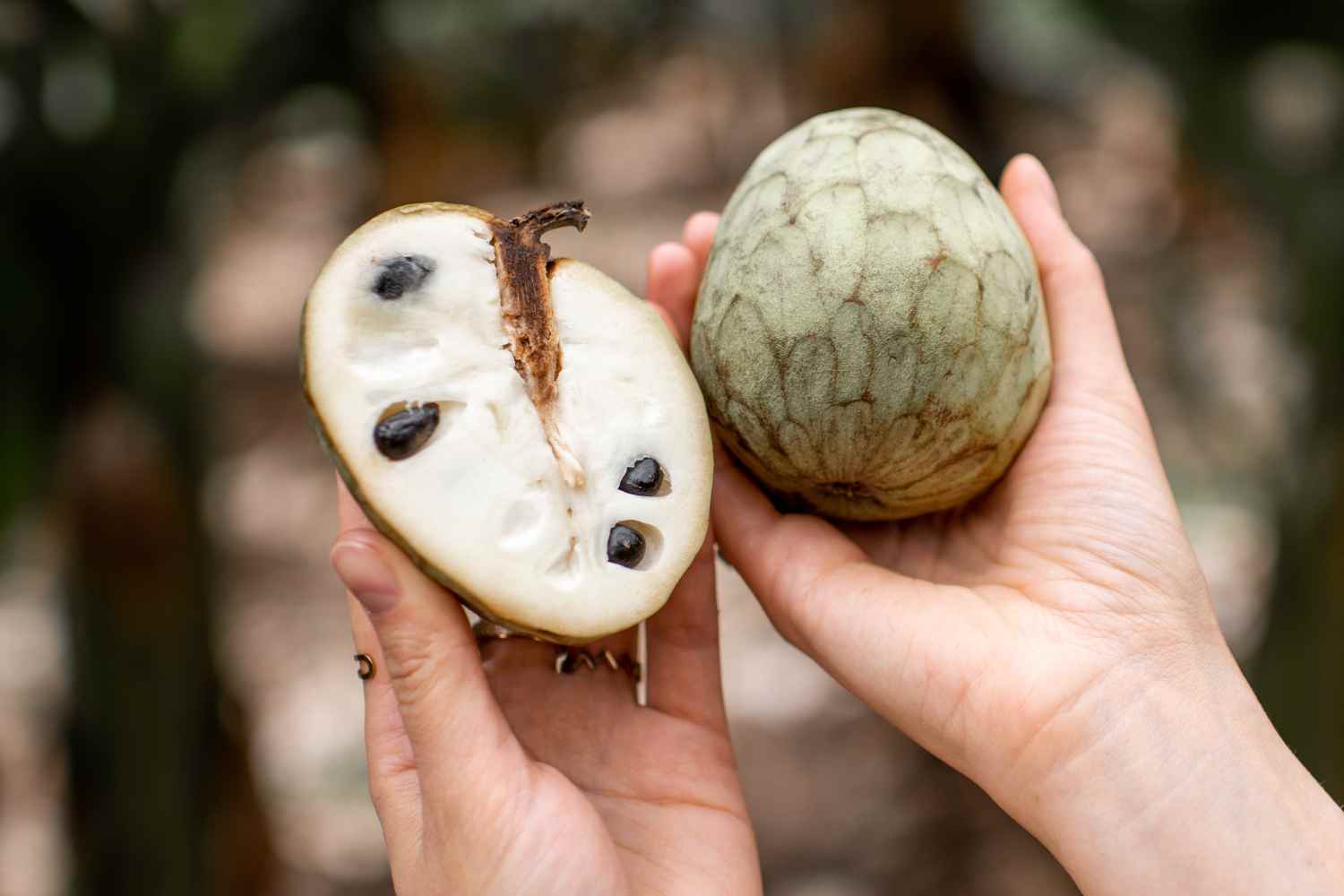
Calabrian annona has a particular aesthetic that makes it unmistakable. The shape varies from oval to rounded, with dimensions that can reach 20 centimeters and weigh more than a kilogram. More frequently it is found in sizes comparable to a large orange, between 200 and 500 grams. The light green peel has an irregular texture reminiscent of scales, thin but resistant to the touch.
Inside you discover a creamy-white pulp with a soft consistency, dotted with numerous shiny and elliptical black seeds that resemble those of watermelon, seeds which, remember, cannot be eaten and must be discarded.
The fruit grows on trees, which produce bell-shaped three-petalled flowers, with blooms ranging from May to August, sometimes lasting until October, while harvesting takes place from September to December, when the fruits have completed their development.
The annona tastes great
The pulp of the annona offers a unique and varied tasting experience, in which the very sugary nature combines with more acidic notes, all very balanced. By tasting it you can recognize hints that recall different fruits, such as pineapple, pear, banana and strawberry. It is an aromatic complexity that evokes tropical, fresh and inviting atmospheres, capable of surprising even the most demanding palates.
Beneficial properties of annona
From a nutritional point of view, Calabrian annona deserves attention. One hundred grams of pulp provide around 70 calories and contain a rich wealth of beneficial substances. Vitamin C is present in significant quantities, excellent for strengthening the immune system and promoting the absorption of iron, while group B vitamins, such as thiamine and riboflavin, are essential for the metabolism and the nervous system.
The fruit represents a good source of potassium and provides 3 grams of dietary fiber for every 100 grams, useful for intestinal transit. The high water content also gives it diuretic and purifying properties, not to forget the presence of antioxidants, including polyphenols, which help fight free radicals and reduce oxidative stress, counteracting inflammation. The characteristics of annona are in some ways reminiscent of those of citrus fruits, another Calabrian excellence.
How to enjoy annona
Tasting annona requires patience, because as soon as it is harvested the fruit is not edible and must ripen for 5-6 days after harvesting. The simplest way is to cut it in half and enjoy it with a spoon, extracting the creamy pulp. It can be cut into small pieces to enrich fruit salads or accompany it with yogurt for breakfast.
The blended pulp can be used as a base for many preparations, for example fruit juices, smoothies and refreshing and energy drinks, perfect for hot days. Even pastry products see the Calabrian annona as the protagonist, used in the preparation of ice creams and sorbets, where the natural sweetness and tropical scents express their maximum potential.
The advice is to try it: each use enhances the freshness and peculiar aroma of this fruit which has managed to become Calabrian despite coming from afar.
