

In a remote spot between Greece and Albania, a group of researchers has unearthed one of the most astonishing discoveries in the world of subterranean animals: a gigantic spider web covering over 100 square meters and home to more than 111,000 spiders. A real silk ecosystem, suspended between the walls of a sulphurous cave where light never reaches and the air is dense with toxic gases.
The study, published in the journal Subterranean Biologywas led by biologist István Urák from Sapientia Hungarian University of Transylvania. According to the researchers, this is the first known example of cooperative coexistence between two species of spiders that, on the outside, would be rivals.
Two species that on the surface would be rivals
The web was built by Tegenaria domestica, the classic house spider, and Prinerigone vagans, another species widespread in Europe. Thousands of funnel webs intertwine to form a single structure, resembling a miniature urban neighborhood. Each spider lives in its own “silk apartment,” but the entire colony acts as a collective organism, sharing space and resources.
On the surface, tegenaria tends to be predators of the second species. But in the toxic darkness of the cave, where sight is useless and survival depends on cooperation, the rules change: the two populations coexist peacefully, hunting the same prey and jointly exploiting the limited resources of the environment.
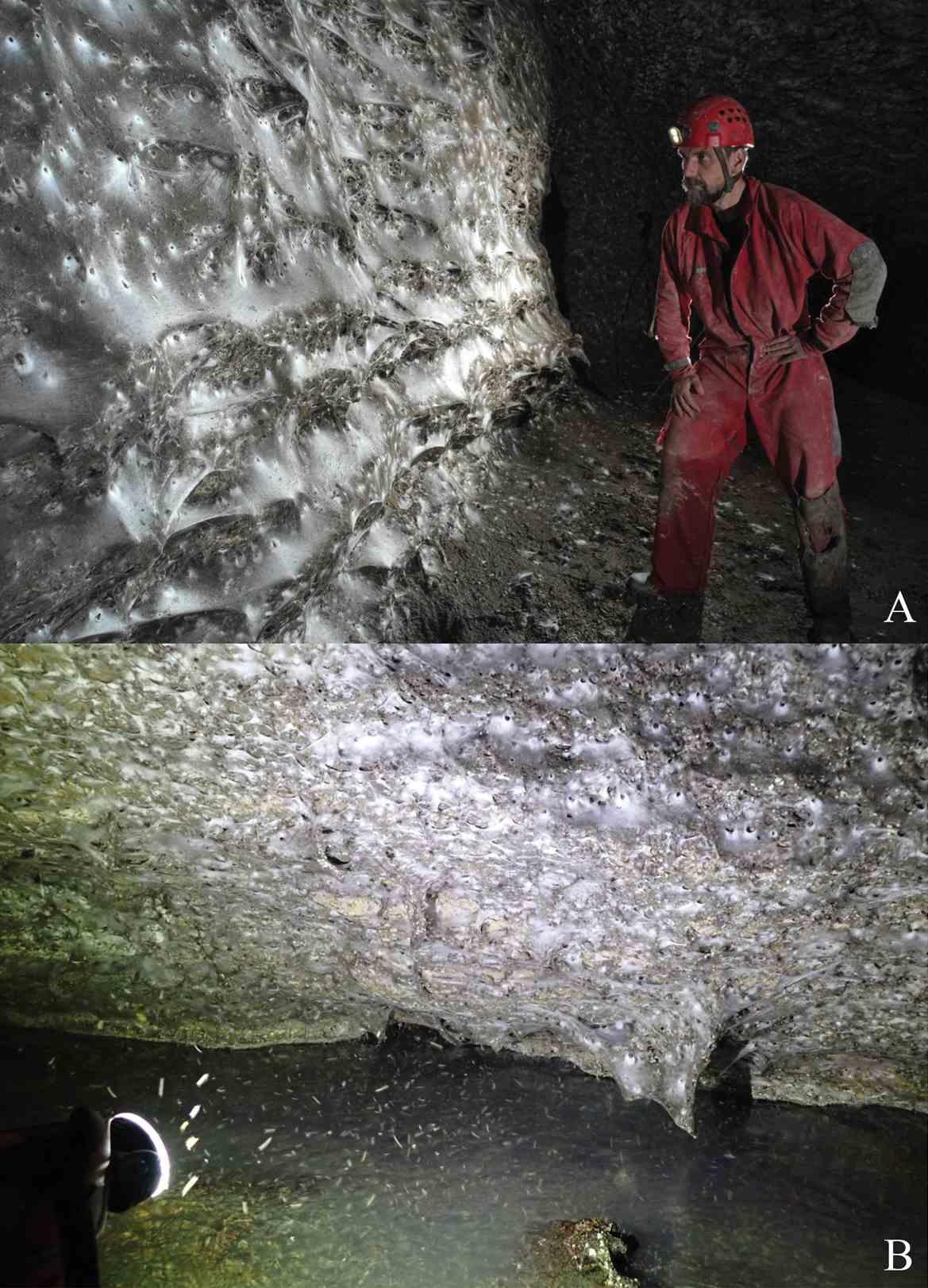
An ecosystem that lives without light
At the base of this unusual food chain there are small insects, chironomids, which feed on microbial biofilms formed by bacteria capable of living thanks to the sulfur and hydrogen sulphide of the underground stream. It is a system reminiscent of that of the ocean depths, where life thrives without any supply of sunlight.
Genetic and microbiological analyzes revealed that cave spiders have developed unique adaptations: distinct DNA and a less diverse gut flora than their surface counterparts. For scientists, this “silk city” represents an extraordinary window into evolution in extreme environments – and a treasure to be protected before human activity can compromise it.
You might also be interested in:
