
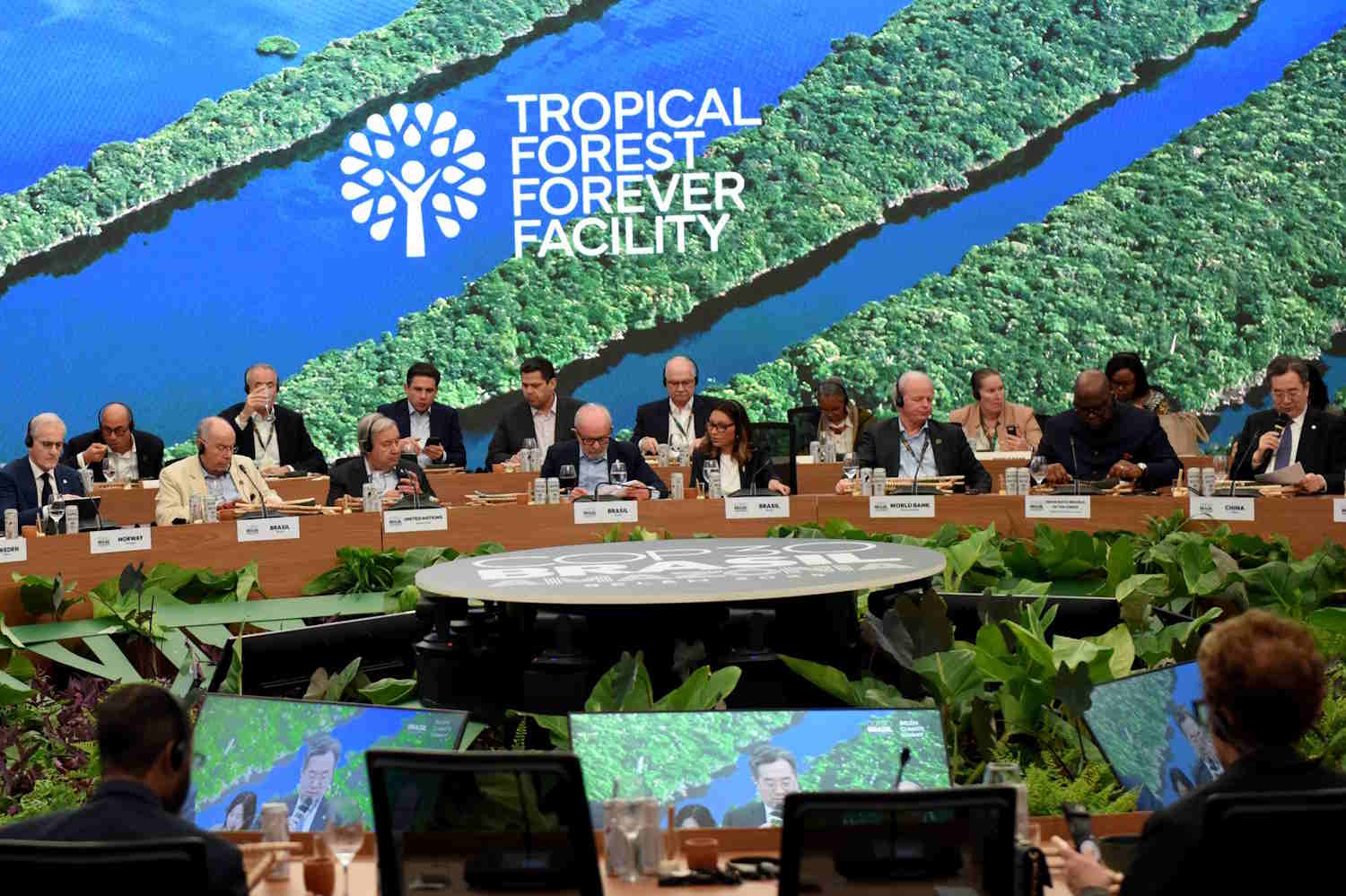
Is called Tropical Forest Forever Facility and it is a fund intended to safeguard the most critical tropical ecosystems officially launched at the Leaders’ Summit in Belém.
Hailed as the largest international source of direct funding for local communities and indigenous peoples, the TFFF – signed by 53 countries, including 19 sovereign investors, aims to support the protection of tropical forests around the world by ensuring stable and long-lasting funding for conservation policies.
The amount of investments already announced is impressive. Norway has committed $3 billion, Brazil and Indonesia have confirmed commitments of $1 billion each, while France has expressed interest in a contribution of up to €500 million. The Netherlands has made $5 million available for the fund’s secretariat, and Germany has approved the TFFF, with discussions underway to finalize their financial commitment. The TFFF will cover more than 90% of tropical forests in developing countries, including Indonesia, the Democratic Republic of Congo and China.
A paradigm shift in environmental finance
President Lula underlined that the TFFF not only marks a milestone for environmental protection, but also represents a fundamental step for the role of countries in the Global South in the global forest agenda.
For the first time in history, countries from the Global South will take a leading role in a forestry agenda, he said.
Furthermore, at least 20% of TFFF resources will be allocated to indigenous peoples and local communities, underlining the importance of their role in conservation.
International leaders have also welcomed this initiative. Norwegian Prime Minister Jonas Gahr Støre underlined the urgency of stopping deforestation to combat climate change and biodiversity loss. The TFFF, thanks to its hybrid financial architecture, combining public and private capital, represents an example of cooperation between governments, the private sector and philanthropy.
The structure of the TFFF
The TFFF stands out for its innovative approach to environmental finance. The framework requires payments to countries to be made based on remote sensing satellite data that monitors forest cover annually in a transparent and low-cost manner. The governance of the TFFF will ensure that sponsoring and forestry countries participate on an equal footing. With fund management aimed at excluding investments that are harmful to the environment, such as those linked to coal or deforestation, the TFFF aims to support only projects that promote sustainable and environmentally friendly growth.
Aiming to reach a $125 billion fund, which will include $25 billion in sovereign capital and $100 billion from institutional investors, the TFFF has the potential to protect more than 1 billion hectares of tropical forests in more than 70 developing countries. This fund represents concrete hope for tropical forests, which are essential for climate regulation, biodiversity conservation and the well-being of local populations.
The launch of the TFFF in Belém can undoubtedly mark the beginning of a new phase for the conservation of tropical forests, with a global commitment to combat deforestation and promote sustainable development. At least in intention, it will bring crucial resources for environmental protection, but it will also strengthen local policies and international cooperation, paving the way for a new era of collaboration and shared responsibility for the future of our planet.
