
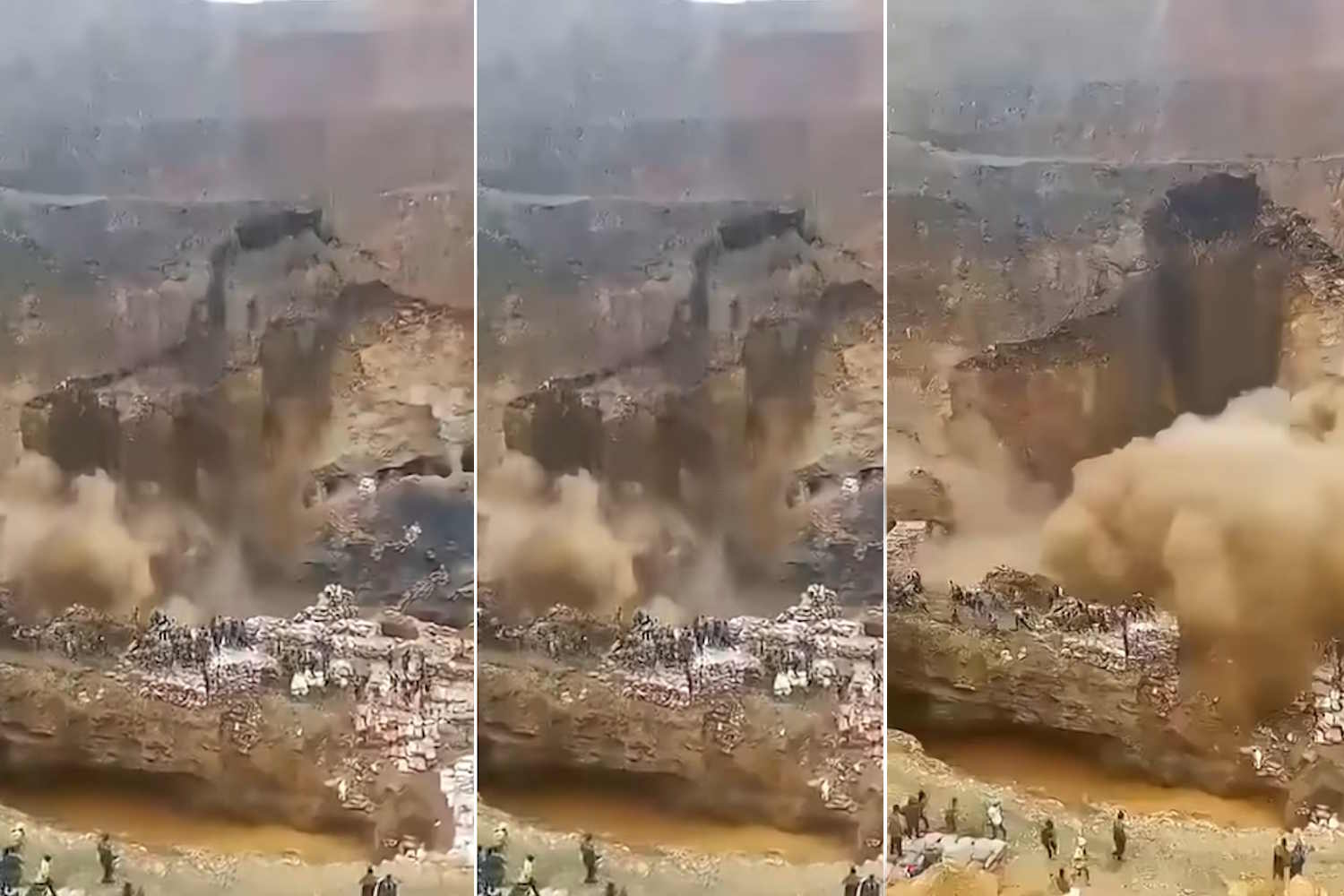
New massacre in the mining heart of the Democratic Republic of Congo: in the artisanal mine of Kawama, Lualaba province, a violent collapse swept away dozens of workers. So far, 70 bodies have been recovered, but dozens of miners are still missing. The rescue operations, hampered by mud and impervious conditions, continue with makeshift means: many rescuers literally dig with their bare hands.
According to local authorities, the failure was caused by torrential rains and irregular extraction practices, aggravated by the precarious structure of the tunnel. The collapsed bridge provided access to an already flooded area. It is an artisanal mine managed by local cooperatives, often outside state control.
The Congolese government has announced the opening of an investigation, but international observers speak bluntly: “tragedy announced“. In 2024, the ILO (International Labor Organization) had recorded over 200 deaths in similar incidents, denouncing the absence of inspections and the use of unauthorized explosives. Amnesty International calls for urgent interventions, but the system continues to gravitate around a global interest: cobalt.
The hidden price of progress: the dirty cobalt supply chain
Congo produces more than 70% of the world’s cobalt, an essential mineral for lithium batteries, smartphones, electric cars, computers, drones and smart devices. But behind technological innovation, there is a reality that rarely appears on display:
A 2025 study of the African mining trade revealed that up to 30% of cobalt sold in international markets comes from illegal artisanal mines. What companies define as “sustainable raw material” is often the result of exploitation and blood.
The global contradiction
Large multinationals claim to carry out checks on the supply chain, but the path of the mineral – especially that extracted by hand – quickly becomes difficult to trace. Once placed on the local market, the artificial cobalt mixes with industrial cobalt, cleaning its origin before being purchased by international brokers.
In short: the mineral that powers smartphones and electric vehicles could have been extracted by a child, or by a miner like those who died in Kawama.
We talk about environmental sustainability, clean energy, electric mobility and decarbonisation. But if the green transition is based on underground extraction by men and children without protection, can we really call it sustainable?
The Kawama tragedy isn’t just about mine safety: it affects each of us every time we upgrade our smartphone, start an electric car or charge a computer. Until technology is ethical from the start, we will continue to invest in a future that is built on the silent sacrifice of those who have no voice.
If to produce “intelligent” devices we let those who make them possible die, then the real crisis is not the energy one, but the human one.
