
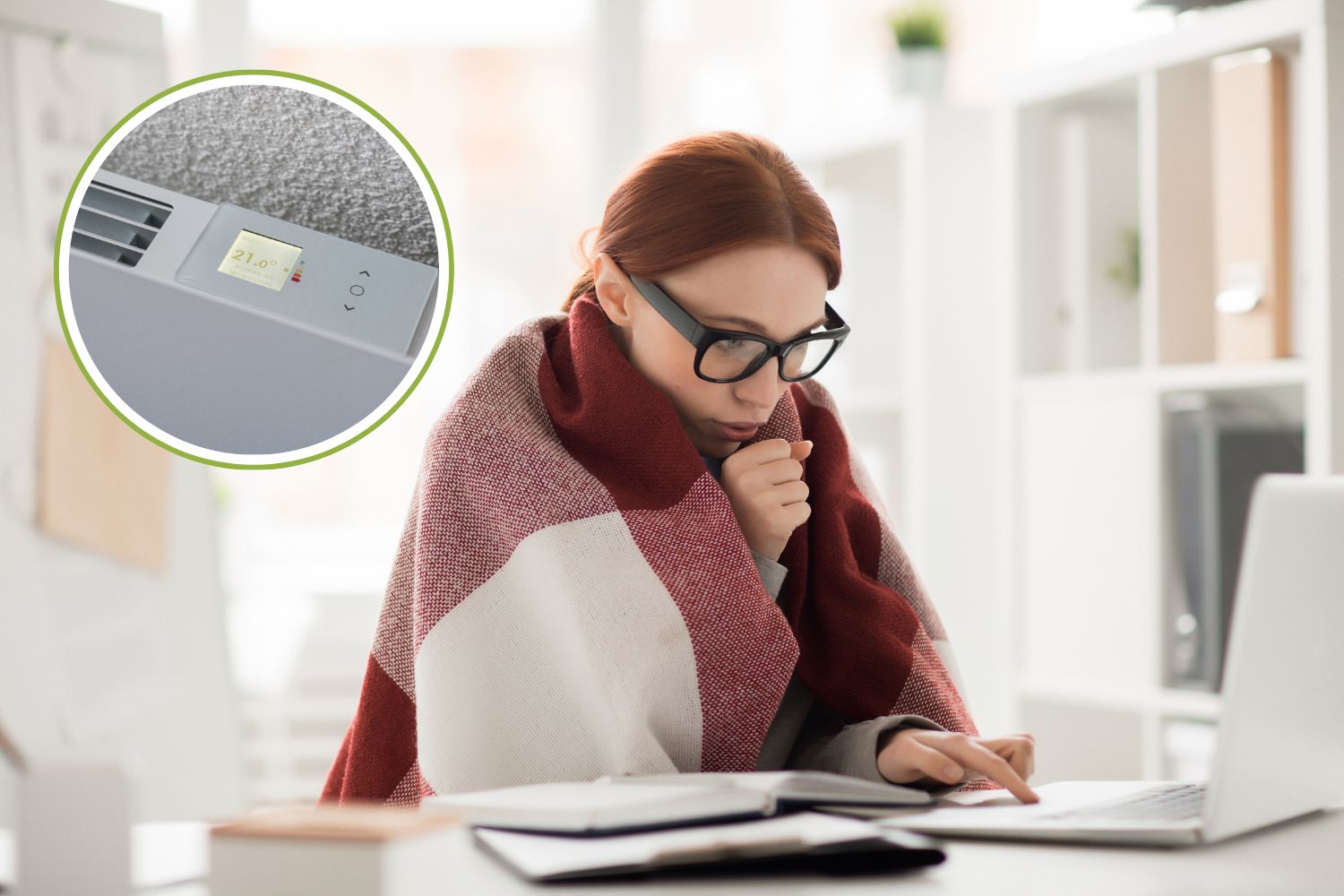
There is a moment, every year, when the house changes mood. It’s not “real” cold, the winter kind, but that cold that gets on you even if the heating is on. You look at the thermostat: 21 degrees. Theoretically you should be fine. But no. Feel cool on your arms, legs, even on the sofa. The truth is that it’s not you who is particularly sensitive to the cold. It is the house that is reacting to autumn in the most classic way: it absorbs more humidity than usual, and when the humidity rate rises, thermal comfort drops.
Experts know this well, and continue to repeat that internal humidity should remain between 35% and 60%. But most people only notice it when the first signs appear: foggy windows in the morning, colder walls, condensation in places where the air stagnates. And above all that annoying “damp cold” that no thermostat can solve.
In autumn the walls act like sponges
The reason for the drop in comfort is less poetic and more technical than it seems, but you just need to look at it once to understand it. After a hot summer, the walls have dried out. Then come weeks of rain, humidity and temperature changes, and the materials begin to absorb water like nothing.
On the other hand, a damp wall is a cold wall. And a cold wall loses heat much faster than a dry one. When you happen to touch a wall in November and feel it freezing, it’s not an impression: it’s really colder than the air you breathe. And it’s that very difference that sabotages your comfort. A wall that retains water has a different thermal inertia, that is, it has a harder time heating up. So you raise the degrees, but he doesn’t cooperate: he heats up last, he cools down first. This is where the feeling of “autumn cold” arises, even at 21 degrees.
Why do you feel cold even when the temperature says you shouldn’t?
Because the body not only perceives the heat of the air, but also that of the surfaces. If a wall is colder than you, it sends a kind of “cold radiation” towards you. You don’t see it, but you definitely feel it.
Then there’s the humidity in the air, which is another problem: when it’s high, your skin can’t regulate heat well. It evaporates less, exchanges less, stays colder. So it’s not the heating that isn’t doing its job: it’s the environment that is reacting in an unbalanced way. Add it all up, and you get the classic Italian autumn scenario: heating on, but cold arms and frozen feet.
Three misconceptions that we carry around with us
How to immediately improve comfort without increasing your bill
The good part is that the solution exists, and it’s much simpler than you think:
You can feel the difference immediately: just lower the humidity level a little to regain comfort without touching the thermostat. It is one of the rare cases in which energy saving and well-being coincide.
You might also be interested in:
