
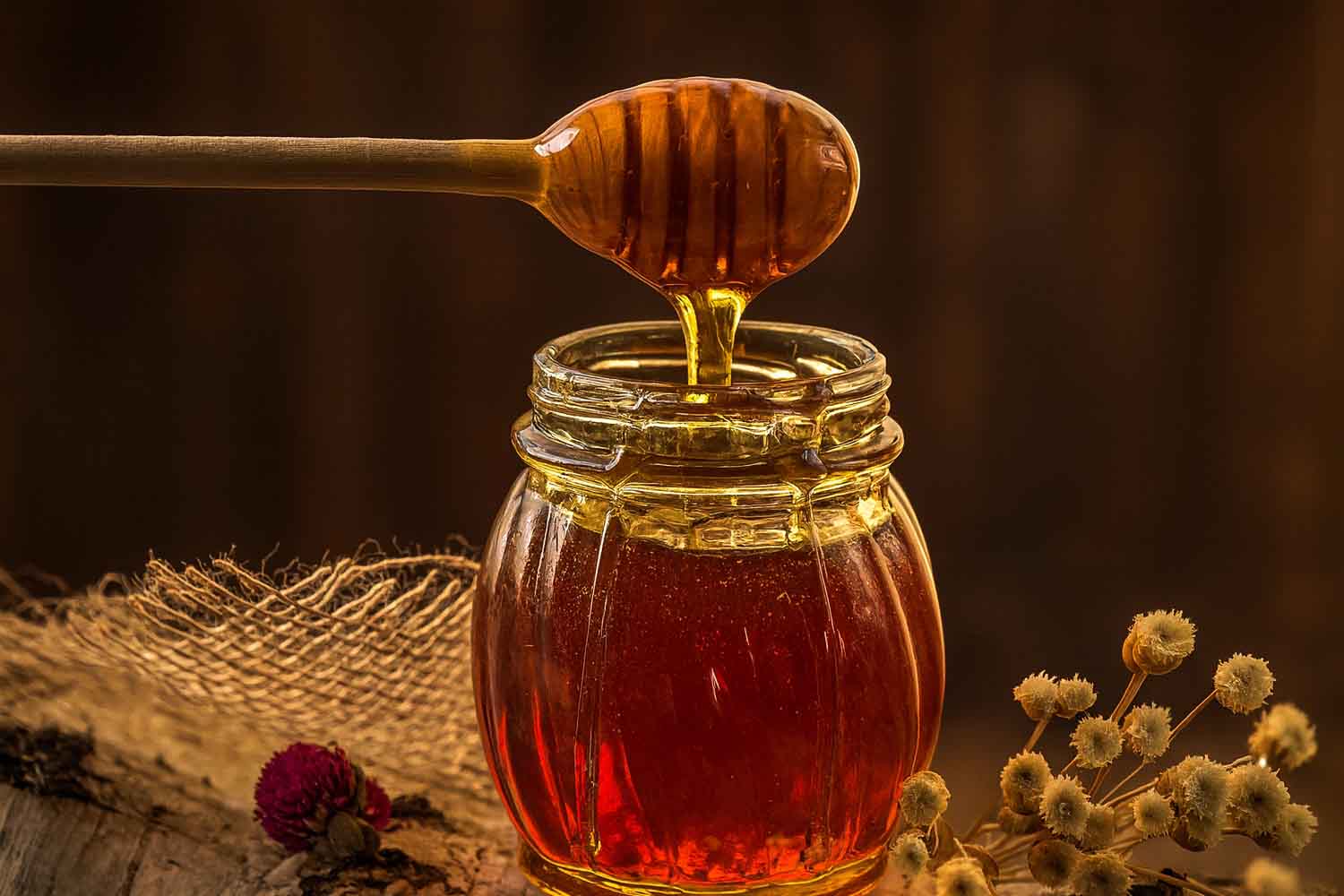
In Brazil a group of researchers has found a surprising way to combine two worlds that we would hardly think of seeing together: honey and chocolate. Not in that sugary form to spread on bread, but in a completely natural version, where the sweetness is only that of the bees and the scent comes from the shells of the cocoa beans. Yes, precisely those wastes that no one considers, and which have instead turned out to be a mine of precious compounds.
The idea was as simple as it was ingenious: using honey as the only solvent, without alcohol and without chemicals, to extract molecules such as theobromine, caffeine and phenolic compounds from cocoa shells, all substances known for their cardiovascular benefits and antioxidant properties. Felipe Sanchez Bragagnolo, first author of the study developed at the University of Campinas, says it almost with a smile: the flavor is what strikes you immediately, but the nutritional content makes the product much more interesting than it seems at first taste.
How to get it
Those who have tried it speak of a chocolate note so clear that it almost seems like magic, and depending on the proportion of honey and shells the aroma can become more intense or more delicate. In their initial phase the researchers did chemical tests and some sensory tests. The next stages will be more in-depth, but already now the feeling is that this honey could end up directly on the spoon, or in drinks, creams, sweets and, why not, even cosmetics.
The most fascinating part of the research is not only the final result, but the method chosen. No petroleum solvents, no alcohol: just ultrasound. A metal probe enters a mixture of honey and pulverized shells and “shakes” it with sound waves that generate microbubbles. When they collapse, they release small charges of energy capable of opening the cell walls of the plant material. And at that point the cocoa compounds naturally pass into the honey.
This technique works especially well with honey from stingless bees. Unlike that produced by European bees, these honeys are more liquid and contain more water. They almost seem to have been created to act as an “edible solvent”, and facilitate the diffusion of the shell molecules. The team tested five, all Brazilian, from jataí to borá, and refined the process with mandaguar honey, which had the best consistency. Once optimized, the protocol worked with others as well. The message is simple: each region can use its own honey and obtain a local version of the product. A small revolution in a country that dreams of a bioeconomy more rooted in the territories.
Innovation, taste and sustainability
This is no small detail, because this “cocoa” honey is not just a gastronomic novelty. It is also an intelligent solution to reduce waste, valorise waste from cocoa processing and give new space to producers of honey from native bees. It is no coincidence that the entire process obtained a positive sustainability index, assessed with Path2Green, the tool developed by UNICAMP to measure the environmental impact of technologies. The use of an edible, local and ready-to-use solvent, together with the reduction of steps and energy consumption, made the method surprisingly “clean”.
Meanwhile, the university’s innovation agency, INOVA, has already started looking for companies interested in licensing the patent. According to the researchers, a small laboratory that processes both cocoa and local honeys could produce this aromatic honey without disrupting its organization. An opportunity for cooperatives, farmers and artisan businesses who want to diversify production with something new and valuable.
Another question researchers are studying involves conservation. Stingless bee honeys do not have the same stability as traditional honey: they often need to be refrigerated or treated to reduce the microbial risk. Ultrasound, however, could also have an effect on microorganisms. If confirmed, the process would make honey more stable and easier to store, without the need for high temperatures or other invasive treatments.
There are many possible applications. In the kitchen it could become a natural aromatic base for icings, creams, ice creams, coffee and energizing drinks. In cosmetics, however, the union between phenolic antioxidants, theobromine and the natural ability of honey to retain hydration opens the way to skin care formulas with a decidedly “green” profile.
And there is one last element that makes this project even more interesting: choosing honey from stingless bees means giving value to biodiversity. These bees, often overlooked compared to the better-known Apis mellifera, are fundamental to Brazilian ecosystems and produce unique honeys, closely linked to the local flora. Each jar of cocoa honey could therefore tell a different story, made up of the territory, native species and care for the landscape.
Maybe it’s too early to say when we’ll see it on the shelves. But the direction is already clear: it is not just a new flavour, but a new way of imagining food, where science and sustainability work together to transform waste into resources and pleasure into knowledge.
If honey has always tasted of nature, today it could also begin to taste a little like wonder.
You might also be interested in:
