
The UN appeal to stop the execution
The United Nations has launched an urgent appeal to Iran to stop the execution of Goli Kouhkan, a 25-year-old woman from the Baloch minority. Eight UN human rights experts, including three special rapporteurs and members of the working group on discrimination against women and girls, called for the immediate suspension of the death penalty scheduled for December.
In their official statement, the experts denounced what Goli’s case represents
the widespread gender bias to which female victims of early marriage and domestic violence are subjected within the Iranian criminal justice system.
According to the United Nations, execute this young woman
would constitute a serious violation of international human rights law.
The terrible story of Goli: a life marked by violence
Goli Kouhkan is little more than a little girl. Today she is 25 years old and locked up in Gorgan Central Prison, Iran. In a few weeks she could be executed. His fault? She would kill her husband after yet another episode of domestic violence.
Behind this tragic story lies an even harsher reality: Goli was the victim of a forced marriage, followed by years of physical and psychological abuse. One of those child brides who are still talked about too little.
A forced marriage and a life of suffering
At just 12 years old, Goli was forced to marry a cousin. A year later she gave birth to a son. During her pregnancy, without any medical assistance, she was forced to continue carrying out heavy labor in the fields and at home, while her husband continued to abuse her. A condition that slowly destroyed her.
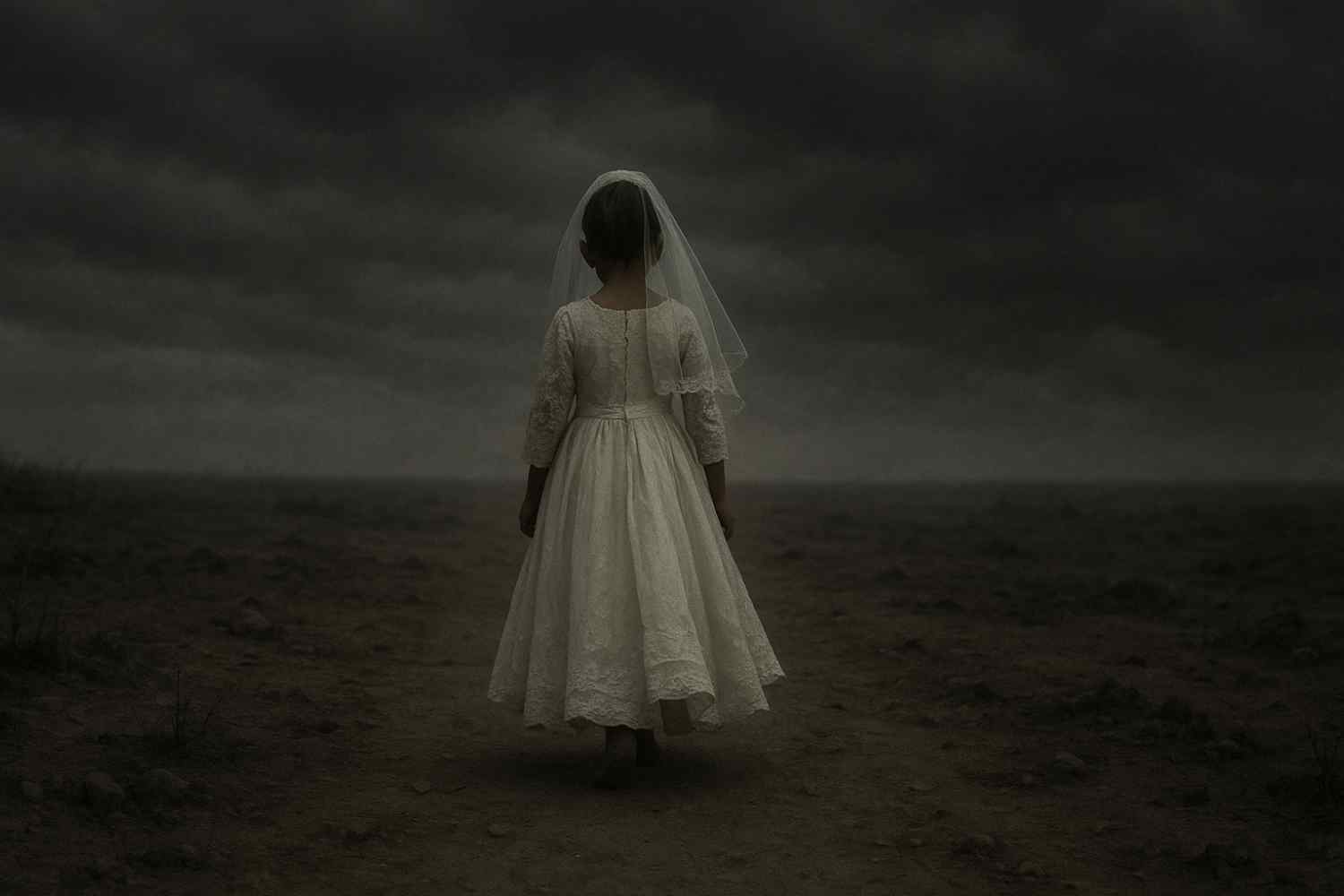
As reported by Iran Human Rights, Goli tried to escape several times, but without success. On one of these occasions she took refuge with her family, but her father told her: “I gave you in marriage in a white dress, you will return in a shroud.” A terrible fate, a cycle of violence that seemed to never end.
The fatal accident and the conviction
In May 2018, Goli, now 18, faced a new escalation of violence. During one of the many arguments with her husband, who had beaten her and her son, she asked a relative of her husband for help. When the man arrived, a fight broke out which led to the accidental death of Goli’s husband.
Immediately after the accident, Goli called an ambulance and reported everything to the authorities, telling the truth about what happened. But this honesty turned into a self-condemnation: she was arrested and sentenced to “qisas”, the Iranian retaliation law which provides for “restitution of the same kind”. According to this rule, the victim’s family can request execution or grant forgiveness.
The “blood price” impossible to pay
After seven years of imprisonment, the husband’s family agreed to renounce the execution as long as Goli pays 10 billion tomans, around 100 thousand euros. It is the so-called “diya”, blood money, requested by the families of the victims in exchange for forgiveness.
If Goli fails to raise this sum by December, she will be sentenced to death. Her family of origin has completely abandoned her. Only thanks to the few visits granted by the prison, Goli was able to see her child, thanks to the intervention of the prison authorities.
The condition of women in Iran: a discriminatory system
Goli’s story is not an isolated case. Women in Iran face a deeply discriminatory legal system that penalizes them for murder charges. According to Iranian laws, anyone accused of “intentional murder” can be sentenced to qisas, regardless of the circumstances that led to the crime.
Once convicted, the families of the victims have the power to decide whether to opt for the death penalty, the payment of “blood money” or forgiveness. Although there is an indicative sum established annually, there is no legal limit to how much families can ask for. Iran Human Rights has documented numerous cases in which people accused of murder were executed because they failed to pay the required sum.
A country with the highest rate of executions of women
Iran is one of the countries with the highest rate of executions of women in the world. In 2024, at least 31 women were executed for drug, murder and national security-related crimes, the highest number of executions of women in more than 15 years. By 2025, at least 30 women have already been executed.
This data highlights the tragic reality of women in Iran who often find themselves facing a legal system that does not guarantee them justice. Goli’s story is an example of how women, especially the most vulnerable and from ethnic minorities such as the Baloch community, are treated.
A call to action
Domestic violence, discrimination and the absence of fundamental rights force these women to live in a condition of fear and suffering, often without the possibility of salvation. The UN appeal represents an opportunity for the international community to put pressure on Iran and prevent an injustice that cries out for vengeance.
Goli’s story is a call to action for all those who fight for human rights and justice. How can we remain silent in the face of such a violation of the fundamental rights of a woman who has been a victim all her life?
