
There is a corner of the universe where matter is so compressed that it defies all human intuition. It is there, among the remains of stars that exploded billions of years ago, that the physics could make his next leap forward. A new international study, led by Italy and published on Physical Review Letterssuggests that observing how the neutron stars it could help us understand if one really exists fifth force of the universein addition to those we already know.
The Physics Department of the University of Bari also participated in the research. The basic idea is simple, at least in words: if a still unknown force acts in the universe, even a tiny one, it should leave a measurable trace. And the cooling of neutron stars is one of the few cosmic processes sensitive enough to notice it.
Neutron stars and cooling
Neutron stars are born from the violent death of stars much larger than the Sun. After the explosion of a supernova, what remains is a very small object on an astronomical scale, but incredibly dense: a teaspoon of its matter would weigh billions of tons. In these extreme conditions, the laws of physics are pushed to their limits.
And this is exactly where cooling comes into play. As time passes, a neutron star loses energy and slowly cools. This process depends on how the particles within it interact with each other. If there were new particles, bound to one fifth forcethe star would lose energy faster than expected.
The research group, which involves scientists from the Universities of Bari, Padua, Sydney and the DESY center in Zeuthen, simulated precisely this scenario: what would happen if a new force, mediated by still unknown particles, was active inside a neutron star?
From the “Magnificent Seven” to a pulsar
To understand whether these hypotheses hold up, the researchers compared the theoretical models with real astronomical data. They analyzed some isolated neutron stars, including the famous “Magnificent Seven” and the pulsar PSR J0659, well-studied objects because they are not influenced by stellar companions or external phenomena.
The result is anything but trivial. If a fifth force in the universe existed and acted through scalar particles over tiny distances, smaller than a millionth of a millimeter, it should noticeably change the cooling rate of these stars. And these changes, the researchers explain, are not visible.
This allows us to impose very strict limits on the existence of a new force: up to a million times more stringent compared to those obtained so far with terrestrial experiments. Basically, looking at the sky, we are already doing more effective fundamental physics tests than many laboratories on Earth.
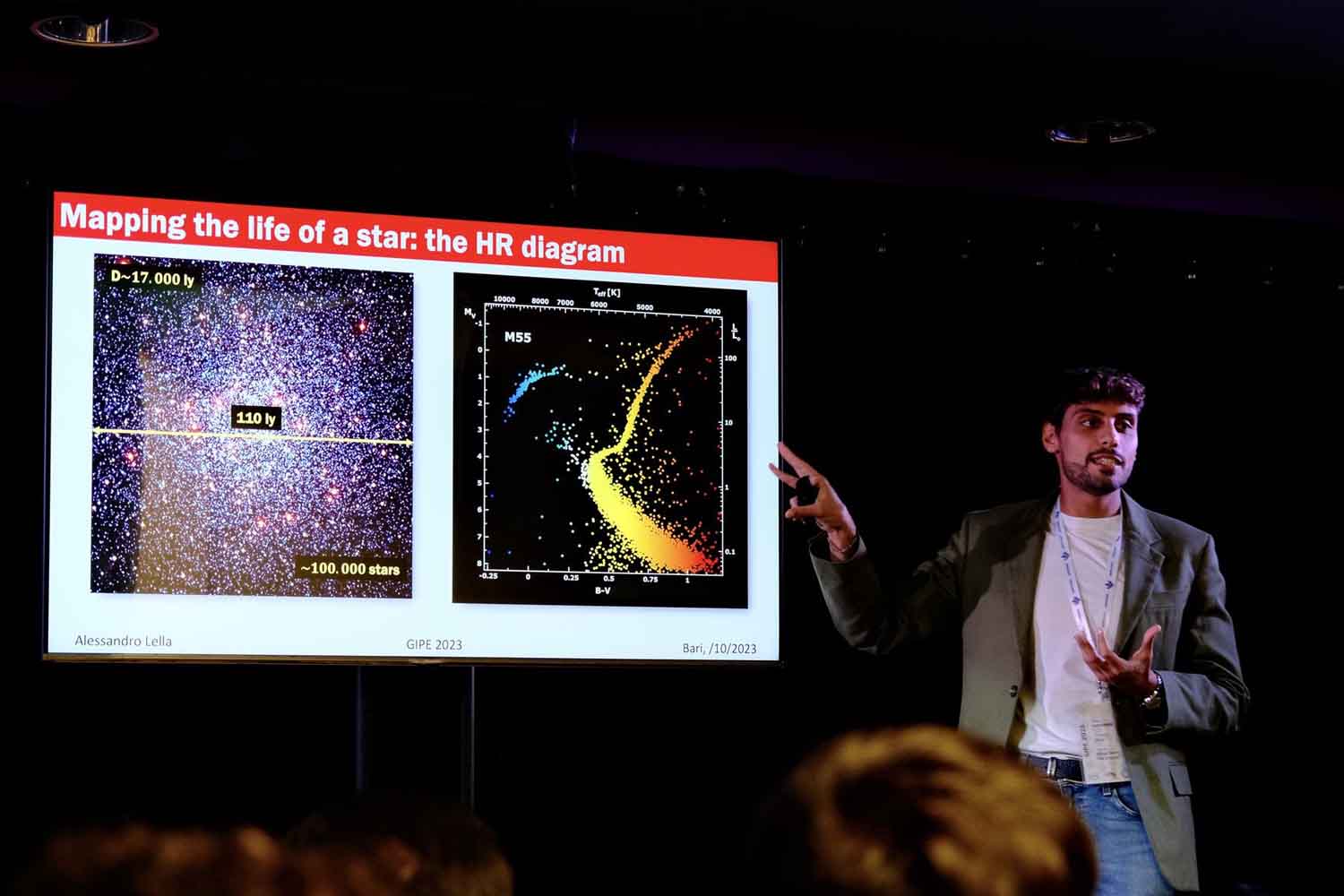
The implications go far beyond scientific curiosity. Additional strength could play a role in understanding the dark matterone of the great puzzles of modern astrophysics, and pave the way for new theories that include extra dimensions or particles never observed before, as he explains Alessandro LellaPhD from the Interuniversity Department of Physics of the University and Polytechnic of Bari and among the authors of the study:
It is striking to think that a force capable of acting over distances smaller than the thickness of a hair could influence the evolution of some of the most extreme objects in the universe. Astronomical observations, in this case, prove to be the most effective tool for intercepting these signals.”
Along the same lines Alessandro Mirizzicoordinator of the Bari group:
Astrophysics today is not just a complement to laboratory experiments. In many cases he manages to go further, testing fundamental theories with surprising precision.
