
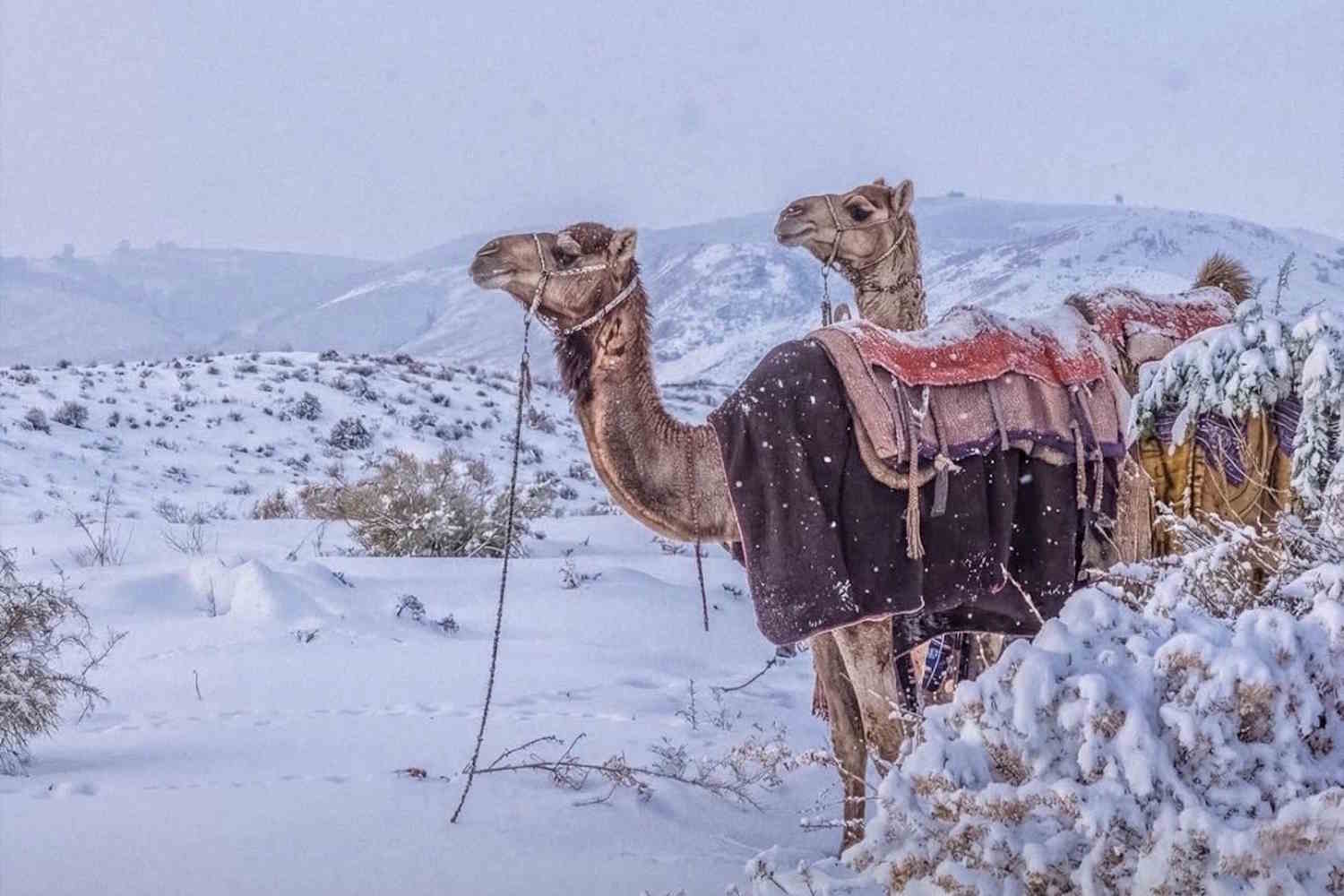
Saudi Arabia, a global symbol of desert and extreme temperatures, was the protagonist of an event that left the world speechless: widespread snowfall whitened the northern regions of the country, transforming arid mountains into almost alpine landscapes.
Snow blanketed Saudi Arabia this week, transforming the usually rugged, desert-framed mountains into a winter landscape!
From Jabal Al-Lawz in Tabuk to parts of Hail and Trojena, the Kingdom turned into a stunning winter wonderland with temperatures dropping to -4°C. A rare but… pic.twitter.com/RTtD4Ddkn7— Jitendra Pal (@jeetkrpal) December 20, 2025

The images from the Tabuk area showed dunes, plateaus and even camels enveloped in white, in a scenario that seems to have come out of a surreal tale. The phenomenon particularly affected the mountainous areas of the north, such as Jabal Al-Lawz and the Trojena plateaus, which exceed 2,600 meters above sea level. Temperatures here have dropped to around -4 degrees Celsius, creating ideal conditions for accumulating snow.
#PICTURES: A layer of snow on the highlands of Trougina pic.twitter.com/WAuyDYwgAN
— Saudi Gazette (@Saudi_Gazette) December 17, 2025
The meteorological dynamics behind the event
According to experts, the snowfall was caused by the arrival of a cold air mass coming from the north, which interacted with cloud systems full of rain. The result was a sharp drop in temperatures accompanied by strong winds and widespread precipitation. In addition to Tabuk, areas such as Hail, Al-Jouf and territories north of Riyadh also recorded unusual winter conditions.
The storm didn’t just bring snow. Several central and eastern regions of the country were affected by moderate and heavy rains, increasing the risk of flooding in the valleys. The authorities have urged the population to be cautious, recommending careful driving and, in some cities, have even ordered distance learning as a preventive measure.
Snow blanketed Saudi Arabia this week, transforming the usually rugged, desert-framed mountains into a winter landscape.pic.twitter.com/0lMIazJe9b
— Massimo (@Rainmaker1973) December 19, 2025
Rare event or recurring phenomenon?
Although many have spoken of the “first snowfall in decades”, some local climatologists point out that in northern Saudi Arabia winter snow can occur, albeit irregularly. However, the growing frequency of extreme events reignites the debate on the role of climate change, which is making global weather increasingly unpredictable, even in regions historically accustomed to drought.
From snowfall in the Middle East to record heat waves elsewhere on the planet, the message is clear: climate balances are changing. The desert turning white is not only a fascinating sight, but also a sign to be observed carefully.
Desert of Saudi Arabia covered in snow after a super-rare winter storm across several regions of the country. pic.twitter.com/afUuAmeIQD
— Nature is Amazing
(@AMAZlNGNATURE) December 20, 2025
You might also be interested in:
