
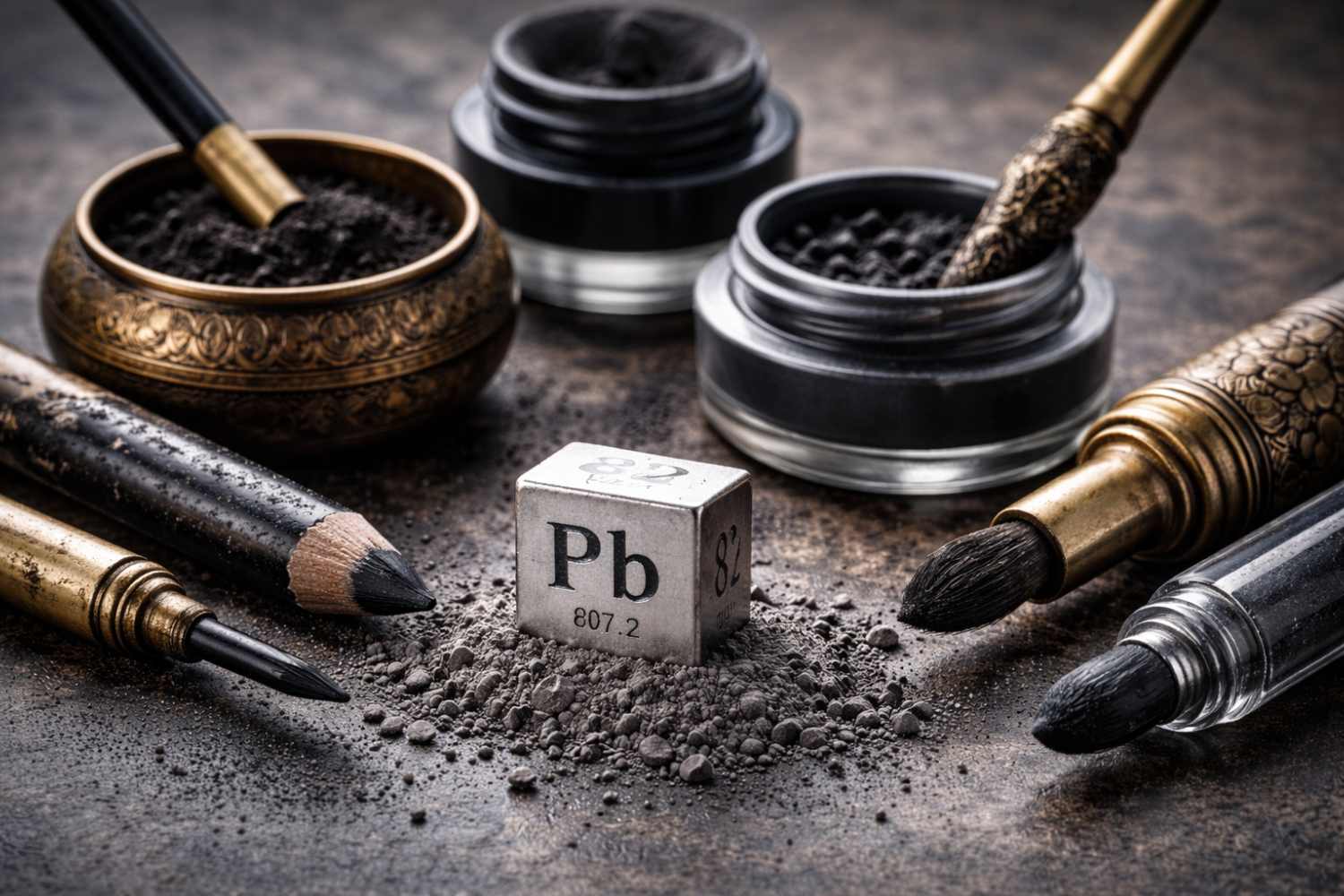
A new investigation conducted by Pure Earth in the United States has found that more than half of traditional eyeliners such as kohl, kajal and surma sold online contain dangerous levels of lead, in some cases at extremely high concentrations. The results, published in collaboration with Consumer Reports, show the need for more stringent controls on these products.
What the American investigation discovered
Pure Earth researchers tested 56 traditional eyeliners purchased mainly on online marketplaces such as Amazon, Etsy, eBay and TikTok Shop. The numbers that emerged are worrying: 29 out of 56 products exceeded the limit of 10 ppm (parts per million) of lead established by the American FDA for cosmetics. But it is when we go into detail that the situation becomes truly alarming.
Nine samples contained more than 100,000 ppm of lead, while three products even exceeded 350,000 ppm. To understand the gravity, we are talking about concentrations thousands of times higher than the permitted limit. Exposure to these levels of lead can cause poisoning with serious neurological and cardiovascular effects.
The most dangerous formulations
Not all eyeliners pose the same risk. The analysis highlighted significant differences between the various formulations. Cream eyeliners generally showed lower levels, with more than half of the 38 samples tested containing 10 ppm or less of lead.
The real problem concerns the powders: of the 18 powders tested, only two respected the FDA limit, while the others reached concentrations of up to 380,000 ppm. These products often contain crushed lead sulfide (galena) as the main ingredient, a traditional practice that has been passed down for generations in many cultures.
One of the most worrying aspects that emerged from the investigation concerns the unreliability of the labels. More than half of the products labeled “lead-free” exceeded the FDA limit, with concentrations reaching 380,000 ppm in one case.
As Drew McCartor, President of Pure Earth, points out:
A ‘lead-free’ label is not a guarantee of safety, which is why greater consumer protection is so important. Until these protections are in place, the safest choice is to avoid traditional eyeliners altogether.
Particularly alarming is the discovery that three products labeled “baby kajal” and marketed for use on infants also contained levels of lead above permitted limits. Children are particularly vulnerable to lead exposure due to neurodevelopmental effects and a tendency to put their hands in their mouths.
A problem not just American
Traditional eyeliners such as kohl, kajal and surma are culturally significant products for many communities in Asia, North and West Africa and the Middle East. Used by both women and men, in some cultures they are applied to infants and children for health or spiritual protection reasons.
While these products are technically banned in the United States as illegal color additives, they continue to be readily available online and in local stores, reporting gaps in regulatory enforcement. Their availability has expanded in recent years thanks to social media and online marketplaces.
Pure Earth previously conducted a survey of 5,000 consumer products in 25 countries in 2021, finding that lead-contaminated cosmetics are widespread globally. These are therefore not isolated cases, but a systemic problem.
However, American experts specify that:
While these findings are alarming, this was a small study and not representative of the entire US market. Future research should include broader, more systematic sampling, including products purchased at brick-and-mortar stores and other locations outside of New York City. Despite these limitations, the implications are clear: lead-contaminated eyeliners that exceed FDA limits are reaching U.S. consumers, indicating gaps in regulation and enforcement. Greater oversight of lead in cosmetics is needed, both in the United States and globally.
And in Italy? Can we buy these products?
The answer is yes. The same online marketplaces used for the American investigation (Amazon, eBay, Etsy) are also accessible from Italy, and many of these products are also shipped to our country. Furthermore, these traditional eyeliners may be available in physical stores specializing in ethnic and Asian products in major Italian cities.
In Europe, the Cosmetics Regulation (EC) no. applies. 1223/2009, which establishes very strict limits for lead in cosmetics. However, as shown by the American investigation, controls on products sold online can have gaps, especially when it comes to global marketplaces where sellers from all over the world can offer their products.
The problem is that these traditional eyeliners often enter the European market through informal channels or as “cultural” products that escape the more stringent controls reserved for conventional cosmetics.
How to protect yourself
While waiting for more effective controls, Consumer Reports has launched a petition asking the US FDA to strengthen monitoring, and Pure Earth is working with the governments of producing countries to eliminate lead at the source.
For those who use these products, the experts’ advice is clear: completely avoid traditional powder eyeliners, be wary of “lead-free” labels without independent certifications and prefer conventional cosmetic products certified according to European standards.
Communities that traditionally use these products need safe and culturally appropriate alternatives. Pure Earth is working in Ghana, where the use of contaminated eyeliner is a leading cause of lead poisoning, to reduce the supply of dangerous products, raise public awareness and promote lead-free reformulation.
