
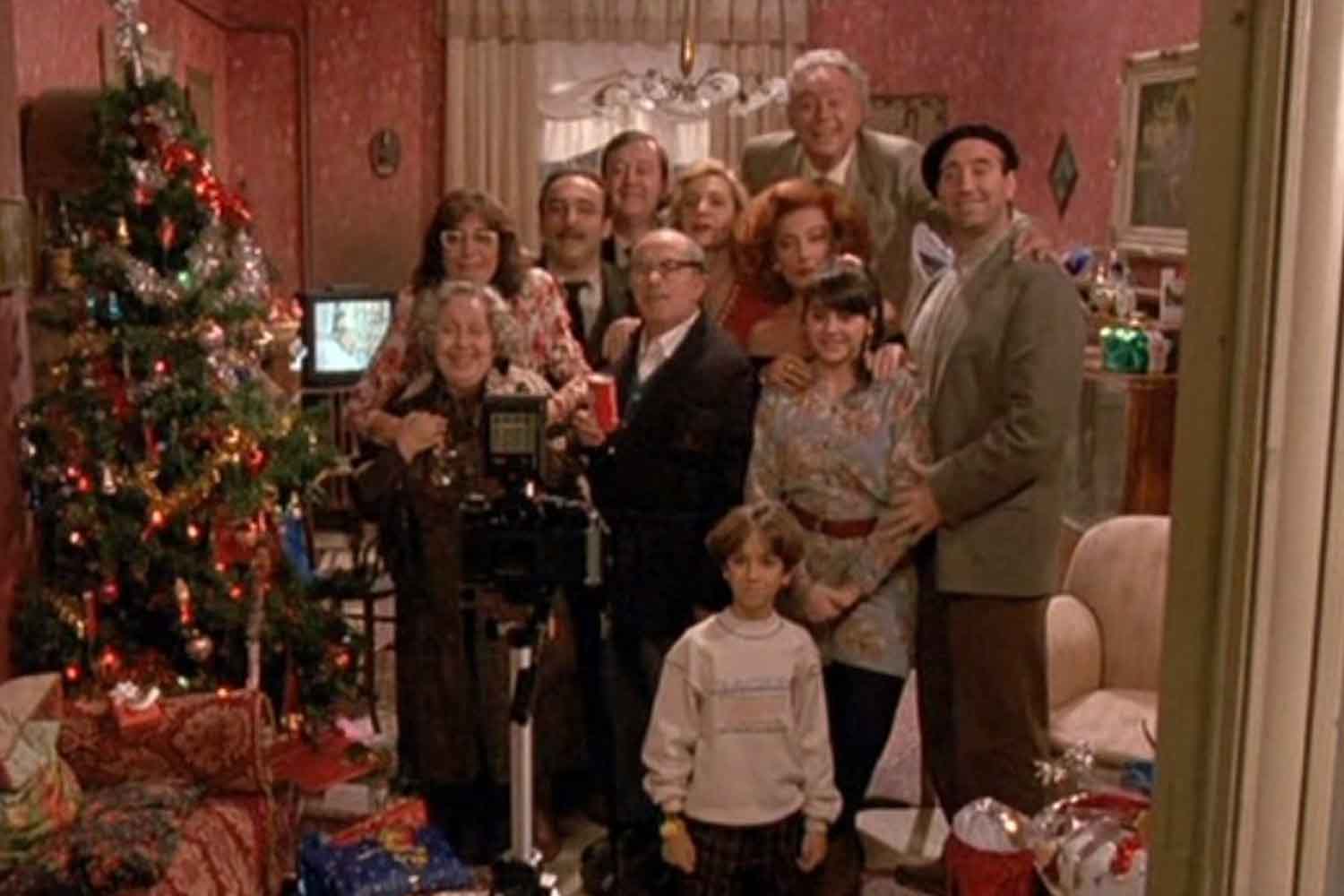
There is a scene that is repeated every year, with slight variations on the theme. Table set, relatives gathered, the air smelling of food and expectations. At first everything is fine. Then, at a certain point, something changes. One joke too many, a sudden silence, a tiredness that rises for no specific reason. And you think: “But why does it always happen at Christmas?”
The answer lies not only in relatives. It’s also in the brain.
Christmas as an emotional short circuit
Christmas is that time of year when our brains are gently pushed out of their comfort zone. They change routines, skip schedules, increase social interactions and, above all, they all focus together. In a few hours we must be children, brothers, grandchildren, responsible adults, patient people and possibly even in a good mood.
According to a Harvard Medical School study dedicated to holiday stress, over half of people perceive the Christmas period as more stressful than normal. Not because it is “bad”, but because it requires continuous mental effort. The brain must continually adapt, change register, modulate emotions. Psychologists call this ability shifting set: the ability to shift attention, strategies and behaviors based on context.
At Christmas we do it non-stop. And tired.
Why do we become more sensitive at Christmas?
When the mental load increases, the prefrontal cortex comes into play, that part of the brain that helps us plan, organize, manage emotions and, yes, even not respond badly to our uncle. The problem is that, when stressed for too long, this area becomes troubled.
Nothing dramatic happens: it is an acute, temporary stress. But in the meantime the defenses are lowered. We filter less, phrases that would slip away in other periods hurt us more easily. And so Christmas becomes the perfect time for old family dynamics to re-emerge as if they had never gone away.
And this is where cinema comes in.
We are all “Snake Relatives”
Every December a quote, a joke, a reference to Parenti serpenti returns on time. And no, not because we’re all cynical. But because that film did something very simple and very rare: it observed without sugarcoating.
In Snake relatives no one is a monster. They are all affectionate, caring, “normal”. Until a seemingly reasonable request upsets the balance. From then on, everyone reacts as they can: minimize, withdraw, rationalize, unload on others. Exactly what we do when the brain is under pressure and no longer has room for the best version of itself.
It’s not malice. It’s emotional fatigue.
The beauty (and difficulty) of families is that they are not only made of affection, but also of memory. At Christmas that memory is reactivated all together. We return, even unconsciously, to our usual roles. And the brain, already busy managing a thousand stimuli, finds itself dealing with years-old dynamics.
This is why a joke weighs more, a silence seems longer. And why, sometimes, we suddenly feel small, irritable or out of place without really knowing why.
Maybe it’s not that “Christmas brings out the worst”. Maybe it just takes away some of the filters.
Keyword: resize
Experts suggest something that sounds almost revolutionary in its simplicity: decide what we really want from this period. Don’t turn it into a test of emotional perfection. Don’t ask him to fix relationships, heal rifts, or show how happy we are.
Christmas remains an important moment, of course. But it’s also just a moment. The brain is grateful when expectations are lowered and breathing space increases.
And perhaps, looking at certain familiar scenes, we can allow ourselves a slightly softer gaze. Not acquittal. But aware. What makes you think: ok, we’re not weird. We are only human. And a little tired too.
You might also be interested in:
