
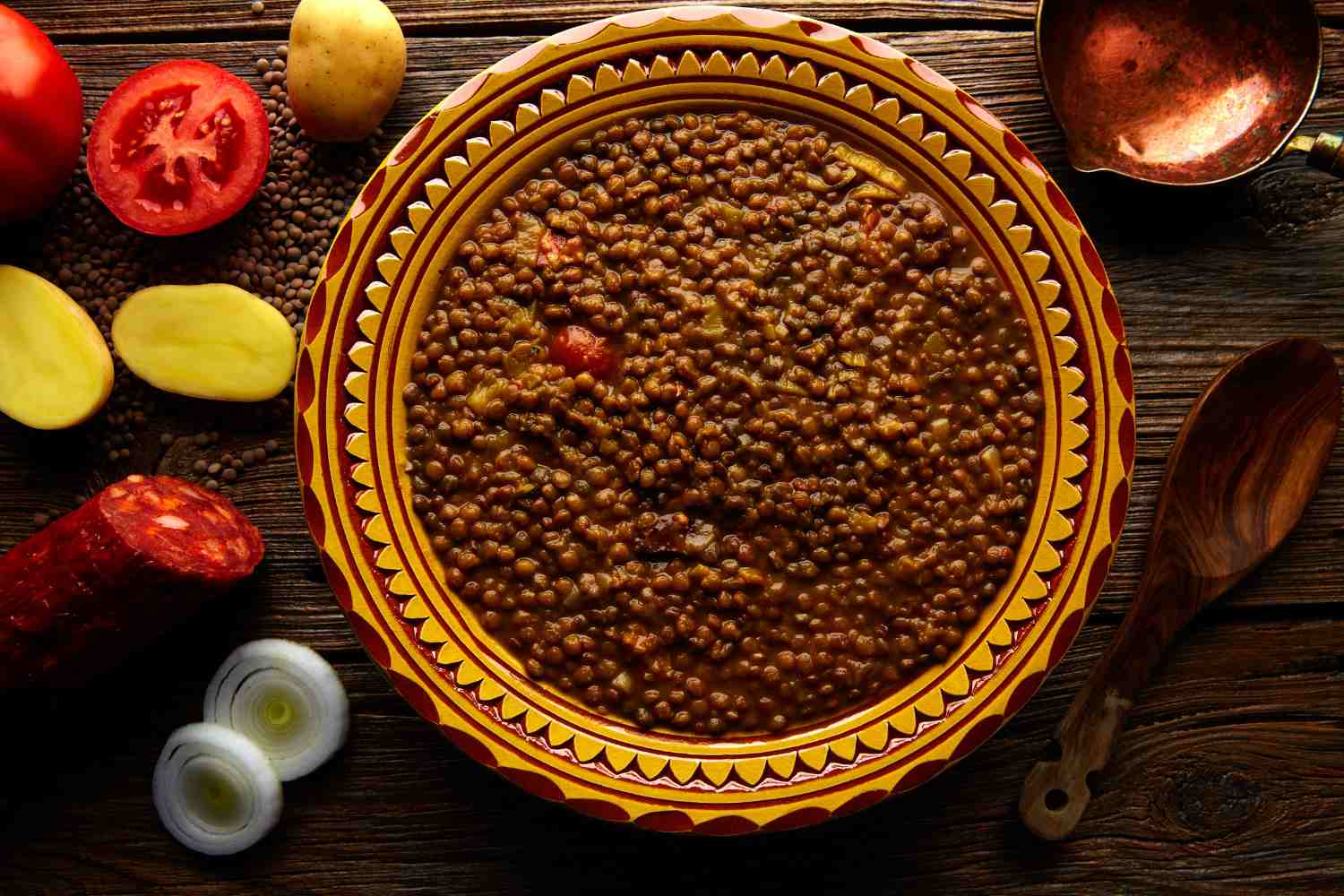
Have you ever wondered why eating lentils on New Year’s Eve is considered a good omen for the new year? What today appears as a simple gastronomic tradition actually has its roots in an ancient history, made up of symbols, superstitions and very concrete needs.
The origins: a tradition that was born in ancient Rome
According to tradition, it was the ancient Romans who made lentils the protagonists of the transition to the new year. They were consumed right on New Year’s Eve as a wish for prosperity and abundance for the months to come. The rounded and flattened shape of the legumes was in fact reminiscent of that of coins, thus becoming a symbol of future wealth.
The purse: the lucky charm of the time
Not just lentils on the plate, in ancient Rome there was a widespread custom of giving a pouch, a small leather bag containing dried lentils, to be tied to the belt. The idea was as simple as it was effective: it was hoped that those legumes, similar to coins, would symbolically transform into money over the course of the year. An auspicious gesture that reassured especially those who could not afford more expensive foods such as meat.
A “poor” but precious food
The virtues of lentils were already known in ancient times. Rich in fibre, vegetable proteins, mineral salts and essential nutrients, they represented a complete and accessible food. For this reason they were very widespread among the poorer classes, who used them as a valid alternative to more elaborate and expensive meals, without sacrificing nutritional value.
Why on New Year’s Eve?
The moment is not coincidental. The transition from one year to another has always been full of symbolic meanings. Lentils, which increase in volume during cooking, have been associated with the idea of growth, multiplication and abundance. According to popular belief, the more lentils you eat on New Year’s Eve, the greater your economic luck will be in the new year.
A tradition that goes beyond Italian borders
Lentils are not an exclusively Italian belief. In several countries, such as Brazil and some areas of Latin America, legumes are consumed on New Year’s Eve with the same propitiatory meaning. A sign that the link between food and luck is universal and crosses cultures and centuries.
Lentils today
Today lentils are back in the spotlight for other reasons too. Economical, sustainable and with low environmental impact, they are increasingly appreciated in modern diets. A simple food that has become a symbol of healthy, responsible and environmentally friendly cuisine.
Not just cotechino: the new versions of the ritual
If the classic version with cotechino or zampone remains the most widespread, lentils lend themselves to many reinterpretations: soups, warm salads, meatballs and vegetarian dishes. A way to respect tradition without making the dinner too heavy.
Superstition or not, it’s worth believing
It’s true, eating lentils doesn’t guarantee a richer bank account. But it remains a gesture full of meaning, which combines history, tradition and common sense. And if nothing else, it brings to the table a wish for abundance, health and continuity. And on New Year’s Eve, after all, bad doesn’t make you believe it one bit.
You might also be interested in:
