
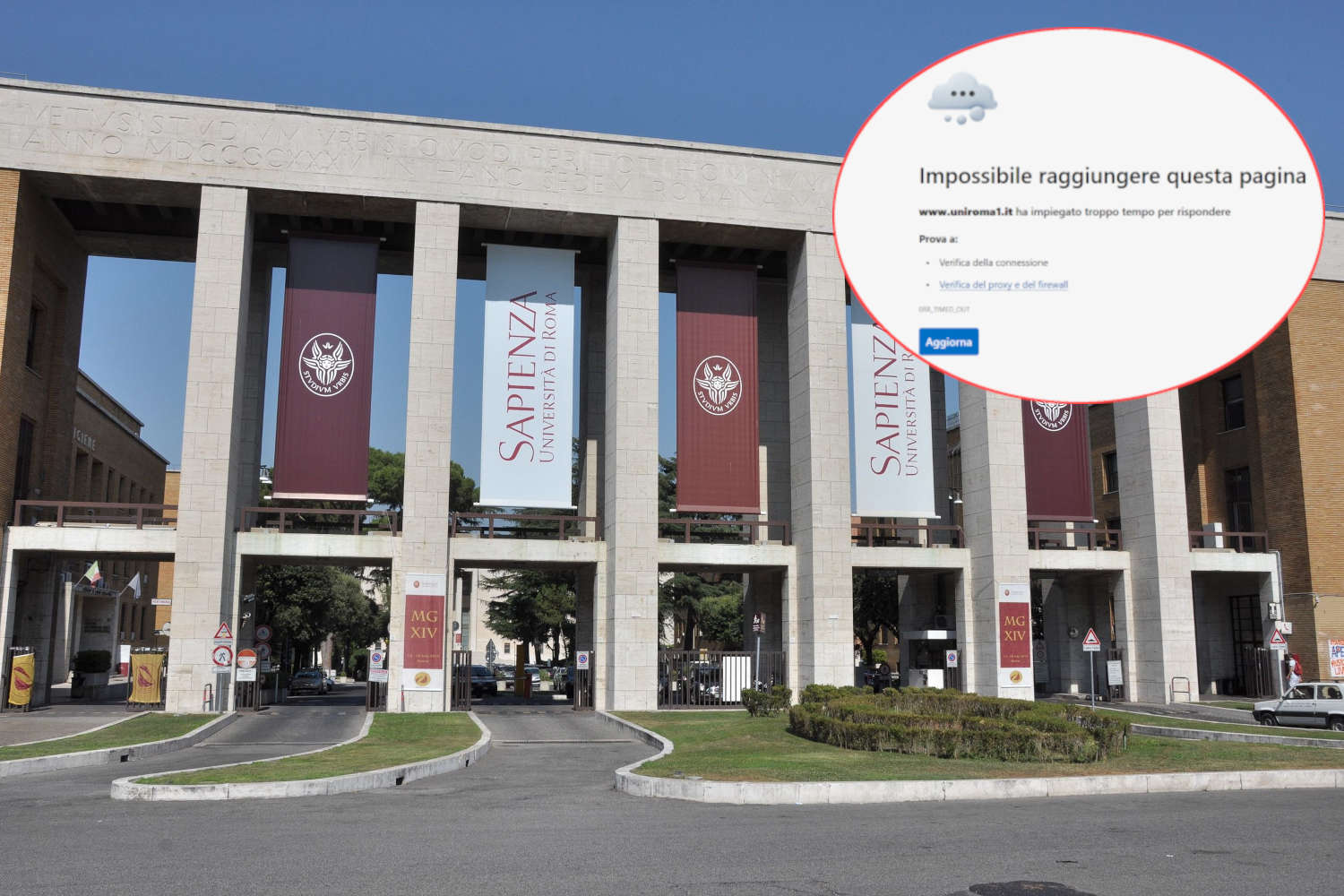
THE’La Sapienza University of Rome is still struggling with a hacker attackstarted yesterday morning and still not resolved. The university websites and numerous digital services are available unattainableparalyzing most administrative activities. At the center of the emergency is Infostudthe platform used by students to book exams, manage payments and consult your university career.
The attack did not end in a few hours but continues to produce effects, so much so that the university has maintained the precautionary block of the entire IT infrastructure to avoid further damage. According to information that has emerged in the last few hours, the action would have the characteristics of a ransomware attack.
The hackers apparently encrypted a large amount of data and sent it to the university blackmail messagewith a 72 hour ultimatum for the payment of a ransom, requested in cryptocurrencies. It cannot be ruled out that there may be someone behind the attack pro-Russian hacker crewalready known for similar operations. The virus may have been infiltrated by exploiting a internal flawperhaps linked to a system administrator account or a simple compromised email.
Services stopped, exams saved
The blockade especially affected administrative services. This is not possible at the moment book appeals, record votes, consult the booklet or carry out online payments. The exams, however, continue to take place regularly thanks to alternative procedures activated by the university to guarantee teaching continuity. The main risk remains that of one leak of personal data of students, teachers and administrative staff, even if the systems of backups would not be compromised.
Technicians at work and uncertain times
Specialists are working on the attack CSIRT of the National Cybersecurity Agencytogether with the university technicians and the Postal Police. The goal is to isolate the threat, limit the damage and initiate a gradual restoration of serviceswhich will take time.
The attack is significant and the return to normality will not be immediate, given the high number of compromised services. The episode brings to mind the previous one from 2011 and the cyber attack on the Lazio Region in 2021, confirming how large public infrastructures remain sensitive targets.
