
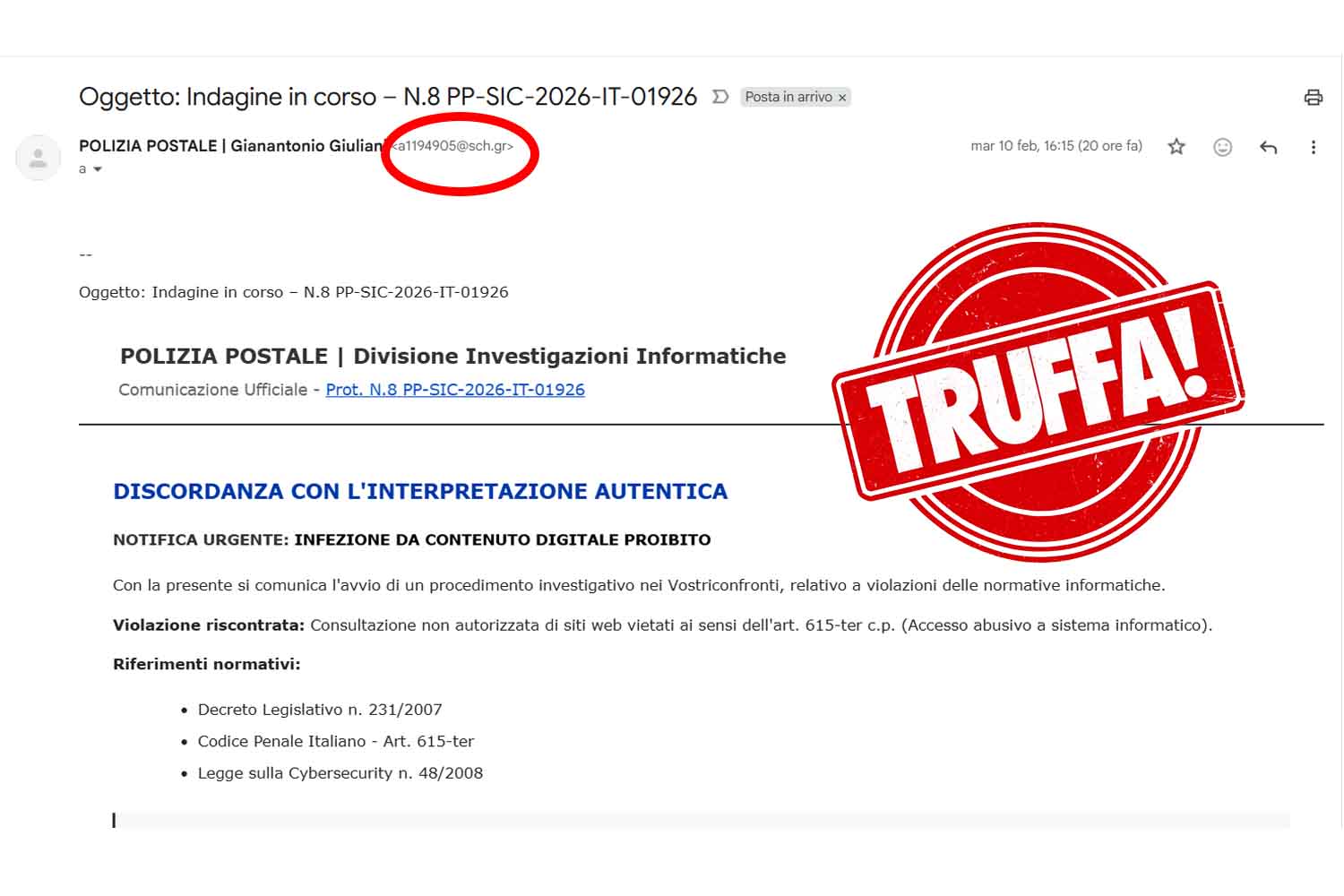
An email that talks about investigation underwaya protocol number, institutional logos, a threatening tone and an attachment to be opened “within 48 hours”. This is what yet another wave of looks like fake postal police emailsa phishing campaign built to generate anxiety and push people to react on impulse.
The mechanism is always the same: fear is exploited to obtain money or personal data. And it works precisely because it touches a sensitive chord, that of the fear of having done, perhaps without knowing it, something wrong.
This is not an improvised message. The fake postal police emails the text cites figures such as the Central Anti-Crime Director of the State Police, the Chief of Police, the Director of the Postal Police and other representatives of the police forces. The logos of the Italian Republic, the Ministry of the Interior, Europol or the Police also appear in the body of the communication, in order to make everything credible.
The content presents an alleged victim to the victim criminal investigation for prohibited digital contenttalking about IT violations and articles of the Penal Code such as 615-ter. The tone is urgent, peremptory, at times intimidating. There is talk of an arrest warrant, of legal consequences, of tight deadlines for responding. Anyone who receives the email is invited to read a PDF attachment and respond within 48 hours. This is where the trap is triggered: haste, anxiety, the fear of “making the situation worse” push many people to click without thinking.
The text of the fake email
A concrete example reports as the subject: “Investigation in progress – N.8 PP-SIC-2026-IT-01926”. The sender signs himself as “POSTAL POLICE | Gianantonio Giuliani”, but the email address has nothing to do with institutional domains.
You just have to read carefully to realize that something doesn’t add up. Citations of legislative decrees, reminders of cybersecurity and threats of criminal proceedings alternate. All seasoned with ungrammatical and inconsistent writing.
Among the phrases used are formulas such as “URGENT NOTIFICATION: INFECTION BY PROHIBITED DIGITAL CONTENT” and indications that require you to respond exclusively via email, under penalty of issuing an arrest warrant. It is a typical construction of phishing: lots of scenography, little substance. The rule, in these cases, is simple: and don’t answer.
The recommendation of the postal police: no request for money via email
The Postal Police is clear: no law enforcement agency contacts citizens via email or messages to request monetary payments or disclosures of personal data under threat of criminal sanctions.
A real investigation is not notified with an ungrammatical email, with an attachment to be opened quickly and a deadline of 48 hours. Fake postal police emails only work if we give in to psychological pressure. Stopping, breathing and reading clearly is the first step in defending yourself.
When we receive a communication of this type it is essential not to be guided by instinct. You must not reply, click on links or open attachments. You do not have to provide personal data, documents or bank details. The message must simply be deleted and, if desired, reported through the official channels of the Postal Police. Information remains the first, true antivirus. Cyber scams don’t just target those who are “less experienced”: they target universal emotions such as fear and guilt.
